

What specific steps are taken to accommodate industry-specific requirements during logistics?
Industry-specific logistics requirements are accommodated by reviewing the component type, dimensions, weight, finish requirements and production sequence before collection. This informs suitable packaging and handling instructions, load planning, collection and delivery arrangements for manufacturers, fabricators, construction firms and automotive businesses.
Industry-specific logistics requirements are accommodated by converting each customer’s production, handling and site requirements into practical instructions for the coating journey. This includes controls for identification, segregation, paperwork, access arrangements and delivery sequence, so the logistics process reflects how the coated components will be manufactured, installed or used.
For manufacturers, maintaining part identity through collection, coating and return is often essential. Components can therefore be grouped and labelled according to the customer’s own batch, job or purchase-order references. Where a production line depends on a particular order of supply, that sequence can be retained when loads are prepared for return. This reduces the risk of parts from different jobs being mixed during industrial batch processing.
Fabricators may send assemblies, fabricated sections or components at different stages of completion. Logistics planning takes account of whether items can be stacked, whether contact between surfaces must be avoided and whether the receiving site has particular unloading restrictions. Instructions supplied by the fabricator are passed into the handling process so that coated parts are presented in a condition suitable for the next fabrication or installation stage.
Construction projects commonly involve deliveries linked to a site programme rather than a single production order. In these cases, loads can be organised around project areas, installation phases or identifiable work packages where the information is provided in advance. Site access details, delivery constraints and the need to coordinate with other materials can be incorporated into the collection and delivery instructions.
Automotive work usually places greater emphasis on repeatability, part identification and preventing cross-contamination between distinct component groups or coating specifications. Job references, batch separation and clear handling instructions help distinguish parts intended for different applications. Specialist finishes, including nylon and protective coatings, can also be treated as separate coating requirements when this is necessary to preserve the correct job identity and handling method.
Industry-specific requirements are normally documented in a job brief or accompanying instructions rather than left to informal assumptions. Useful information includes:
- the customer’s part, batch or purchase-order references;
- any required segregation between jobs, coating systems or production stages;
- site access, unloading and delivery restrictions;
- the intended installation or manufacturing sequence;
- special handling notes for delicate, assembled or unusually shaped items; and
- any paperwork that must travel with the components.
These controls are particularly important where a single collection contains work for several orders or where coated components move between separate manufacturing and installation locations. Clear identification and documented instructions allow the logistics process to support the customer’s own quality procedures without imposing a single approach on every sector.
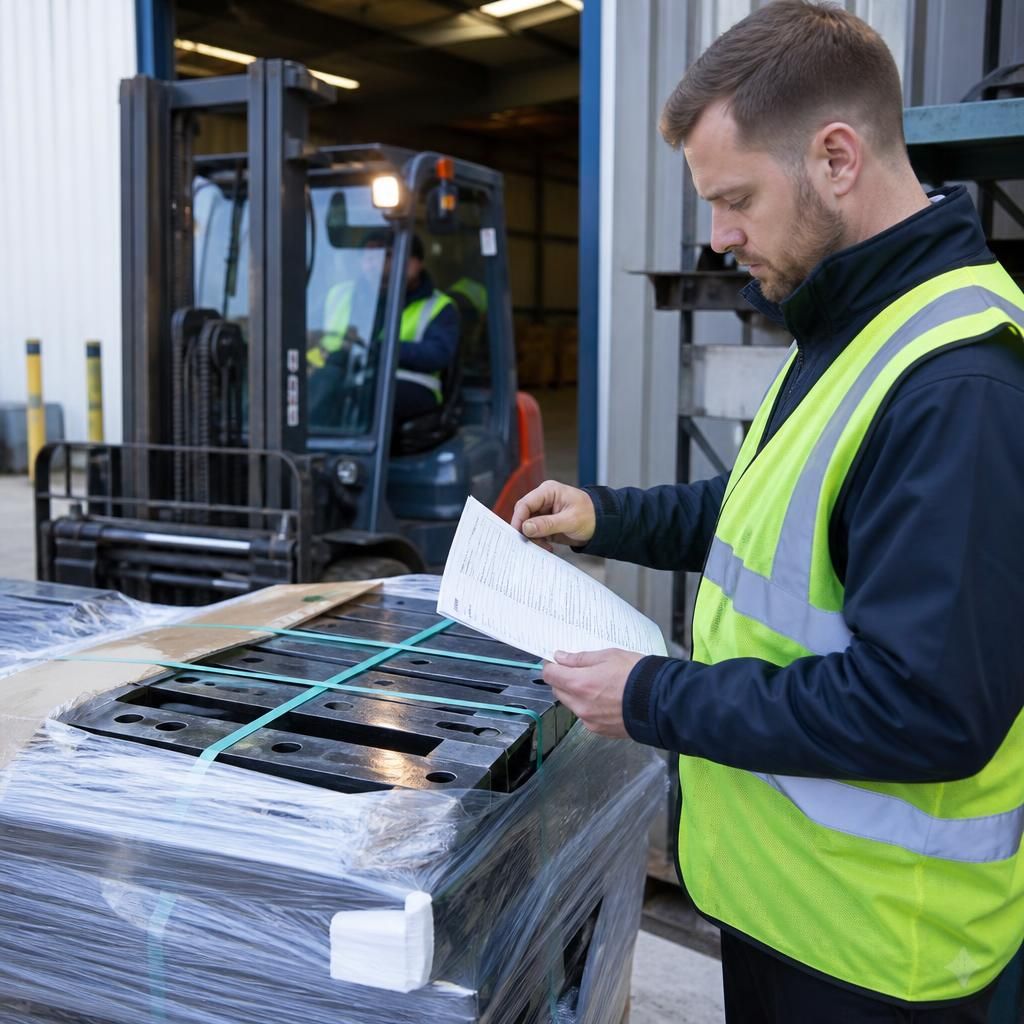
A further control is to match each load with the receiving operation’s own intake procedure. Before dispatch, the collection and return records can specify the expected part count, load reference, condition checks and receiving contact, allowing the customer to reconcile the consignment with its internal goods-in process. This is particularly useful where coated components enter a controlled manufacturing line, a fabrication workshop or a construction site with separate material records. Any discrepancy can then be identified against the relevant load documentation rather than being treated as an unexplained shortage or mixed delivery.
Discuss Your Industry-Specific Logistics Requirements
Discuss your industry-specific logistics requirements with the powder-coating team, including any handling, documentation or receiving procedures that need to be built into the job. Providing these details at the planning stage helps ensure the collection and return arrangements reflect your operational process.