

How do you ensure the quality and safety of my components during transportation?
We protect component quality during transport by assessing each load, using suitable separation and secure restraint, and handling finished parts carefully to reduce the risk of movement, impact, scratching or contamination. Components are checked at collection and delivery so any visible issue can be identified and addressed promptly.
Component transport safety is managed by matching the handling and packaging approach to the component’s size, shape, weight, finish and vulnerability. The objective is to preserve both the metal part and its powder-coated surface between collection, processing and delivery, without introducing moisture, contamination, deformation or damage caused by unsuitable loading conditions.
Before transport, the component details are considered so that practical risks can be identified in advance. This includes reviewing features such as sharp edges, exposed faces, apertures, delicate projections, threaded sections and areas where contact could mark the finish. Components that cannot safely be placed together are kept apart, while parts with similar handling requirements can be grouped in a controlled way.
- Protection from contact damage: suitable protective materials or packaging arrangements are used to prevent coated faces rubbing against one another or against the vehicle or container.
- Protection from contamination: finished components are kept away from dirt, loose debris and substances that could affect the appearance or cleanliness of the coating.
- Protection from moisture: the load is handled and covered in a way that reduces exposure to rain, condensation and damp conditions, particularly where components have unprotected areas or recesses.
- Protection from distortion: heavier items are positioned so that their weight does not place unnecessary pressure on lighter or more delicate components.
Loading is planned around the shape and weight distribution of the consignment rather than treating every load in the same way. Items need to remain stable during normal vehicle movement, including braking, cornering and changes in road surface. Restraint methods are selected to hold the load securely without placing excessive pressure on coated edges, corners or visible faces.
Handling procedures also distinguish between unfinished components and parts with a completed powder-coated surface. Finished items require particular care because an impact may not only mark the appearance but may also expose the substrate or damage an edge. Where components are lifted, moved or unloaded, contact points and access routes are considered to reduce unnecessary handling and the risk of dropping or dragging parts.
Information supplied by the customer can improve the transport assessment. Dimensions, approximate weights, stacking restrictions, lifting points, fragile features and any packaging already in use should be provided where relevant. It is also useful to identify which surfaces must remain visible or free from contact. This allows the collection and delivery arrangement to reflect the actual component rather than relying on a generic packing method.
Quality control continues through the logistics process by keeping the consignment identifiable and relating the delivered items to the relevant coating work. If packaging is found to be unsuitable, damaged or disturbed, the condition can be recorded and the issue investigated before the components are treated as ready for onward use. This provides a clearer basis for distinguishing transport-related damage from pre-existing marks or coating issues.
For complex, oversized or unusually shaped components, transport planning should be agreed before collection. Discussing access, lifting requirements, packaging limitations and unloading conditions in advance reduces avoidable risk and helps ensure that the protective measures are suitable for the complete journey.
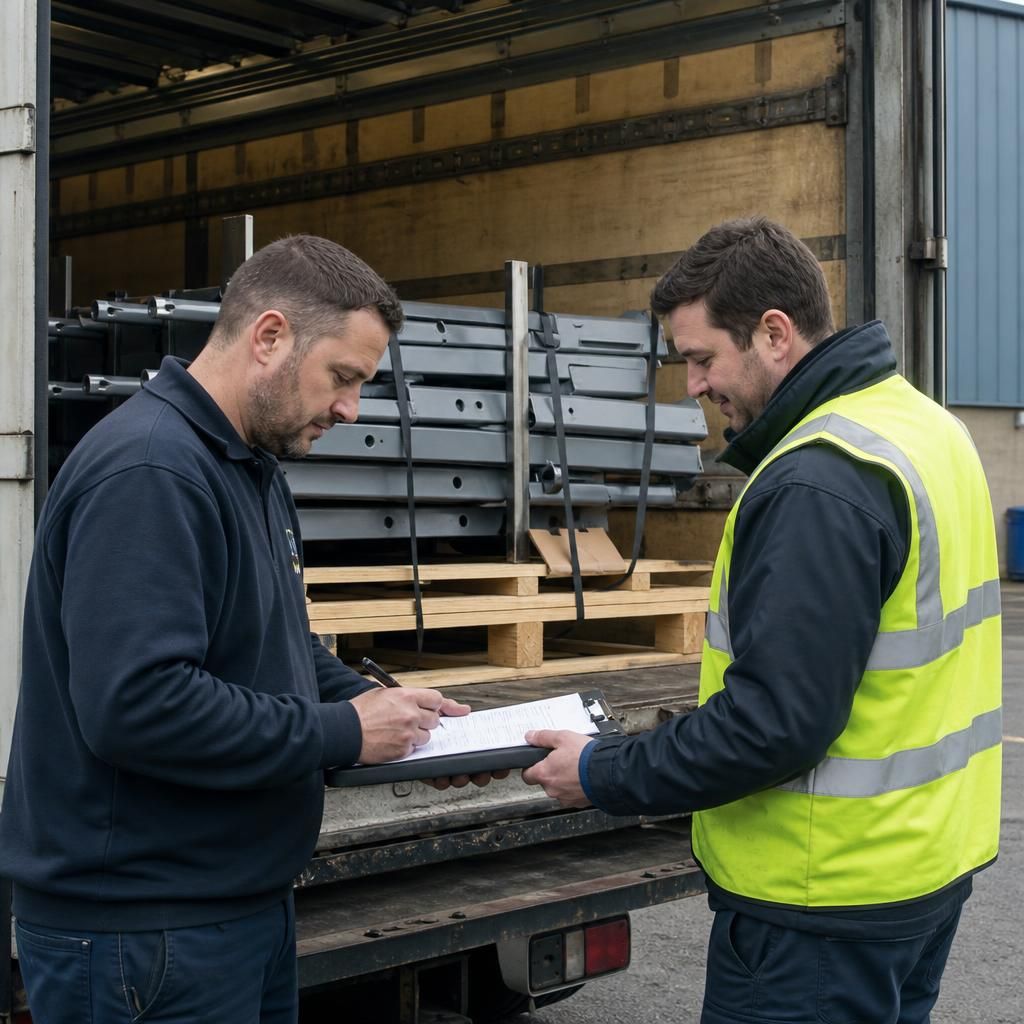
A documented handover record adds an important quality control during component transportation. It can identify the consignment, note its condition at transfer, record any handling instructions and confirm whether packaging or restraints remain intact. This creates a clear reference for the customer and coating team if an issue is found later.
For business-critical components, the record should also distinguish visible transport damage from marks or defects that were present before collection. Any discrepancy can then be isolated for review rather than allowing affected parts to proceed directly into production.