

What are the most popular finishes available for powder coated steel components?
The most popular finishes for powder coated steel components are smooth, matt, satin, gloss and textured effects, with metallic and fine-texture options also commonly selected. The appropriate finish depends on the required appearance, surface feel, cleaning needs and the component’s operating environment.
Popular powder-coat finishes for steel components are specified by their level of sheen, surface texture and visual effect. The most suitable choice depends on whether the component is primarily decorative, frequently handled, exposed to dirt or weather, or required to match an existing assembly.
Smooth finishes provide an even, low-texture surface and are widely used where a clean, uniform appearance is required. They are suitable for fabricated panels, enclosures, brackets and visible machine parts. Because there is little surface texture to disguise inconsistencies, the steel must be properly prepared and the coating applied evenly.
Matt and satin finishes are commonly selected for contemporary equipment, architectural metalwork and internal components. Their reduced reflectivity can make a part appear more understated and can reduce the visual prominence of glare, reflections and minor surface marks. Satin generally provides more lustre than matt, so the difference should be confirmed against a physical sample where components need to match an existing finish.
Gloss finishes give steel a brighter, more reflective appearance. They are often used when colour clarity and a stronger visual impact are important. The increased reflection can make surface defects, handling marks and uneven preparation more noticeable, meaning the quality of the steel substrate and the consistency of the application remain important considerations.
Textured finishes add a tactile surface pattern rather than leaving the coating completely flat. They are useful for components that need a more robust-looking appearance or where a less reflective surface is preferred. Fine-texture powders provide a relatively subtle effect, while heavier textures create a more pronounced finish. Texture can help reduce the visibility of minor visual irregularities, but it does not replace cleaning, preparation or the repair of corrosion and significant surface defects.
Metallic finishes contain reflective particles that create a metal-like visual effect. They can be used to give steel components a distinctive appearance, but colour and effect consistency need particular attention across batches. Viewing a representative coated sample is advisable, especially where parts are manufactured at different times or positioned next to one another. Application method, coating thickness and part geometry can influence how the metallic effect appears.
Wrinkle and speciality effects are available for applications requiring a more pronounced decorative surface. These finishes are selected less often than standard smooth or textured options, but can be appropriate for equipment, furniture components and fabricated items where the surface appearance is part of the design. Their suitability should be assessed against the component’s cleaning method, contact points and required tolerances.
Finish selection should also consider the way the steel component will be used:
- Visible architectural or presentation parts: prioritise colour consistency, sheen and the quality of the substrate beneath the coating.
- Frequently handled components: consider how the chosen texture feels in use and whether the surface will retain dirt in its profile.
- Parts exposed to contamination: compare the ease of cleaning a low-texture surface with the visual advantages of a textured effect.
- Components fitted together: specify the same colour, gloss level, texture and coating system so adjacent parts have a consistent appearance.
- Parts with tight fits or moving interfaces: account for the coating thickness and avoid selecting a finish solely on appearance.
Colour and finish are separate parts of the specification. A RAL colour may be available in several sheen or texture options, and the same nominal colour can look different when applied as a matt, satin, gloss, metallic or textured coating. A written specification should therefore identify the colour reference, finish type, acceptable visual standard and any areas that must remain uncoated.
For repeat production, an approved sample or retained reference panel helps establish the expected appearance. It is particularly useful for metallic and textured finishes, where lighting, viewing angle and application conditions can affect the perceived result. Powder-coated steel specialists can use the component drawings, intended environment and production requirements to help establish a finish specification that balances appearance, handling and maintenance needs.
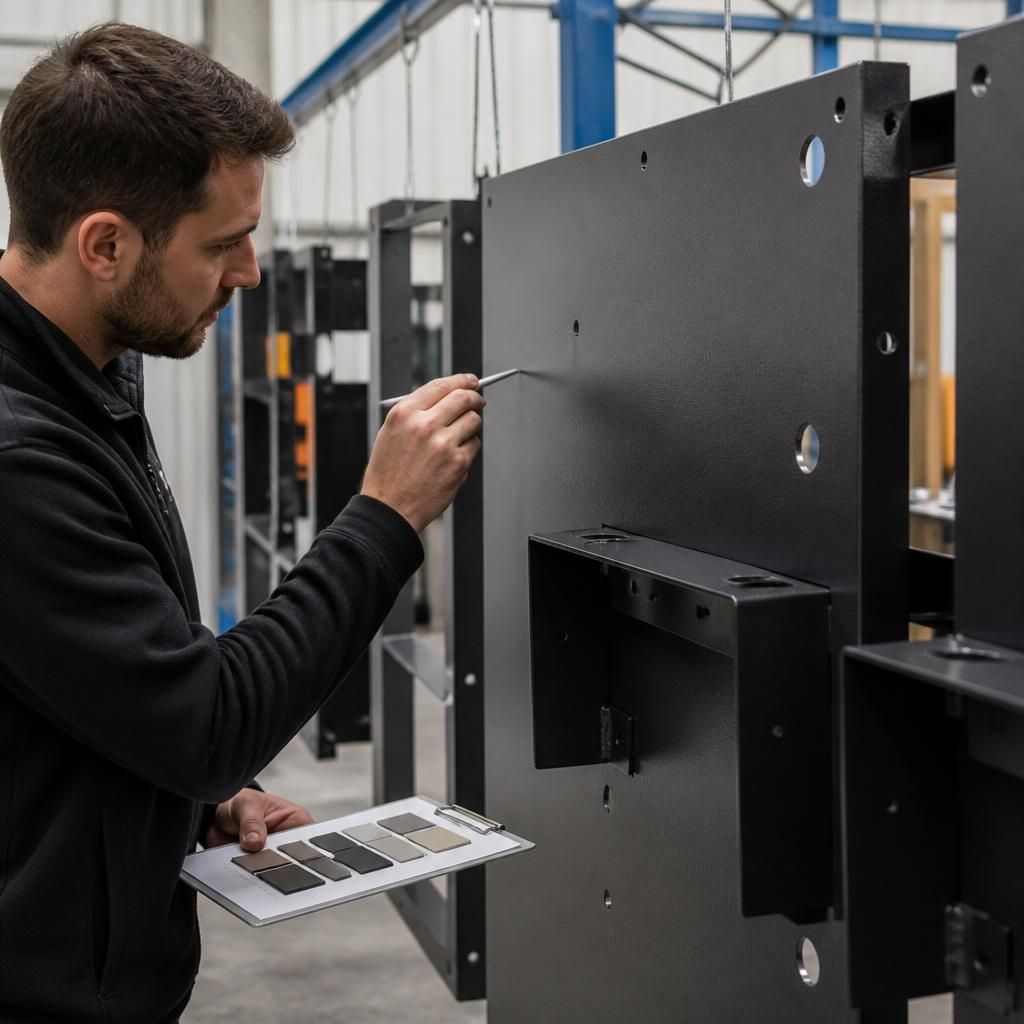
Another practical difference between powder-coat finishes is how easily a damaged area can be made visually consistent with the surrounding coating. Smooth, solid-colour finishes are generally simpler to assess for colour and coverage, whereas metallic, wrinkle and pronounced textured effects can be more difficult to blend after local damage or modification.
This matters for steel components that may be drilled, cut, assembled or exposed to contact during installation. The finish specification should state whether minor repairs are acceptable, which areas may be retouched and whether a replacement part must match the original coating exactly. For critical visible surfaces, retaining the approved colour and finish reference alongside the production records helps identify the intended appearance if a component needs to be recoated later.
Discuss your steel component finish requirements
Discuss your steel component finish requirements with a powder-coating specialist, providing drawings, quantities, intended use and any colour or finish references. This information can be used to assess the most suitable coating specification for your components.