

What are the key benefits of using powder coating for steel components?
Powder coating protects steel components with a tough, uniform finish that can improve resistance to corrosion, abrasion, impact and weathering. It also provides consistent colour and appearance, efficient coverage with minimal waste, and a durable surface that can reduce maintenance requirements compared with less robust finishes.
Powder coating benefits steel components by combining a controlled application process with a solvent-free, heat-cured finish. Beyond surface protection, it can improve production consistency, reduce handling between coating stages, support repeatable specifications and provide a practical range of finish options for manufactured parts.
More consistent production: Powder is applied as a dry, electrically charged material that is attracted to the earthed steel component. This allows the coater to control application more systematically than methods that depend mainly on liquid flow and drying. Once the coating has been cured, the result is a bonded film with a defined appearance. For manufacturers and fabricators, this repeatability is useful when supplying batches of components that must match an agreed specification.
Efficient application: Powder coating can often achieve the required film build in a single coating operation, subject to the specification, component geometry and powder system selected. This can reduce the number of wet layers and drying stages that would otherwise be needed. Any areas that require masking, plugs or other process controls can be identified before production so that critical faces, threads, bores and contact points remain suitable for assembly.
Reduced solvent use: Powder is supplied as a dry coating material rather than a liquid paint containing a solvent carrier. This means there is no solvent evaporation during normal curing and can reduce solvent-related emissions and handling requirements. The exact environmental profile still depends on the powder formulation, pre-treatment chemicals, curing energy and waste-management arrangements, so these factors should be assessed as part of the complete finishing specification.
Material efficiency: The dry application process can make efficient use of coating material, particularly where equipment is set up for repeat production. In suitable systems, overspray may be collected and managed in accordance with the coating manufacturer’s requirements. This can help limit process waste, although recovery arrangements are not appropriate for every colour, material combination or quality requirement.
Design and specification flexibility: Powder coating is available in a broad selection of colours, gloss levels and surface textures. This enables steel components to be matched to a product design, corporate specification, visual schedule or identification system. Different finish choices can also help distinguish parts used for separate functions, provided the selected coating is compatible with the component’s operating environment.
Better batch repeatability: A documented powder type, colour reference, pre-treatment route, film thickness and curing schedule gives future batches a clear production target. This is particularly valuable for fabricated assemblies, replacement parts and products made over an extended period. Good records do not remove the need for inspection, but they make it easier to identify variation and maintain consistency between production runs.
Potential lifecycle value: The main financial benefit is normally assessed across the component’s service life rather than by coating price alone. A suitable powder system can reduce the need for recoating, touch-up work, production rework and unplanned removal from service. The actual result depends on steel preparation, coating selection, edge and weld condition, film thickness, curing and the conditions in which the component will be used.
These benefits depend on specifying the process correctly. Steel should be clean and appropriately pre-treated, areas that must remain uncoated should be protected, and the powder must be cured within the supplier’s stated parameters. Component size, mass, shape and assembly materials can also affect whether powder coating is suitable, because the part must normally pass through an appropriate curing oven without distortion or damage.
For B2B projects, the most useful assessment is therefore based on the complete requirement: steel grade and condition, intended environment, appearance, dimensional tolerances, production volume, inspection criteria and delivery arrangements. A specialist powder coater can use this information to recommend a coating system and process controls that deliver the practical benefits without treating powder coating as a one-size-fits-all solution.
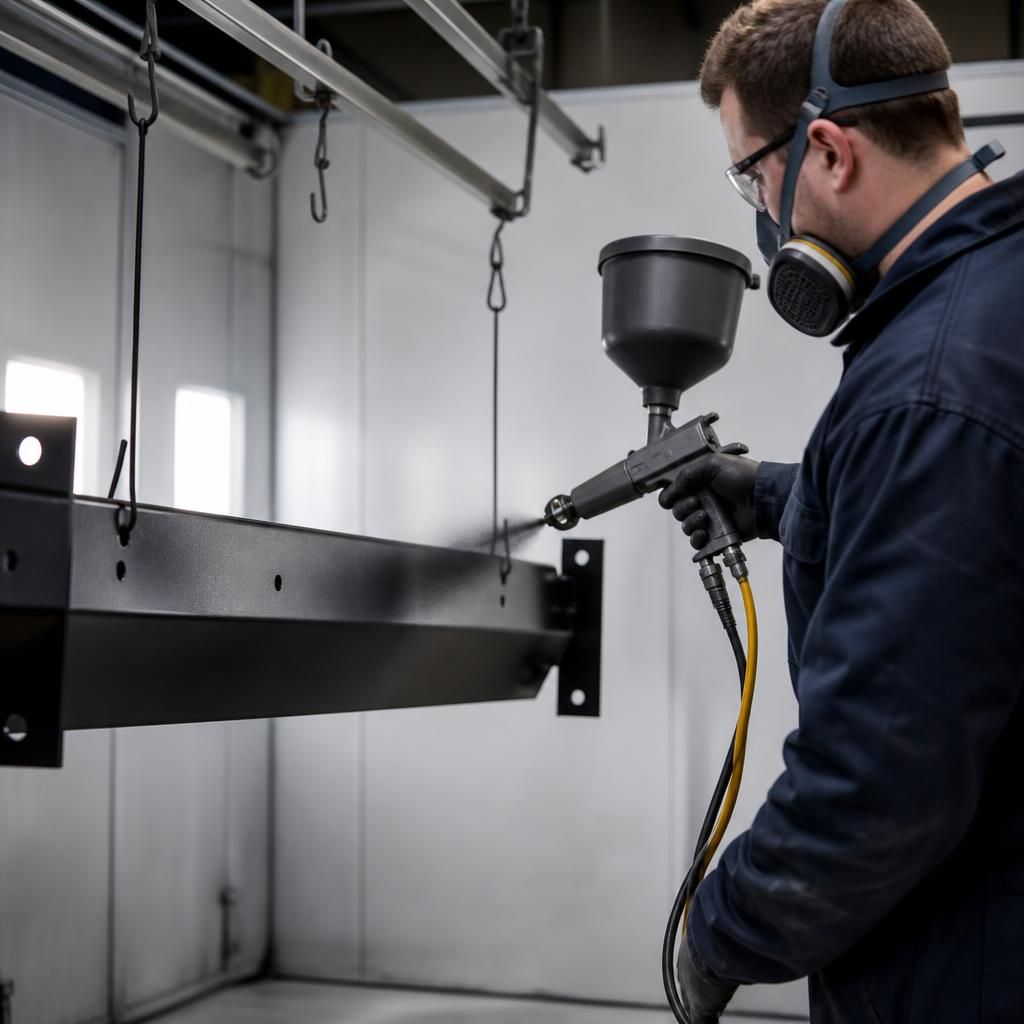
A key benefit of powder coating for steel is the ability to specify the finish according to the component’s working environment, rather than choosing colour alone. The coating system should be assessed against factors such as outdoor exposure, contact with moisture, likely abrasion, handling during installation and the appearance required by the finished product.
This approach helps prevent over- or under-specification. A decorative finish may be suitable for an indoor component, while steel used in a more demanding setting may require a protective powder system and an appropriate pre-treatment route. The chosen colour, gloss level and texture should therefore be recorded alongside the technical requirements, so the finished component is both visually suitable and fit for its intended use.
Discuss powder coating for your steel components
Discuss your steel components with a powder-coating specialist to assess the coating system, finish and process controls suited to their intended use. Provide details of the steel, component dimensions, operating environment and required specification to support an informed recommendation.