

How does powder coating improve the longevity and maintenance of steel components?
Powder coating extends the service life of steel components by forming a tough, uniform barrier against moisture, corrosion, abrasion and everyday wear. Its smooth, sealed surface is generally straightforward to clean, helping reduce routine maintenance and preserve the component’s protective finish.
Powder coating improves the longevity of steel components by creating a firmly bonded, chemically resistant finish that helps the steel withstand its intended operating environment. The benefit depends not only on the powder itself, but also on steel preparation, coating thickness, curing, component design and the conditions to which the finished part is exposed.
Unlike an untreated steel surface, a correctly prepared and cured coating separates the substrate from contaminants that can initiate deterioration. Good adhesion is particularly important: if the coating lifts, blisters or flakes, moisture and contaminants can reach the steel beneath it. Pre-treatment removes residues and prepares the surface for bonding, while controlled curing develops the coating’s final hardness and resistance. Inadequate preparation or curing can therefore shorten the useful life of an otherwise suitable powder system.
The coating also helps preserve component performance by resisting common forms of physical and chemical attack. The appropriate formulation and finish can help withstand handling, contact, light impact, cleaning processes and exposure to industrial contaminants. However, no coating is suitable for every environment. High humidity, salt contamination, strong chemicals, sustained heat, ultraviolet exposure and repeated mechanical contact may require a specification selected specifically for those conditions.
Maintenance is reduced when the coating remains intact because routine care can focus on removing deposits rather than treating developing corrosion. A practical maintenance approach for coated steel components includes:
- Inspecting the finish for chips, scratches, blistering, lifting, colour change or loss of adhesion.
- Paying particular attention to edges, corners, welds, holes, joints and areas where water or debris can collect.
- Cleaning accumulated dirt and industrial deposits with clean water and a mild, compatible detergent.
- Rinsing away cleaning residues and drying the component where trapped moisture could remain.
- Avoiding abrasive pads, aggressive solvents and cleaning methods that could roughen or damage the film.
Damage should be dealt with promptly rather than left to spread beneath the surrounding coating. The correct repair method depends on the size and location of the defect, the condition of the steel and the exposure category. Local touch-up may be suitable for minor damage, but it does not always reproduce the appearance or performance of a factory-applied powder finish. More extensive deterioration may require removal of the defective coating, renewed preparation and complete recoating.
Component design also affects long-term maintenance. Drainage should prevent standing water, while sealed or suitably treated joints can reduce the risk of contaminants becoming trapped. Sharp edges, inaccessible recesses and areas that are difficult to clean need consideration during specification. These details influence how consistently the coating can be applied and how easily the part can be inspected and maintained in service.
The correct film build is another important factor. A coating that is too thin may provide insufficient coverage, while excessive thickness can affect appearance, flexibility, curing and the fit of assembled parts. Thickness should therefore be specified according to the steel component, service environment and selected powder system rather than treated as a universal value.
For manufacturers and fabricators, the most reliable way to extend service life is to treat powder coating as part of a complete protection specification. Identify the exposure conditions, define the required appearance and performance, prepare the steel correctly, control application and curing, and establish a maintenance method suited to the finished component. Powder coating can substantially reduce the attention steel parts require in service, but its durability is ultimately determined by the compatibility of the coating system with the component’s design and working environment.
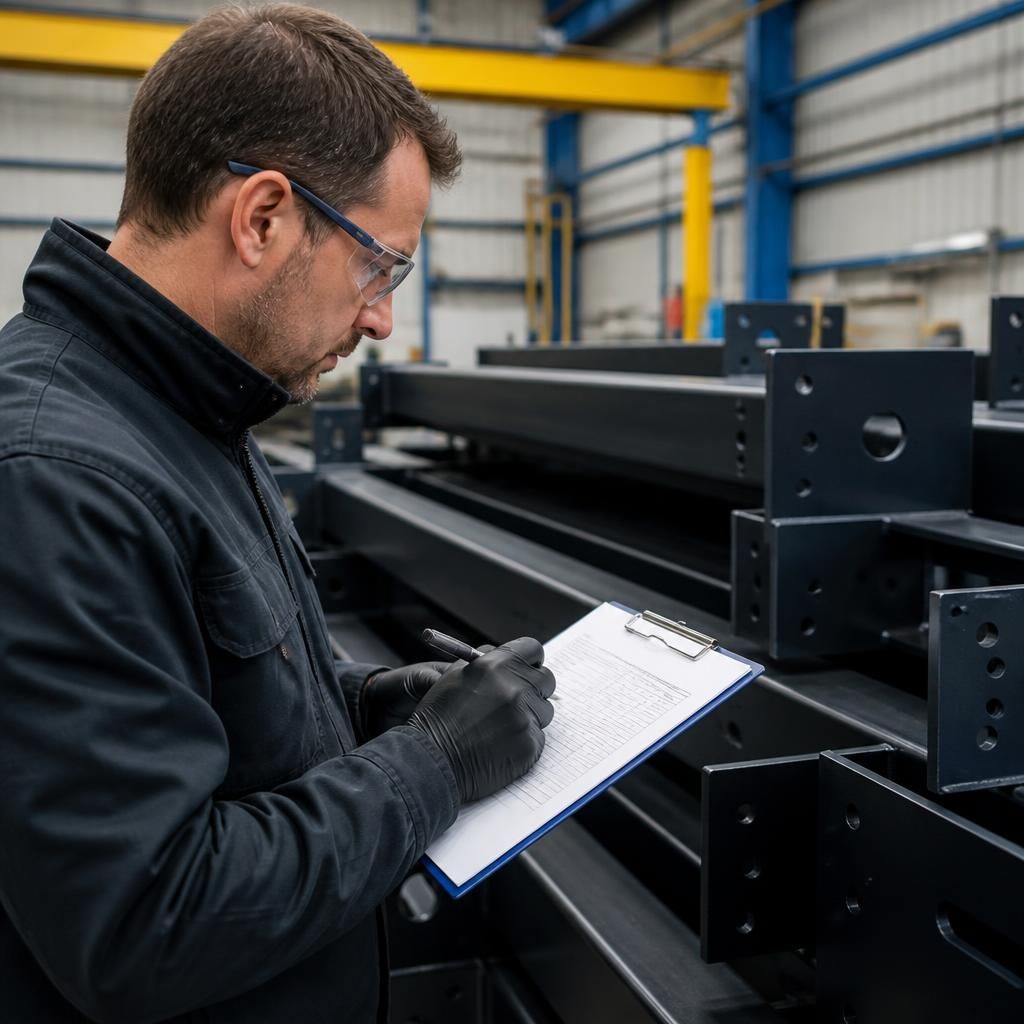
Long-term maintenance of powder-coated steel is easier to control when the original coating specification is retained. Records should identify the preparation system, powder type, colour, gloss level, target film build and curing requirements, together with the component’s intended exposure. This information helps maintenance teams assess whether a repair or recoating system is compatible with the existing finish.
Keeping these details with the component or asset record also avoids relying on visual matching alone. Colour and gloss may appear similar while the products have different chemical resistance, flexibility or curing requirements. Accurate specification records therefore support more consistent remedial work and help preserve the coating system throughout the component’s service life.
Discuss powder coating for your steel components
Discuss your steel components with Powder-coatings.co.uk to review the coating system, finish and application requirements for their intended service environment. Providing details of the component, operating conditions and required finish will help establish a suitable specification.