

What are the most advanced features available in industrial powder coating systems that can enhance production efficiency?
The most advanced industrial powder coating systems combine automated powder application, closed-loop process controls, programmable curing ovens, integrated conveyor handling and real-time monitoring. These features help maintain consistent coating thickness and cure quality while reducing manual intervention, powder waste and production stoppages.
The most advanced industrial powder coating systems improve production efficiency through coordinated changeover, powder recovery, energy management, digital traceability, in-line inspection and condition-based maintenance. Rather than relying on a single high-performance machine, they connect application, curing, handling, quality assurance and production data so that each stage supports the next with fewer interruptions and less rework.
Recipe management and job identification allow operators to select a validated process for a particular component, substrate, powder type and finish. A recipe may include application settings, film thickness targets, curing parameters and line-speed requirements. Barcode or RFID identification can link the workpiece to the correct process, helping prevent incorrect settings when several products or colours are being processed. This is particularly valuable for batch production involving frequent changes between specifications.
Rapid colour-change technology is another important feature. Modern systems can use dedicated powder paths, automated purging, removable booth components and carefully sequenced cleaning routines to reduce contamination between colours. Booth design is critical: smooth internal surfaces, accessible filters and limited powder traps make cleaning more predictable. Where the production mix justifies it, separate application circuits can reduce the time and powder loss associated with switching between contrasting finishes.
Advanced powder recovery and separation can improve material utilisation when overspray is suitable for reclamation. Cyclone and cartridge recovery arrangements collect unused powder, while screening and separation equipment helps remove contamination or agglomerated material. Recovered powder must be managed according to the coating manufacturer’s requirements; mixing incompatible colours, chemistries or batches can affect finish quality. The most effective systems therefore combine recovery equipment with controlled storage, identification and reclaim policies rather than returning all overspray indiscriminately.
Energy-optimised thermal systems focus on delivering the required heat without unnecessarily warming unused areas or running equipment at full output during low-demand periods. Useful features include modulating burners, variable-speed fans, insulated oven construction, controlled air circulation and heat recovery from exhaust streams. Standby modes can reduce energy use between production runs, provided that the system returns to the required process conditions before coating resumes. Oven efficiency should be assessed alongside airflow uniformity, because lower energy consumption is not beneficial if it produces uneven curing.
In-line quality inspection can identify process problems before a large batch reaches final inspection. Non-contact film-thickness measurement, surface cameras and temperature probes can highlight thin areas, contamination, surface defects or inadequate part heating. These tools do not replace destructive testing and periodic laboratory checks, but they provide earlier indication of drift. The practical efficiency gain comes from isolating affected parts and correcting the process before extensive rework or repeat coating is required.
Digital traceability and production-data integration enable manufacturers to connect coating records with purchase orders, component batches and final inspection results. A system may record powder identification, operator actions, process settings, oven conditions, alarms and inspection outcomes. Integration with manufacturing execution or enterprise resource planning software can reduce manual data entry and make it easier to trace a finished component back through its coating process. This is especially useful where customers require documented process control or where parts are supplied into safety-critical applications.
Condition-based maintenance and diagnostic functions help identify developing faults before they become production interruptions. Useful diagnostic points include powder-feed pressure, filter loading, gun output, compressed-air quality, booth airflow, burner operation and conveyor drive condition. Trend information can show whether a component is gradually deteriorating, while alarm histories help maintenance teams distinguish a recurring root cause from an isolated fault. This is more effective than relying solely on fixed maintenance intervals, although scheduled servicing remains necessary.
Flexible line architecture allows equipment to accommodate changes in component size, production volume and coating specification. Modular booths, adjustable part fixtures, configurable gun positions and independently controlled zones can make a system more adaptable than a fixed arrangement. Flexibility should not be confused with unlimited capacity: the system still needs suitable dwell time, loading clearances, extraction performance and thermal capacity for the largest and most demanding components.
Safety systems also contribute to efficient operation by preventing avoidable incidents and uncontrolled process conditions. Interlocked access doors, extraction monitoring, fire detection, emergency stops, earthing checks and automatic isolation of faulty equipment help protect operators and reduce the risk of damage to the line. Pneumatic and electrical components should be specified for the coating environment, with particular attention to combustible powder, dust accumulation and ventilation.
When comparing advanced systems, assess the complete workflow rather than individual features. Examine changeover time, reclaim suitability, energy demand, inspection capability, data access, maintenance requirements, spare-parts support and the range of components the line must handle. A technically sophisticated system is only efficient when its features match the production mix, powder chemistry, component geometry and required level of traceability. For many manufacturers, the best solution is a balanced system that reduces changeover and rework while preserving reliable curing, safe operation and consistent process control.
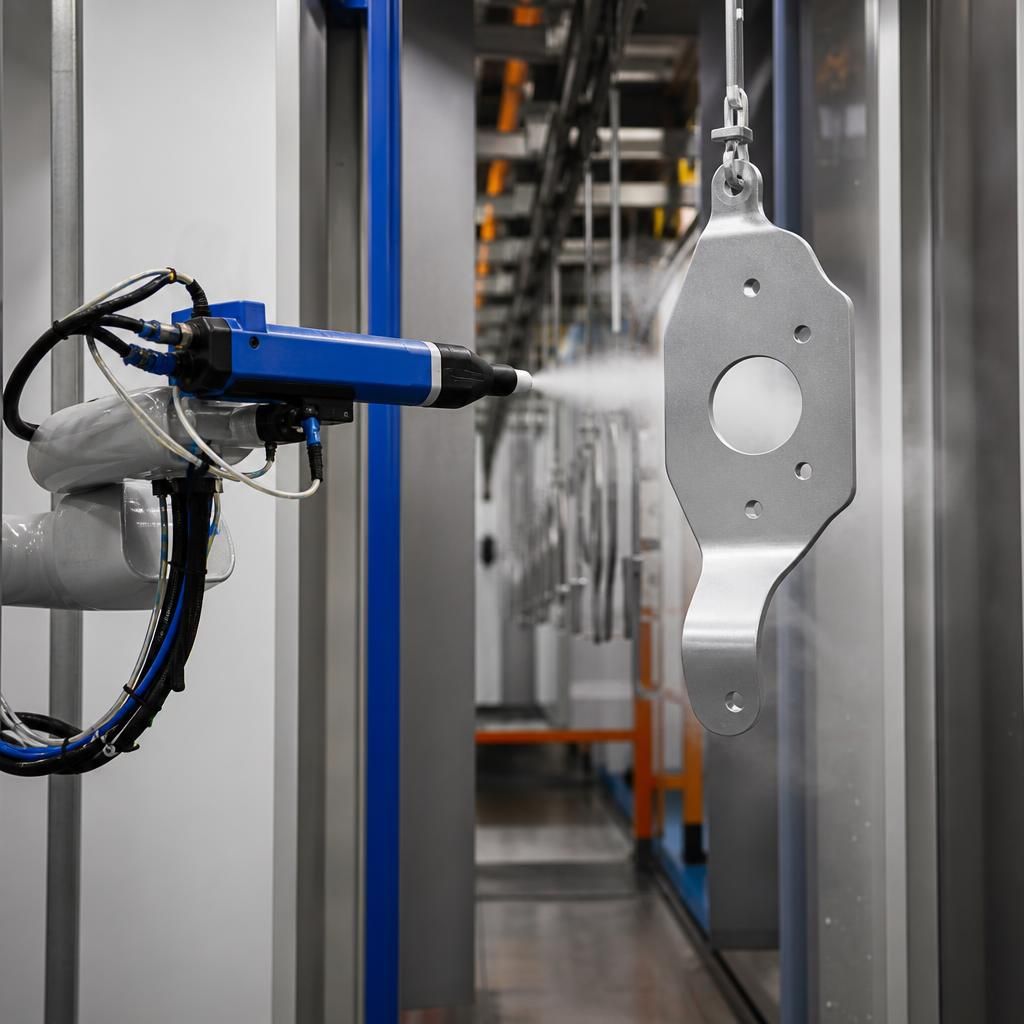
Part profiling and adaptive gun control can improve efficiency where components vary in shape or size. Sensors or a programmed component profile identify the part’s position, dimensions and surface areas, allowing spray guns to adjust triggering, movement and coverage rather than applying powder continuously across the whole conveyor width. This can reduce unnecessary overspray, limit powder build-up on fixtures and improve access around edges, recesses and open sections. The feature is most useful for mixed production, where fixed gun settings would otherwise require frequent manual adjustment or compromise coating coverage.
Discuss Advanced Industrial Powder Coating System Requirements
If you are assessing an advanced industrial powder coating system, discuss your component mix, production requirements and coating specifications with Powder-coatings.co.uk to identify the most suitable level of automation and process control.