

How does the choice of electrostatic powder coating technology impact the efficiency and quality of your industrial coatings?
Electrostatic powder coating technology affects industrial coating efficiency by controlling how effectively powder is charged, transferred and deposited onto metal components. The right system can improve coverage consistency, reduce overspray and support a more uniform, durable finish when its settings are matched to the part, powder and production process.
The choice of electrostatic powder coating technology affects industrial performance through the relationship between charging method, application control, component geometry and curing requirements. A suitable system makes the coating process more predictable and easier to control; an unsuitable one can increase rework, powder consumption and variation between batches, even when the same powder and oven are used.
Corona and tribo charging are the two principal approaches. Corona guns charge powder using a high-voltage electrode as the particles pass through the electrical field. They are widely adaptable and can suit varied component sizes, production volumes and powder types. Tribo systems charge the powder through friction inside the gun rather than using a high-voltage electrode. This can be useful where reduced back-ionisation, controlled deposition or access to certain recesses is important, although the powder must be compatible with the charging process and the equipment requires careful setting.
The charging method influences how the powder behaves around edges, corners, cavities and recessed sections. Strong attraction is useful for exposed faces, but excessive electrical energy can cause back-ionisation, in which charged particles repel one another and create an uneven surface. A system with adjustable voltage and current allows the operator to reduce the electrical output for intricate parts or increase control for larger, simpler surfaces. The most effective setting is therefore determined by the component rather than by maximum output alone.
Application control has a direct effect on repeatability. Industrial equipment may allow adjustment of powder output, air volume, atomising air, voltage, current and gun movement. These settings influence film build, edge coverage and the amount of powder reaching the intended surface. Automatic guns can provide consistent movement and spacing in a conveyorised process, while manual guns offer greater flexibility for irregular components, small batches and areas that need targeted coverage. In mixed production, the ability to combine both approaches can be more valuable than selecting one application method exclusively.
Part presentation is equally important. Consistent racking and earthing help maintain a stable electrostatic field, whereas poor contact, unsuitable hooks or contamination on the suspension points can reduce attraction and create bare areas. The design of the rack should expose the required surfaces without placing components too close together. It should also allow easy access for spraying and minimise areas where powder can accumulate without being properly bonded to the metal.
Geometry determines how much advantage a particular technology can provide. Flat panels and open profiles are generally straightforward to coat, while deep boxes, narrow channels and Faraday cage areas require lower settings, altered spray angles or a combination of automatic and manual application. Operators may need to coat recessed areas first and then apply the main pass to exposed faces. Gun distance, movement speed and angle should be kept consistent where repeatability between parts is required.
Powder recovery and filtration affect efficiency as well as finish quality. A well-matched booth and recovery arrangement can separate usable overspray from waste and help prevent contamination between colours or powder types. However, recovered powder must be managed according to the coating specification. Excessive recycling or poor separation can alter the blend and introduce defects such as colour variation, surface contamination or inconsistent texture. The right technology therefore includes not just the gun, but also powder handling, booth extraction and cleaning procedures.
Control systems can improve production efficiency by storing repeatable recipes for specific components and powders. A recipe may include application settings, gun positions and powder feed parameters. This reduces reliance on individual judgement when a known job returns to production, but stored settings still require verification after changes to powder, substrate, racking, booth conditions or component design. Digital controls do not remove the need for process checks; they make those checks more consistent.
The impact on quality must also be considered alongside curing. Electrostatic application determines how much powder is deposited and where, but the coating achieves its final properties only when the film reaches the powder manufacturer’s specified cure schedule. Uneven film thickness, overloaded racks or poor air circulation can produce different results across a batch. The application system, oven loading pattern and curing process should therefore be assessed as one production system rather than as separate items.
When comparing technologies, assess the following factors:
- the range of component sizes, shapes and recesses to be coated;
- the powder chemistries, colours and textures used in production;
- the balance between manual flexibility and automatic repeatability;
- the required control over film build and edge coverage;
- the level of colour change and booth cleaning required;
- the quality of the available earthing, racking and component presentation;
- the compatibility of the booth, recovery unit, guns and control system; and
- the inspection and recording needed to maintain consistent batches.
For manufacturers and fabricators, the best choice is usually the technology that matches the actual production mix rather than the system with the highest nominal output. A carefully configured corona system may be the practical option for varied work, while tribo charging or a hybrid manual and automatic arrangement may offer better control for particular shapes or repeat production. Evaluation should include sample components, the intended powder range and the complete coating cycle. This reveals whether the proposed technology can achieve the required appearance and film consistency without creating avoidable handling, cleaning or rework demands.
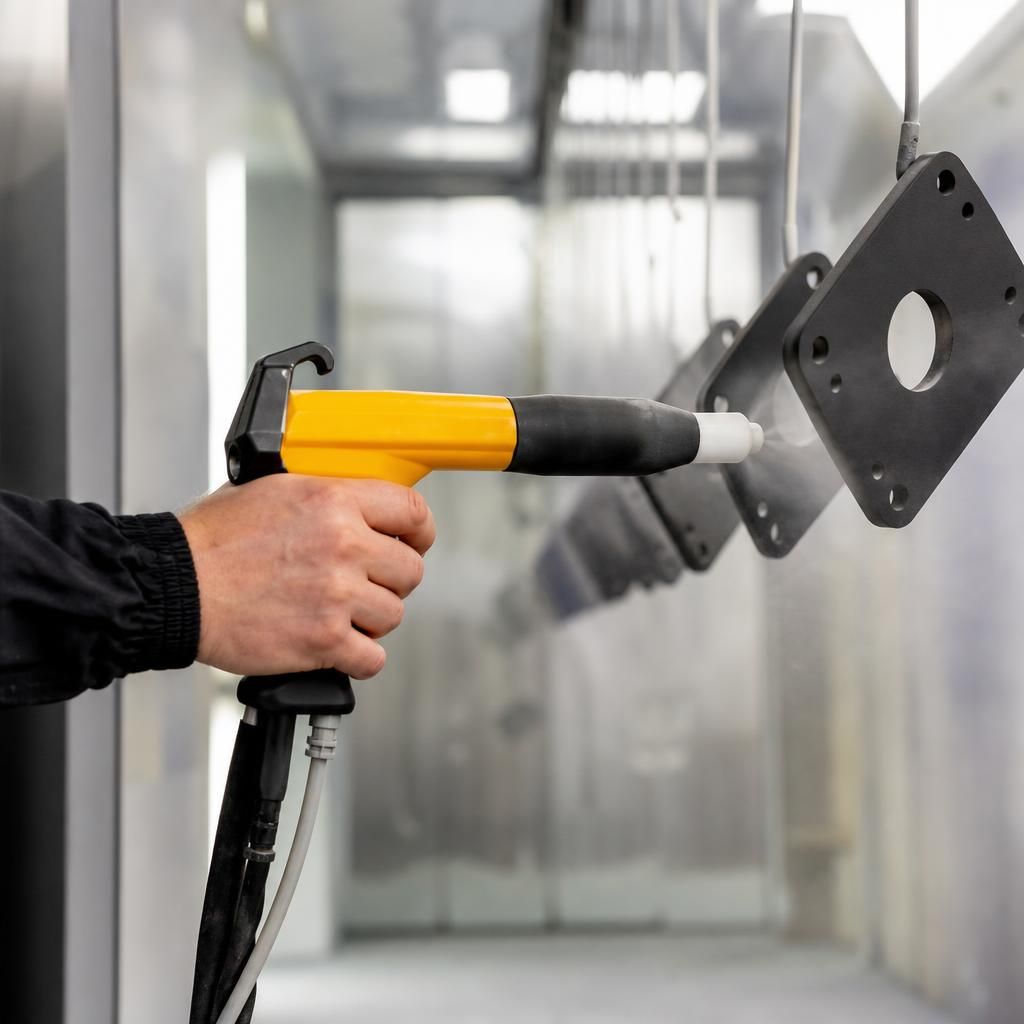
Gun nozzle selection is a practical part of electrostatic powder coating technology because it determines the shape and concentration of the spray pattern. A nozzle that matches the component can distribute powder more evenly across broad faces, profiles or edges, while an unsuitable pattern may increase overspray or leave areas requiring additional passes.
Flat-spray nozzles can support coverage across wider surfaces, whereas more focused patterns may help direct powder towards narrower sections and detailed features. The correct choice depends on the component geometry, powder characteristics and required film build. Standardising suitable nozzle configurations for recurring parts can also make operator adjustments more consistent and reduce unnecessary variation between batches.
Discuss your electrostatic powder coating requirements
Discuss your electrostatic powder coating requirements with our team and provide details of your components, powder specifications and production process. This can help establish which application approach and supporting equipment are appropriate for your coating needs.