

What specific quality control measures are in place to ensure consistent powder coating finishes?
Consistent powder coating finishes are achieved through controlled surface preparation, measured powder application and carefully managed curing, with checks at each stage. Finished components are inspected for coverage, colour, texture and visible defects before they are released for collection or delivery.
Consistent powder coating quality depends on controlling the complete job specification, not just checking the finished component. Important measures include confirming the required finish before production, identifying the substrate and component requirements, controlling powder and equipment records, and using repeatable inspection and testing criteria for every batch.
Specification review before processing
Each project should be assessed against the intended service conditions and appearance requirements. This includes confirming the metal type, component dimensions, areas that must remain uncoated, required colour and gloss level, coating system, and any performance requirements such as resistance to corrosion, impact, chemicals or wear. Clarifying these details before production reduces the risk of applying an unsuitable finish or treating components inconsistently.
Where appearance is particularly important, an agreed reference sample or finish standard can provide a practical comparison point. This helps distinguish an acceptable variation in texture or gloss from a genuine defect, especially when components are supplied in separate batches.
Powder and material traceability
Powder should be checked against the job specification before use, including its colour, finish type and suitability for the application. Records linking the powder to the relevant production batch help identify which material was used if a technical query arises later. Powder condition and storage are also relevant because contamination, moisture or unsuitable storage can affect flow, appearance and final performance.
Components should be kept identifiable throughout the process. Clear job references, batch separation and controlled handling reduce the chance of mixing different specifications or combining parts that require different finishes.
Equipment and process checks
Application equipment needs to be maintained and checked so that it operates consistently from one production run to the next. This includes inspecting spray equipment, confirming that settings are suitable for the powder and component, and checking that the booth and recovery systems are not introducing contamination. Equipment calibration and maintenance records provide evidence that the process is being managed rather than adjusted by guesswork.
Racking and masking are also quality-control considerations. Components need to be supported securely, with contact points selected to limit uncoated areas and prevent movement during handling. Masking must protect threads, mating faces, bores and other functional surfaces where coating could affect assembly or tolerances.
Controlled handling and segregation
Clean handling between preparation, coating and inspection helps prevent fingerprints, dust, impact marks and other contamination. Parts with different colours, textures or coating requirements should be separated during processing and storage. Finished components should be protected from abrasion and unnecessary contact while they are moved or prepared for collection or delivery.
Segregation is particularly important for specialist finishes and protective systems. A nylon coating, for example, should not be treated as interchangeable with a standard decorative finish because the required performance and handling criteria may differ. The inspection plan should therefore reflect the coating selected and the component’s intended use.
Testing beyond visual inspection
Visual checks are only one part of quality control. Depending on the specification, coated parts may also be assessed using appropriate tests for adhesion, coating build, cure, impact resistance or surface continuity. These checks help identify problems that may not be obvious from appearance alone, such as weak bonding, incomplete curing or inadequate protection at a critical area.
Test methods and acceptance criteria should be agreed with the customer where the component has specific technical or regulatory requirements. Testing should be carried out on representative parts or samples in a controlled way, with results recorded against the relevant job or batch.
Records and corrective action
A reliable quality system retains production information such as the job specification, material details, process observations, inspection findings and any agreed deviations. This creates traceability and makes it easier to investigate a recurring issue rather than treating each defect as an isolated event.
If a component does not meet the agreed criteria, it should be identified and segregated before release. The cause can then be assessed, whether it relates to the substrate, handling, contamination, equipment, material or process settings. Corrective action may involve rework, additional testing or rejection, depending on the condition of the part and the requirements of the application.
For B2B projects, these controls provide a more dependable basis for repeat production. They help ensure that batches are judged against the same specification, that functional areas remain usable, and that any variation is identified before components are returned to the manufacturer, fabricator, construction project or automotive application.
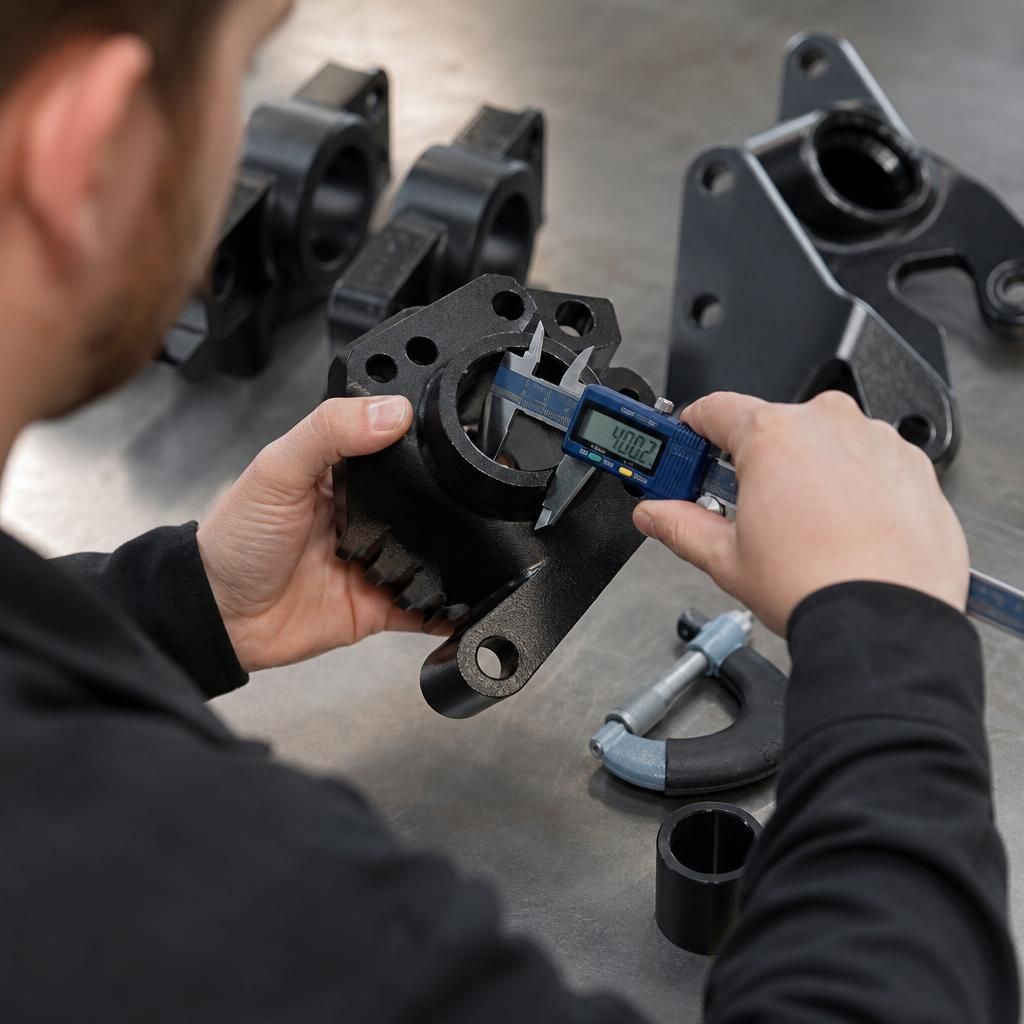
Dimensional and fit checks help confirm that a consistent finish has not affected component function. After coating, inspectors can check critical features such as threads, bores, mating faces, apertures and assembled joints against the agreed drawing or component requirements. Where coating build could influence fit, suitable gauges or a trial assembly can identify interference before the batch is released. This check complements visual inspection by confirming that parts remain usable as well as uniform in appearance.