

What are the environmental benefits of choosing powder coating over traditional painting methods?
Powder coating can have a lower environmental impact than traditional liquid painting because it uses little or no solvent, produces very low volatile organic compound (VOC) emissions and can reduce coating waste. Its durable finish may also extend the service life of coated metal components, reducing the need for repeated repainting and the associated use of materials.
Powder coating can offer environmental advantages over traditional liquid painting because its environmental impact is assessed across material use, application, curing, maintenance and disposal. The main benefits arise from avoiding solvent-based formulations, improving the proportion of coating that reaches the component and creating a finish that can remain serviceable for longer.
Reduced hazardous material handling: Many liquid paints rely on organic solvents to keep the coating fluid during application. Powder coating is supplied as a dry formulation, so it does not require the same solvent-handling arrangements associated with solvent-based paint systems. This can reduce the storage, transport and disposal of solvent-containing materials, subject to the specific powder formulation and site controls.
Efficient use of coating material: Powder that does not initially adhere to the part may be collected in suitably designed application systems. Depending on the equipment, colour and contamination controls, recovered powder may be reused or managed as a separate waste stream. This gives the process an opportunity to use material more efficiently than an application method where overspray becomes liquid paint waste immediately. Reclaim arrangements must be properly controlled, as recovered material is not automatically suitable for every finish or specification.
Fewer process emissions from application: Powder application does not produce the same solvent evaporation associated with conventional wet painting. This can simplify the management of extraction and air-quality controls for the coating area. It does not remove the need for responsible ventilation, filtration, personal protective equipment or waste management: fine powder still needs to be controlled to protect workers and prevent uncontrolled release.
Potentially lower packaging and waste impacts: Dry powder avoids the liquid carriers used in many paint products and can reduce the volume of solvent-contaminated containers and cleaning materials generated by a project. The actual result depends on product packaging, colour changes, cleaning procedures and how surplus or obsolete powder is handled. A coating provider should be able to explain how these waste streams are segregated and disposed of.
Longer maintenance intervals: A coating that protects a metal component against its intended exposure can reduce the frequency of stripping, preparation and recoating. This may lower the environmental burden associated with additional raw materials, transport, surface preparation and production downtime over the component’s working life. The benefit depends on correct specification: coating type, pretreatment, film thickness, edge coverage and the operating environment all affect service performance.
Important energy consideration: Powder coating normally requires heat to cure the coating, so the oven stage has an energy demand that should be included in any fair comparison with liquid paint. The environmental balance depends on the powder chemistry, component size, loading pattern, curing conditions and the efficiency of the equipment. Avoiding solvent emissions does not mean that powder coating is impact-free; responsible assessment considers both the application benefits and the energy used during curing.
For a meaningful comparison, businesses should assess the complete process rather than focusing on one feature. Relevant questions include whether the selected coating is suitable for the component and exposure, how overspray and contaminated powder are managed, what controls are used during colour changes, how curing energy is monitored and whether the finish can support the required service life. For industrial work, these decisions should be made alongside requirements for corrosion protection, appearance, dimensional tolerances and batch consistency.
Powder coating is therefore best viewed as a lower-impact option in many metal-finishing applications, rather than an automatically sustainable choice in every situation. Its environmental advantages are strongest when the coating is correctly specified, applied with effective material recovery, cured efficiently and managed through appropriate waste and quality-control procedures.
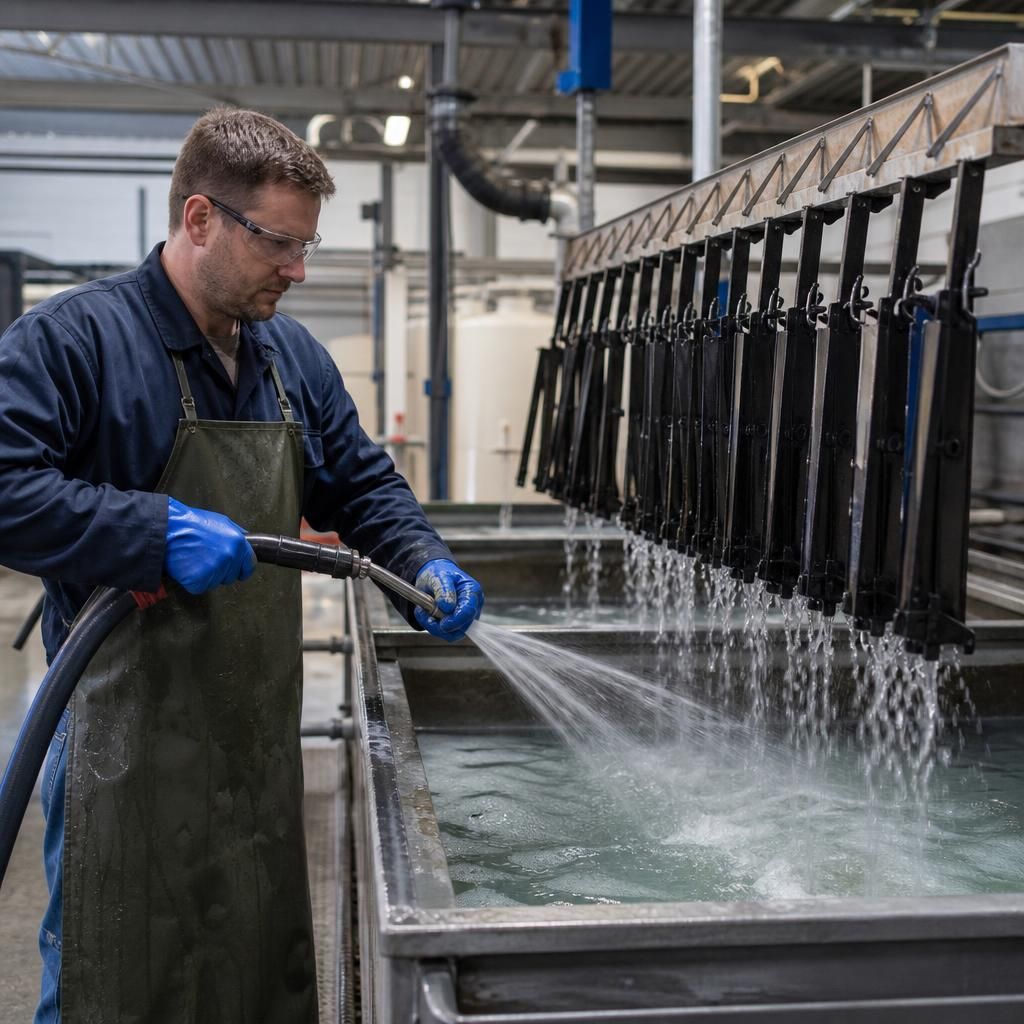
The environmental impact of powder coating also depends on the preparation carried out before application. Metal parts may require degreasing, rinsing or a conversion treatment to support adhesion and corrosion resistance. These stages can use water and treatment chemicals, so they should be managed with suitable segregation, containment and disposal procedures. This is an important part of comparing powder coating with traditional painting, because the coating material itself is only one stage of the overall finishing process.
For industrial projects, a responsible assessment should therefore consider the complete route from surface preparation to finished component. Powder coating can provide environmental advantages at the application stage, but those advantages are best maintained when preparation chemicals, rinse water and related waste streams are controlled as carefully as the powder itself.