

What types of industrial components benefit the most from powder coating?
Industrial components that benefit most from powder coating are metal parts exposed to handling, abrasion, moisture or demanding operating conditions, including machinery frames, fabricated assemblies, enclosures and automotive components. It provides a durable, uniform finish for both individual parts and repeat production batches, making it suitable where consistent protection and appearance are important.
The industrial components that benefit most from powder coating are repeat-manufactured metal parts requiring a consistent, hard-wearing finish, including brackets, guards, panels, supports, storage components and formed assemblies. Powder coating is particularly suitable where the component must tolerate regular contact, outdoor exposure, cleaning or general industrial use while maintaining an even appearance.
Components with broad, accessible surfaces are often well suited to the process. Steel and aluminium panels, covers, trays, brackets, machine guards and support structures can usually be coated efficiently because the powder can be applied evenly across the visible faces. A correctly prepared surface and controlled curing cycle produce a continuous finish that protects the substrate and gives the component its specified colour and texture.
- Brackets and mounting parts: These commonly experience contact during installation, adjustment and maintenance. A robust coating can reduce marking and surface deterioration during normal handling.
- Guards and protective barriers: These are exposed to knocks, dust, oils and repeated cleaning, making surface durability and easy maintenance important.
- Panels, covers and trays: Powder coating provides a uniform decorative and protective finish across visible surfaces and can help maintain consistency between parts made in the same batch.
- Racking, shelving and storage components: These parts may be subject to loading, impact and frequent movement, so the coating specification should reflect the severity of use.
- Metal supports and structural accessories: These can benefit where the coating needs to cover edges, faces and less visible areas without relying on a separate liquid-paint system.
Repeated production components are another strong application. When a manufacturer produces the same part or product range regularly, powder coating supports repeatability in colour, gloss and film coverage. Batch processing can also make it easier to define a consistent preparation, application and curing specification. The component design, metal grade, coating system and required finish should be agreed before production so that the same standard can be applied from one batch to the next.
Components used outdoors or in areas where corrosion is a concern can also be suitable, provided the coating system matches the environment. Outdoor fittings, agricultural parts, construction accessories and external supports may face rain, condensation, dirt and fluctuating temperatures. Powder coating is not a substitute for appropriate metal preparation: cleaning, conversion treatment and, where required, a primer or multi-coat system are essential to help the finish adhere and protect the substrate.
Aluminium and other non-ferrous components may benefit from powder coating when the surface is properly cleaned and pretreated. Aluminium can have an oxide layer and may contain residues from forming or machining, so preparation must be compatible with the alloy and the intended service conditions. Steel components likewise require attention to mill scale, rust, oil, weld residue and sharp edges before coating.
Component geometry affects whether powder coating is the right choice and how it should be applied. Deep recesses, narrow channels, internal corners and closely spaced features can create a Faraday cage effect, where the electric field makes it harder for powder to reach certain areas. Drainage and vent holes may also be needed in hollow parts to allow pretreatment chemicals and air to move through safely. Designers should consider access for spray application, hanging points, masking requirements and the removal of masking materials after curing.
The process is most appropriate for parts that can tolerate the curing temperature specified for the powder system. Heat-sensitive materials, bonded assemblies, components containing seals or pre-installed electronics may require masking, assembly after coating or a different finishing method. Threads, bearing seats, electrical contact points and close-tolerance faces may need protection because even a controlled coating thickness can affect fit or function.
Surface condition is particularly important on welded or fabricated components. Weld spatter, sharp edges, trapped oils and outgassing from porous sections can cause pinholes, craters, poor adhesion or uneven coverage. Components should therefore be designed and prepared with clean welds, suitable edge treatment and adequate access for pretreatment. Castings and porous materials may need additional preparation or a suitable outgassing procedure before the powder is applied.
The best candidates are therefore not defined by size or appearance alone. A component is likely to be a strong powder-coating candidate when its substrate is suitable, its geometry allows reliable coverage, its operating temperature is compatible with curing, and the required protection is understood. For a production specification, assess the metal type, exposure conditions, expected abrasion or impact, required appearance, tolerances and whether the component will be assembled before or after coating.
For manufacturers and fabricators, providing accurate drawings, material details, masking points, finish requirements and batch information helps establish a coating process suited to the component rather than applying a generic finish. This is especially important for parts combining visible surfaces, tight tolerances and areas that must remain uncoated for electrical, mechanical or assembly purposes.
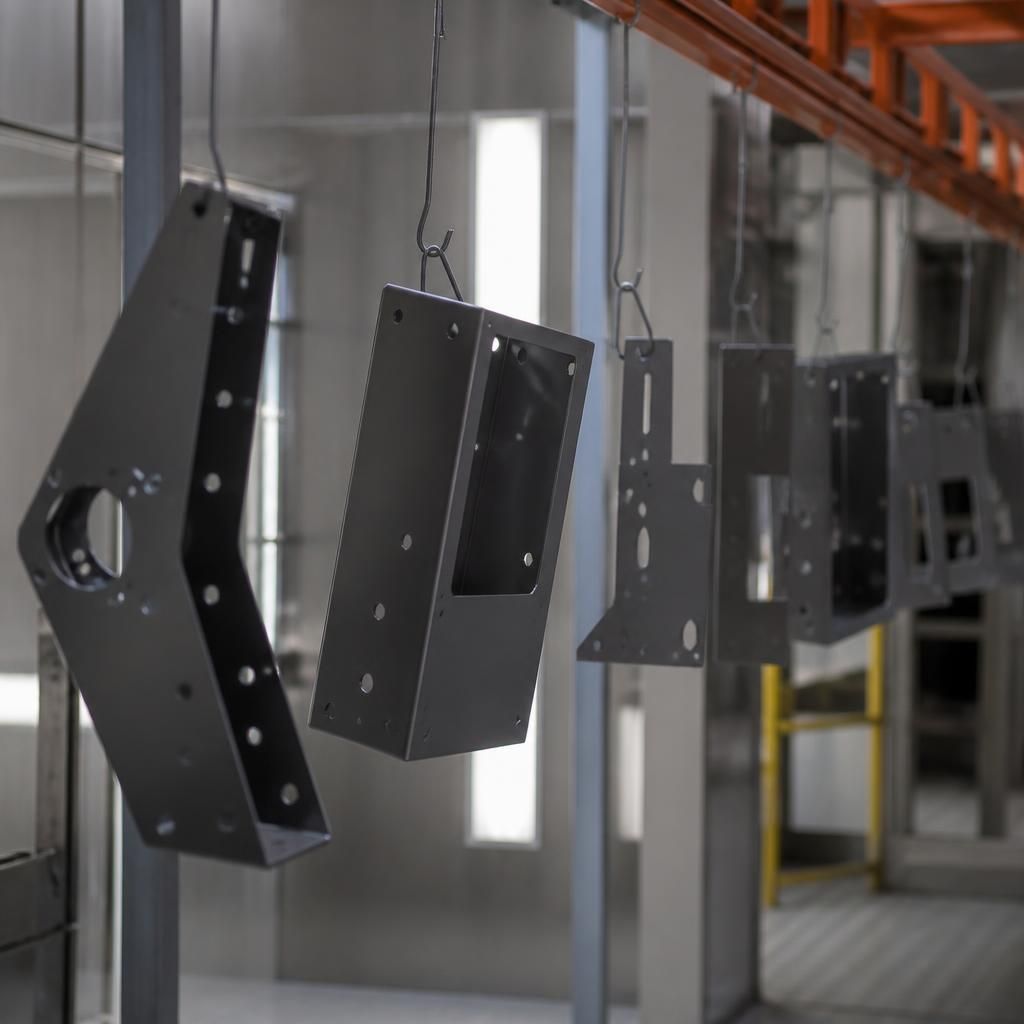
Components often benefit most when they can be powder coated before final assembly. Treating individual metal parts separately gives the applicator better access to exposed faces, edges and fixing areas, while avoiding accidental coating of seals, electronics, bearings or other materials that may not tolerate the curing process.
This approach is useful for fabricated housings, machine guards, brackets and modular assemblies where different parts have different coating requirements. Drawings should identify threads, contact points, close-tolerance faces and masking areas so the finished coating supports assembly rather than affecting fit or function.