

What pretreatment methods are crucial for ensuring optimal powder coating adhesion and longevity?
Optimal powder coating adhesion and longevity depend on thorough cleaning, suitable mechanical preparation and chemical conversion treatment. Degreasing removes oils and contaminants, abrasive blasting or other surface profiling removes corrosion and creates a suitable key, while treatments such as zinc phosphate improve adhesion and help protect the metal against corrosion beneath the coating.
Crucial pretreatment is a controlled sequence that makes the metal chemically clean, physically suitable and stable before powder is applied. The best method depends on the substrate, service environment, required corrosion resistance and powder system; no single treatment is appropriate for every component.
Substrate-specific preparation is the first consideration. Mild steel, galvanised steel, aluminium and stainless steel have different surface chemistries and can require different cleaning agents, activation steps and conversion coatings. Galvanised surfaces may need treatment that avoids attacking the zinc layer, while aluminium requires careful control because its natural oxide film can interfere with bonding. Stainless steel is comparatively resistant to corrosion, but residues, handling contamination and embedded particles can still affect adhesion.
Chemical conversion treatment changes the outer surface into a more receptive layer for the powder coating. Iron phosphate can provide a suitable base for many general-purpose applications, while zirconium- or titanium-based systems may be selected where a thin, low-residue conversion layer is preferred. Silane-based treatments can also improve the interface between the metal and coating. Chromate-based processes have historically been used for certain substrates, but their use is subject to environmental, health and regulatory controls, so the treatment must be selected with the specification and applicable requirements in mind.
Rinsing and drying are part of the pretreatment, not secondary tasks. Residual cleaner, salts or conversion chemicals can cause blistering, loss of adhesion, staining or premature corrosion. Components should therefore pass through a suitable rinse sequence and be dried thoroughly before powder application. Particular attention is needed around joints, folded sections, threaded holes and enclosed areas where liquid can remain trapped. Water quality, rinse condition and carry-over between process stages all influence the consistency of the finished surface.
Surface profile and edge condition also affect coating performance. A surface that is excessively smooth may provide insufficient mechanical key, whereas an overly aggressive profile can increase powder consumption and leave high points vulnerable to incomplete coverage. Sharp edges can produce a thinner coating film than adjacent flat areas, so edge preparation and component design should be considered alongside the chosen pretreatment. Welds, heat-affected zones, cut edges and areas containing fabrication residue deserve particular inspection because they often behave differently from the surrounding metal.
Process control determines whether a suitable method delivers repeatable results. Important controls include:
- cleaner concentration, temperature and contact time;
- the condition and contamination level of rinse stages;
- conversion-treatment concentration and application conditions;
- the time between final preparation, drying and powder application;
- drying temperature and the removal of moisture from recesses; and
- inspection for residue, flash rust, staining, powdery deposits or untreated areas.
These controls should be matched to the metal and the coating specification rather than applied as a fixed recipe. A treatment suitable for indoor steelwork may not provide the same protection for exterior fabrications, components exposed to road salts or parts operating in a chemically aggressive environment.
Compatibility with the powder system matters as well. Pretreatment must leave a surface that supports the selected powder chemistry and curing conditions. Contamination from oils, silicone products, marker pens, masking materials or workshop handling can compromise the interface even when the main treatment line is correctly operated. Components should be protected from recontamination after preparation and handled using clean methods before coating.
For complex or high-value components, the appropriate process is normally confirmed through a specification review and, where necessary, trial panels or test pieces. Adhesion testing, visual inspection and corrosion testing can help identify whether the failure originates in cleaning, conversion treatment, drying, powder application or curing. This is more reliable than treating poor adhesion as a powder problem alone.
In practical terms, optimal longevity comes from matching the pretreatment sequence to the substrate and exposure conditions, then controlling every stage through to final inspection. Thorough preparation, correct chemical selection, effective rinsing and disciplined handling work together; a strong result cannot be secured by relying on the conversion coating or powder layer in isolation.
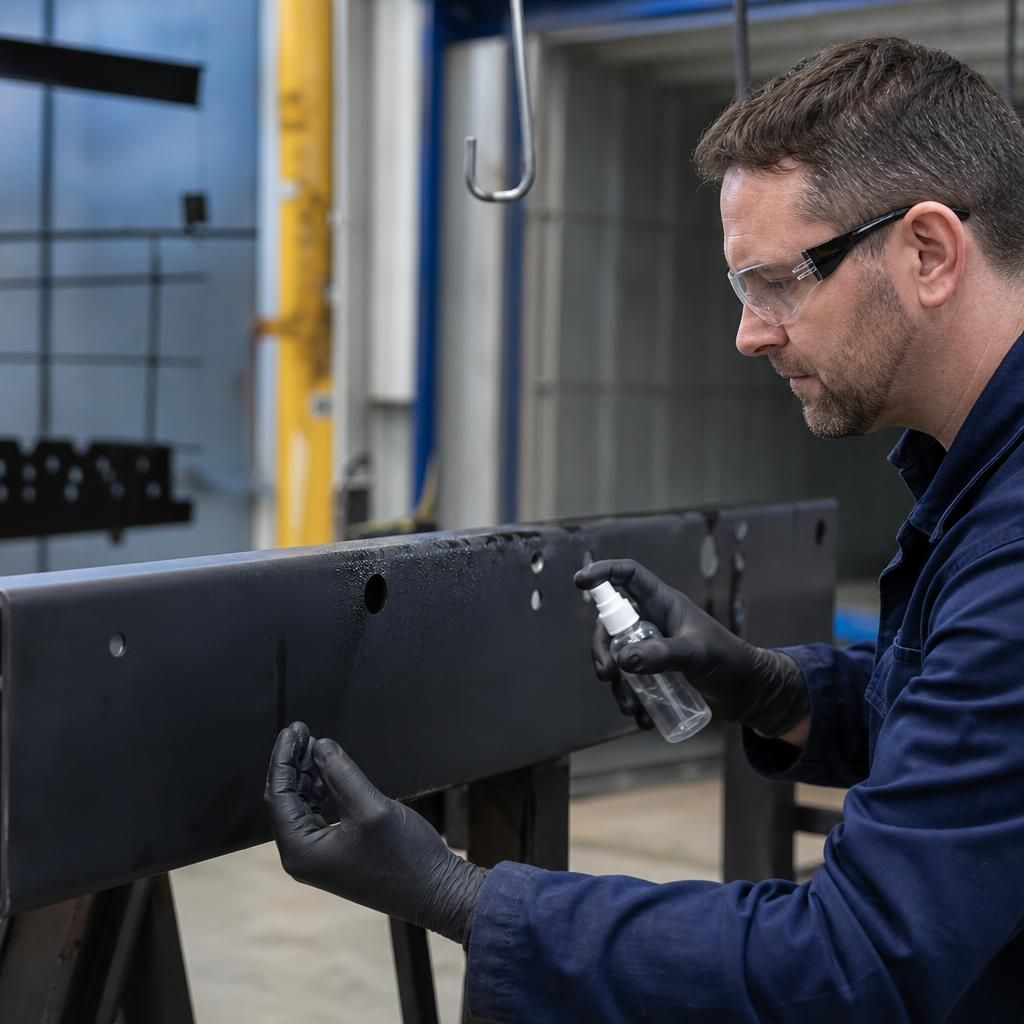
Pretreatment verification is crucial because a surface can appear clean while still carrying residues that reduce powder coating adhesion. Visual inspection should be supported by practical checks for remaining oil, cleaner, salts, moisture, flash rust and untreated areas before the component moves to powder application.
A water-break check can help identify uneven surface contamination after cleaning: water should spread consistently rather than retreating into isolated beads on areas intended for coating. On components exposed to corrosive conditions, soluble-salt checks may also be appropriate, particularly where fabrication, storage or handling could have introduced contaminants. These checks do not replace the specified pretreatment, but they help confirm that it has produced a suitable surface.
Inspection should cover welds, corners, recesses and areas that are difficult to drain or dry, as these locations commonly retain residues. Recording the result of the checks alongside the treatment conditions provides useful evidence that the chosen method is being applied consistently and helps identify whether a later adhesion problem originated before powder application.