

What are the environmental advantages of using powder coating over traditional liquid painting methods?
Powder coating generally has lower volatile organic compound (VOC) emissions than traditional liquid painting because it is applied as a dry powder rather than a solvent-based liquid. It can also reduce material waste through powder recovery and provide a durable finish that may require fewer recoating cycles over the component’s service life.
Powder coating can have a lower overall environmental impact than traditional liquid painting because it produces fewer solvent-related residues, supports more controlled application and avoids several waste streams associated with liquid paint handling. The actual advantage depends on the powder formulation, curing requirements, pretreatment system and how responsibly the coating line manages energy, water and waste.
Reduced use of cleaning solvents
Liquid painting commonly requires solvents for thinning, equipment cleaning and removing overspray from tools and application equipment. These activities can create contaminated wipes, used solvent and liquid residues that require controlled storage and disposal. Powder coating is supplied as a dry material, so the associated cleaning process generally does not depend on the same volume of solvent-based products. This can reduce the environmental risks associated with solvent manufacture, transport, storage and disposal.
Fewer liquid waste streams
Liquid painting can produce waste from mixed paint, hardeners, thinners, contaminated containers and wash-out materials. Once mixed, some liquid coatings have a limited usable life, making unused material difficult to retain for later work. Powder is stored in a dry form and is not combined with a separate liquid hardener immediately before application. This can simplify material management and reduce the risk of disposing of partially used mixed coating.
More controlled material use
Powder coating equipment applies charged particles to an electrically prepared metal surface, allowing the coating to be directed towards the component rather than relying solely on atomised liquid droplets. This can improve control of the application process and reduce airborne overspray when the equipment, booth and extraction system are correctly set up. Recovered material may also be managed through an appropriate reclamation system, although its suitability depends on colour, chemistry, contamination and the required finish.
Lower risk of contamination from liquid spills
Dry powder does not flow across a workshop floor in the same way as liquid paint. A spill still needs to be contained and cleaned safely, but it is less likely to spread through drains or soak into absorbent surfaces as a liquid coating would. Good housekeeping remains essential because airborne powder must be controlled and collected using suitable filtration and cleaning methods.
Potential lifecycle benefits
The environmental assessment should include the component’s full service life, not just the coating stage. A finish that remains protective and visually acceptable for longer can reduce the need to strip, transport and refinish the same metal part. It can also reduce the consumption of replacement components where corrosion protection is an important design requirement. These benefits vary according to the substrate, pretreatment, coating specification, operating conditions and the quality of application.
Considerations that can reduce the advantage
Powder coating is not automatically environmentally preferable in every application. The coating must be heated in an oven, so curing consumes electricity or gas. Energy use is affected by oven design, insulation, airflow, loading, cure temperature and whether the process is matched to the component. A coating that requires excessive curing energy may reduce the environmental benefit compared with a suitable lower-energy alternative.
Pretreatment also needs to be included in any comparison. Degreasing, rinsing and conversion treatments can use water and chemicals, and may generate wastewater or treatment sludge. Responsible industrial coating therefore requires controlled chemical storage, appropriate effluent management and correct disposal of pretreatment residues. Selecting a suitable pretreatment system is important for both coating performance and environmental control.
Powder selection matters as well. Different formulations have different curing temperatures, raw-material profiles and end-of-life considerations. The correct choice should be based on the component’s exposure conditions and performance requirements rather than assuming that every powder product has the same environmental profile.
How to make a sound comparison
- Compare the complete process, including pretreatment, application, curing, cleaning and waste management.
- Check the coating’s curing requirements and whether the oven is operated efficiently for the component size and batch.
- Ask how unused powder, contaminated material, filters and packaging are segregated and handled.
- Review the management of pretreatment water, chemical residues and sludge.
- Consider the expected service conditions and whether the specified finish is appropriate for the metal and environment.
For manufacturers, fabricators and other industrial users, the fairest comparison is therefore between complete, properly managed processes rather than between powder and liquid material in isolation. Powder coating can reduce solvent-related waste and simplify environmental controls, while responsible pretreatment, energy management and waste handling determine how much of that potential benefit is achieved.
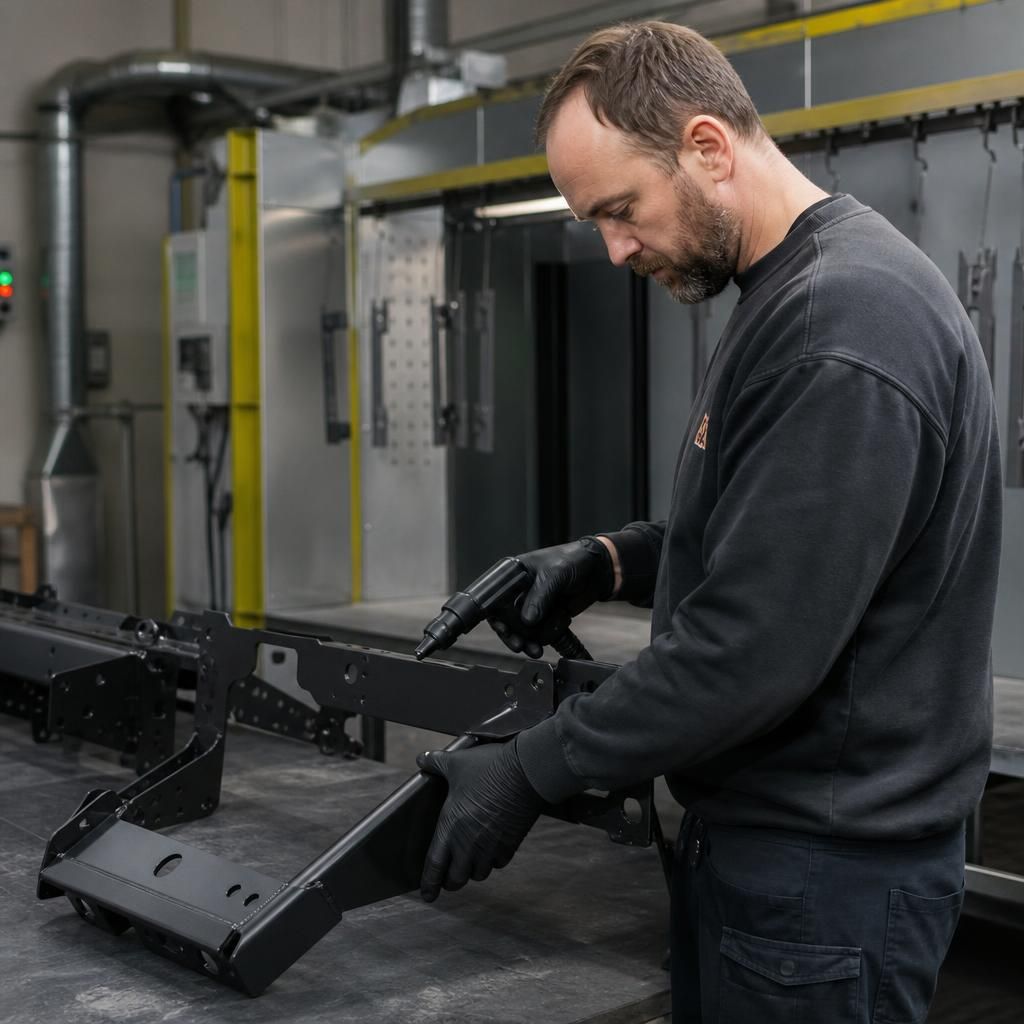
Reducing rework is another environmental consideration when comparing powder coating with liquid painting. A component that meets the required finish at the first application avoids the additional powder or paint, preparation, cleaning and curing associated with stripping and recoating. Achieving this depends on accurate pretreatment, suitable powder selection, consistent application and correct oven curing, so environmental performance is closely linked to process control as well as the coating material itself.