

What materials can be powder coated, and are there any limitations to the types that can undergo this process?
Powder coating is primarily suited to conductive metal components such as steel, aluminium, iron and galvanised metal, provided the substrate can withstand the curing temperature. Key limitations include heat-sensitive materials, heavily contaminated or poorly prepared surfaces, and non-conductive substrates that require specialist powder-coating methods.
Material suitability for powder coating is determined by the substrate’s electrical behaviour, heat tolerance, surface condition and geometry. A component may be technically coat-able yet unsuitable for a standard production process if it cannot be grounded, contains trapped contamination, has tight dimensional tolerances or cannot tolerate the curing cycle.
Commonly suitable metal substrates
Most industrial powder coating is carried out on fabricated or cast metalwork, including mild steel, stainless steel, aluminium, cast iron and other ferrous or non-ferrous alloys. These materials can usually be prepared, electrically earthed and heated consistently. The precise alloy still matters: aluminium grades can differ in their response to pre-treatment, while cast materials may contain pores that release gases during heating and create pinholes or small surface defects.
Galvanised and zinc-coated steel can also be processed, but it requires suitable preparation. The surface may need cleaning, light abrasion or a compatible pre-treatment, depending on its condition and the coating specification. Newly galvanised surfaces, aged weathered coatings and damaged areas should not automatically be treated in the same way. The condition of the zinc layer, the presence of white corrosion products and the required corrosion protection all influence the preparation route.
Surface condition is as important as the base material
Powder cannot conceal every defect in the underlying component. Oil, grease, cutting fluids, rust, mill scale, weld spatter, silicone, adhesive residue and moisture can interfere with adhesion or produce visible faults. Existing paint or powder coating may need to be removed where it is loose, incompatible, excessively thick or masking corrosion.
Welded fabrications should be free from sharp projections and excessive spatter. Crevices, overlapping joints and unsealed hollow sections deserve particular attention because they can retain chemicals or moisture during pre-treatment and curing. Enclosed sections may also need suitable drain and vent holes. Without them, trapped air or vapour can affect the finish, while sealed cavities can present a safety risk when heated.
Components that need additional planning
- Castings: porous cast aluminium, iron and similar materials can release trapped air or process residue during curing. Outgassing may cause bubbles, pinholes or craters, so trial work and an appropriate preparation method may be advisable.
- Assemblies: powder coating is generally easier to control on separate components than on assembled items. Hinges, bearings, seals, electrical parts, plastics and lubricated mechanisms may be damaged by heat or contaminated by pre-treatment chemicals.
- Threaded and close-fitting areas: powder adds a measurable film thickness. Threads, bores, sliding faces, locating surfaces and precision interfaces may need masking, plugs or a coating exclusion zone to remain within tolerance.
- Large or complex fabrications: the item must fit safely through the preparation, spray and curing stages. Deep recesses, Faraday cage areas, narrow channels and internal faces can be harder to coat evenly than exposed surfaces.
- Thin sheet and delicate parts: these may distort if heated unevenly or handled incorrectly. The design, support method and curing profile should be considered before processing a production batch.
Non-metallic materials and specialist applications
Standard powder coating is not normally suitable for ordinary plastics, rubber, wood, glass or composite materials because many cannot withstand the heat used to melt and cure the powder, and non-conductive surfaces do not behave like an earthed metal workpiece. Specialist low-temperature powders, pre-heated components, conductive primers or alternative application methods can sometimes extend the range, but these are separate process decisions rather than a default option.
Some engineered plastics and heat-resistant composites may be considered after checking their maximum service temperature and dimensional stability. A coating specialist would normally require details of the material grade, previous processing, intended use and any permitted temperature limits before recommending a route. If the component cannot be reliably prepared, grounded and cured, wet paint, plating, anodising or another finish may be more appropriate.
Design and specification checks
Before coating, provide drawings or samples showing critical dimensions, masking requirements, finish areas and any surfaces that must remain uncoated. It is also useful to identify lifting points, drainage holes, threaded features, welds, inserts and materials joined to the main substrate. These details help determine whether the part should be coated as one piece or split into separate components.
The required environment also affects material assessment. Indoor decorative work, exterior structural components, areas exposed to moisture and parts subjected to chemicals or abrasion may require different pre-treatment and powder specifications. The base metal, preparation standard and coating system must therefore be considered together rather than selected independently.
For an industrial coating assessment, the most useful information is the substrate and alloy, component dimensions and weight, current surface condition, intended environment, required colour or texture, dimensional tolerances and any areas that must remain free of coating. A sample or representative batch can help identify issues such as outgassing, adhesion, masking and coverage before larger quantities are processed.
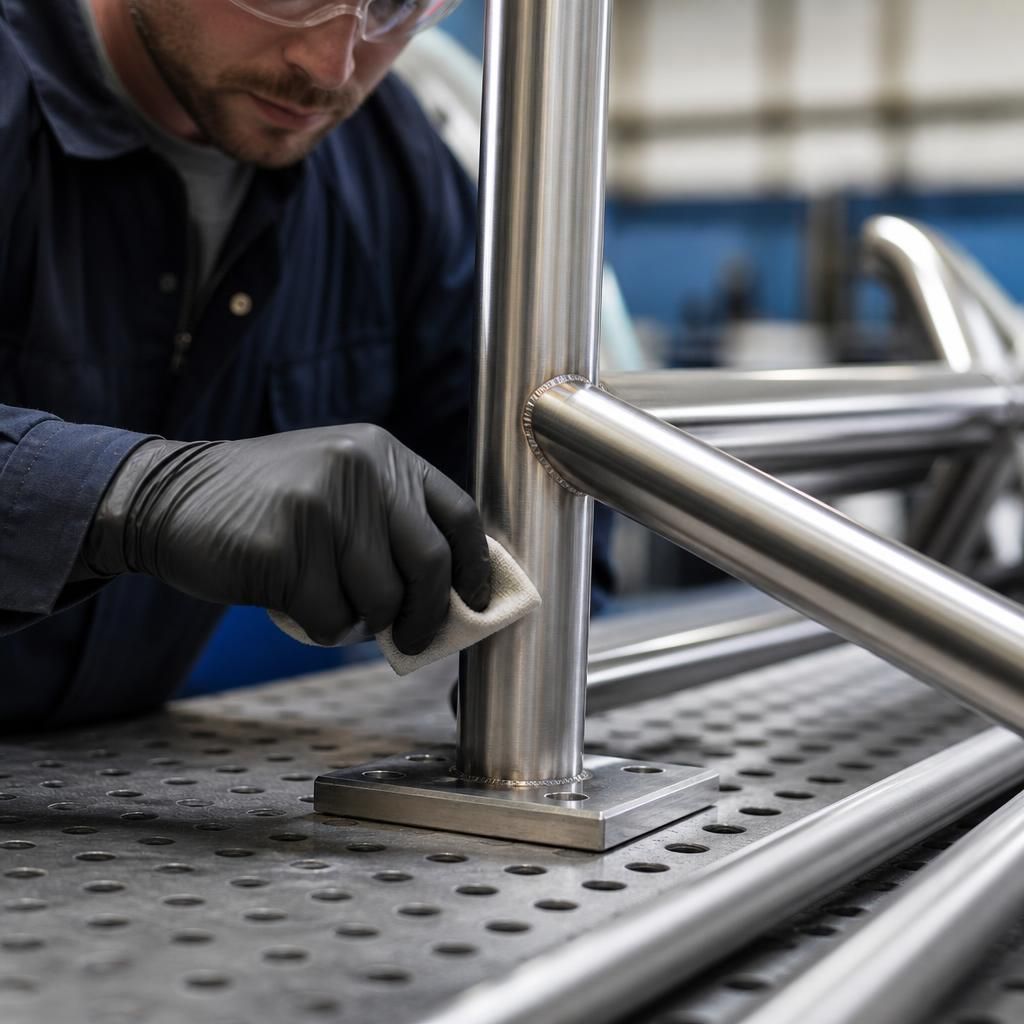
Stainless steel can be powder coated, but its naturally passive surface is not automatically ready for coating. Thorough degreasing and a compatible pre-treatment are important because residues, weld discolouration and the steel’s surface condition can affect adhesion. The stainless grade and any previous treatment should be identified before selecting the preparation method.
This is also relevant when stainless steel is joined to other metals. Each material may respond differently during preparation and curing, so masking, separation or a trial component may be needed to confirm the finish and avoid problems at welds, joints or exposed edges.
Discuss Your Material’s Powder Coating Suitability
Discuss your material and component requirements with the powder coating team to assess substrate suitability, preparation needs and any masking or dimensional considerations. Provide a drawing, sample or representative component where possible to support an informed coating recommendation.