

What pre-treatment processes are critical for ensuring optimal powder adhesion and finish quality?
Critical pre-treatment includes thorough degreasing to remove oil, grease and contaminants, followed by rinsing and drying to prevent defects. Depending on the metal and service conditions, abrasive preparation or chemical conversion may then be used to improve surface keying, corrosion resistance and consistent powder adhesion.
Optimal powder adhesion and finish quality depend on more than removing visible dirt. Effective pre-treatment must produce a chemically and physically suitable surface, deal with defects in the component itself, and leave the metal in a controlled condition until powder is applied and cured. The correct process varies according to the substrate, previous use, fabrication method, required corrosion protection and service environment.
Initial inspection and substrate assessment are critical because pre-treatment cannot compensate for unsuitable or contaminated material. Each component should be checked for the metal type, existing coatings, corrosion, mill scale, weld residues, sharp edges, trapped contaminants and areas that may be difficult to reach. Aluminium, galvanised steel, mild steel and previously coated parts can require different preparation routes. Any oil, sealant, adhesive, marking ink or temporary corrosion inhibitor should be identified before the process is selected, as some substances can interfere with later stages or create localised defects.
Fabrication details also influence the result. Weld spatter, grinding dust, burrs and loosely attached particles can remain beneath the powder film or create raised imperfections. Welds and joints may retain moisture or process residues, while enclosed sections and overlapping folds can hold treatment chemicals after processing. Components should therefore be designed, supplied and presented in a way that allows drainage, access and complete processing. Where appropriate, drainage holes, suitable racking points and open joint arrangements help prevent chemicals becoming trapped and later causing staining, blistering or loss of adhesion.
Mechanical preparation is used where the substrate contains scale, corrosion, old coating or fabrication residue that chemical treatment alone may not remove. Blasting, abrading or controlled grinding can expose sound metal and create a suitable surface profile for the powder film to grip. The preparation must be consistent: excessive abrasion can leave an unnecessarily rough profile that shows through the finish, while insufficient preparation may leave weakly attached material beneath the coating. Grinding marks, sharp transitions and feathered edges should be assessed because the powder follows the underlying surface rather than disguising major preparation defects.
After mechanical work, loose dust must be removed without recontaminating the surface. Abrasive media, workshop dust and handling residues can otherwise become embedded in the coating or cause small pinholes and surface irregularities. The prepared part should also be protected from bare-hand contact, dirty gloves, oily equipment and uncontrolled storage conditions. Even a correctly prepared surface can be compromised if it is handled or stored carelessly before coating.
Chemical conversion treatment can provide an additional layer of protection between the metal and the powder coating. Its purpose is not simply to improve appearance; it can help stabilise the surface and support corrosion performance at areas where the coating film may be thinner or locally damaged. The chemistry must be compatible with the substrate and the powder system. Treatment concentration, contact time, temperature, rinsing and final drying all need to be controlled, because residues or incomplete reaction can produce adhesion problems and visual variation.
Particular attention is needed when coating mixed materials or components that include dissimilar metals. Galvanised surfaces, aluminium and steel may respond differently to the same preparation system. A process suitable for one substrate may stain another, leave an unsuitable surface condition or fail to address the relevant corrosion mechanism. Material identification should therefore take place before production rather than relying on appearance alone.
Rinsing quality and water management are often decisive in preventing later defects. Treatment residues, dissolved salts and loose process chemicals must not remain on the component. Rinse stages need to be kept sufficiently clean for their purpose, with attention to water quality and carry-over between tanks or stages. Poor drainage can leave concentrated residue in corners, seams and recessed areas even where the main faces appear clean.
Drying must be complete, including inside hollow sections, around joints and beneath overlaps. Remaining moisture can lead to blistering, pinholing, flash corrosion or inconsistent curing behaviour. Components should not be left in conditions where condensation can form after drying. The interval between final preparation and powder application also matters: exposed metal can oxidise or collect contamination, particularly in humid or dusty surroundings.
Edge, weld and geometry preparation should be considered separately from general surface cleaning. Powder tends to pull away from sharp edges during application and curing, potentially leaving reduced film coverage at those points. Excessively sharp corners may therefore need to be eased during fabrication. Welds should be free from spatter and poorly bonded residue, while porous welds or crevices may release gas during curing and cause pinholes or outgassing defects. Where a component is prone to this problem, the preparation and curing approach should be agreed before coating begins.
Masking and racking are also part of pre-treatment control. Areas that must remain uncoated, such as threads, bearing seats, earthing points or close-tolerance interfaces, need suitable masking before the relevant process stages. Masking materials must withstand the preparation and curing conditions without shedding debris or allowing chemical ingress. Racking should provide reliable electrical contact for electrostatic application while minimising contact marks and ensuring that all surfaces can be treated, coated and cured properly.
Finally, the process should be verified rather than judged only by the final appearance. Useful controls include checking surface cleanliness, inspecting prepared edges and welds, confirming that parts are dry, recording process conditions and examining trial or first-off components before a batch proceeds. Adhesion testing, film-thickness checks and visual inspection can help identify whether a problem originates in preparation, application or curing. If poor adhesion is found, simply applying more powder will not correct the underlying cause; the surface condition and process sequence need to be investigated.
For batch and large-scale work, consistency between components is as important as the preparation method itself. Clear specification of the substrate, preparation standard, masking requirements, acceptable surface condition and inspection points reduces variation between loads. This is particularly important where parts come from different fabrication runs or include different combinations of welds, folds and recessed sections.
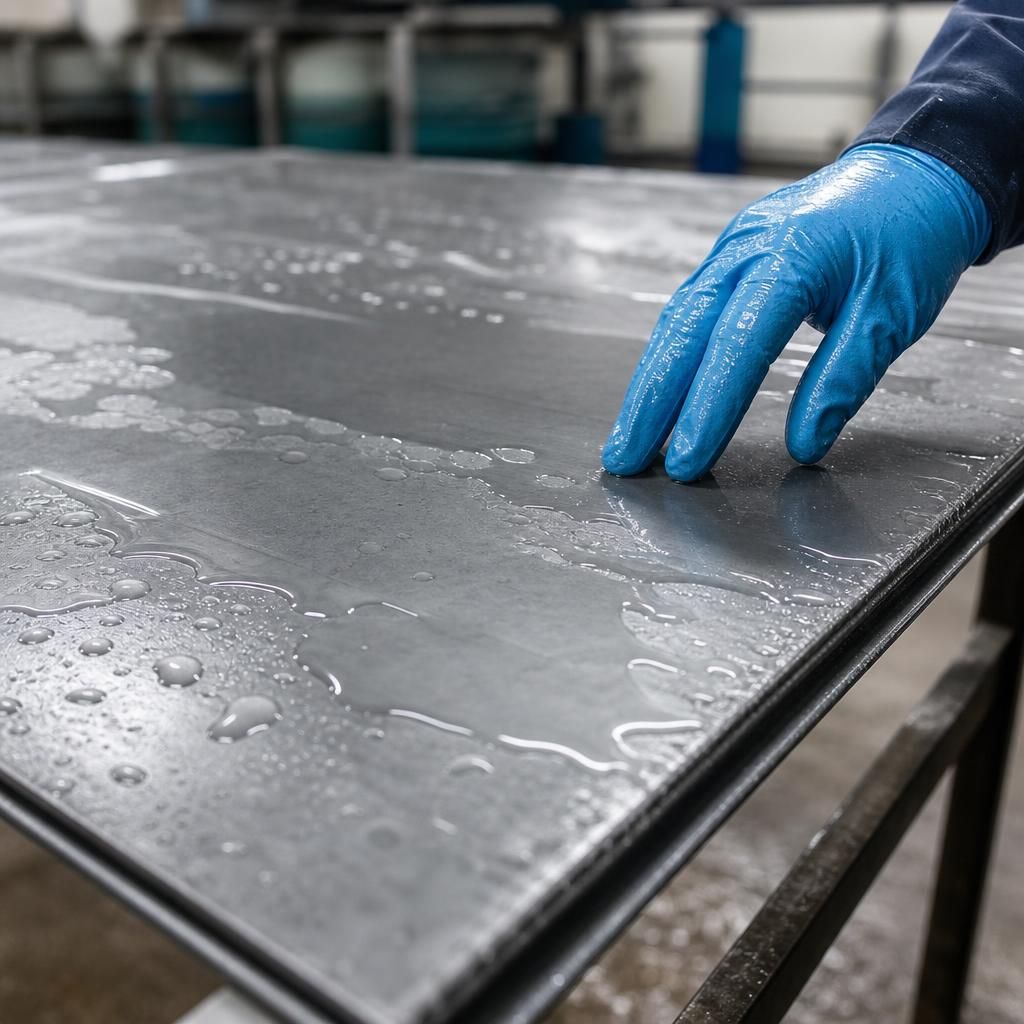
A water-break assessment is a practical check of whether a metal surface remains contaminated after cleaning. When the surface is rinsed, clean metal should usually retain a continuous film of water. If water pulls back into isolated droplets or exposed patches, oil, grease or another hydrophobic residue may still be present and could interfere with powder adhesion.
This check can help identify areas requiring further cleaning before conversion treatment or coating, particularly on broad, accessible surfaces. It is not a substitute for the agreed pre-treatment specification: textured, porous, oxidised or chemically treated substrates may need additional inspection or testing. Used alongside process records and sample evaluation, it helps distinguish incomplete cleaning from later application or curing problems.
Discuss Your Powder Coating Pre-Treatment Requirements
Discuss your component materials, existing surface condition and required performance with the powder coating team to identify a suitable pre-treatment route. Provide drawings, photographs or sample parts where useful so the preparation requirements can be assessed before production.