

What is the process for transitioning from small parts coating to large-scale projects?
Transitioning from small parts coating to a large-scale project involves reviewing the component design, substrate, required finish and production volumes before defining a repeatable coating specification. The process then moves through agreed preparation, application and curing controls, with initial batches checked against the specification before the workflow is scaled for consistent production.
Transitioning from small parts coating to a large-scale project requires the coating method to become a controlled, repeatable production system. The main change is not simply increasing the number of components; it is coordinating part handling, racking, masking, coating, curing, inspection, packaging and transport so that every batch follows the same agreed process.
1. Confirm the production requirements
The project should begin with a detailed review of the parts and the expected production pattern. Useful information includes technical drawings, component dimensions, metal type, existing surface condition, areas that must remain uncoated, required appearance and any performance requirements. It is also important to identify whether parts will arrive as a regular production stream, in mixed batches or as a single large order.
This information allows the coating provider to identify practical constraints before production starts. Large components may need different hanging points or handling arrangements from small parts, while awkward shapes can affect powder access, drainage during preparation and the position of contact marks. Threads, machined faces, bores and mating surfaces may require masking or a defined allowance for coating thickness.
2. Convert the agreed finish into a production specification
A large-scale project needs a clear specification that can be used by everyone involved. This normally records the component identification, colour or finish reference, preparation requirements, masking points, coating material, target film characteristics and curing requirements. Where several part types are involved, each should be linked to the relevant instructions rather than relying on informal descriptions such as “standard black” or “match the previous batch”.
The specification also provides a basis for dealing with changes. If the substrate, design, powder type or required appearance changes during the project, the effect on preparation, application and curing should be assessed before the revised parts enter the main production flow.
3. Plan loading, racking and line movement
Small components can often be grouped efficiently, whereas large parts may need individual suspension, additional support or a particular orientation. Racking must hold the parts securely while allowing suitable access for coating and enabling electrical contact where required. The arrangement should also reduce shadowing, contact points and the risk of parts touching one another during movement.
Part orientation matters throughout the process. Hollow sections may need appropriate positioning to prevent trapped treatment fluid, while complex assemblies may need to be supplied as separate pieces if their construction would obstruct preparation or curing. Planning these details in advance helps prevent rework caused by inaccessible areas or unsuitable contact marks.
4. Establish a batch and identification system
At higher volumes, traceability becomes more important because parts may be processed over several runs. Components should be identifiable from receipt through to finished dispatch, with batch information recorded against the agreed specification. Separating different finishes, part numbers and customer orders reduces the risk of mixing components or applying the wrong instructions.
A practical production plan should also consider the order in which parts are processed. Grouping compatible components can reduce unnecessary changes between colours or coating types, but this must be balanced against the need to keep customer batches and part references separate. Any split delivery or partial completion should be documented clearly.
5. Use controlled checks as production expands
Checks should continue after the first approved production run. Operators and inspectors can assess the parts at defined points, including after preparation, after coating and before packing. Typical checks include coverage of visible and specified surfaces, consistency of appearance, masking accuracy, contamination, damage, curing and the condition of contact points.
Large-scale work also benefits from agreed criteria for acceptable variation. Powder coating is applied to three-dimensional components, so visual assessment should take account of viewing distance, component geometry and the distinction between significant surface defects and unavoidable marks on concealed or contact areas. Any non-conforming parts should be isolated and reviewed rather than returned immediately to the main batch.
6. Scale handling and packing with the coating process
Finished parts need protection from impact, abrasion and contamination after curing. Packaging should suit the component’s size, weight, geometry and handling method without placing pressure on vulnerable edges or finished faces. For repeat orders, using a consistent packing arrangement makes loading, identification and receipt easier for both parties.
Collection and delivery planning should be considered alongside production capacity. Components need to arrive in a condition suitable for coating, with sufficient separation to prevent damage, and finished goods need a transport plan that preserves the finish. Businesses across the Midlands can discuss collection and delivery arrangements as part of coordinating a larger coating project.
7. Review the first scaled runs and refine the method
Once production has moved beyond small parts, the process should be reviewed using practical evidence from the larger components and batch quantities. This may identify a need to alter hanging positions, masking tools, packing materials, batch sequencing or inspection points. Refinements should be recorded in the working specification so that the improvement is carried into later runs rather than depending on individual knowledge.
In this way, the transition becomes a controlled increase in scale rather than an unplanned expansion of the original small-parts method. The result is a documented workflow that accounts for the physical behaviour of larger components, the demands of repeated batches and the handling required from receipt through to dispatch.
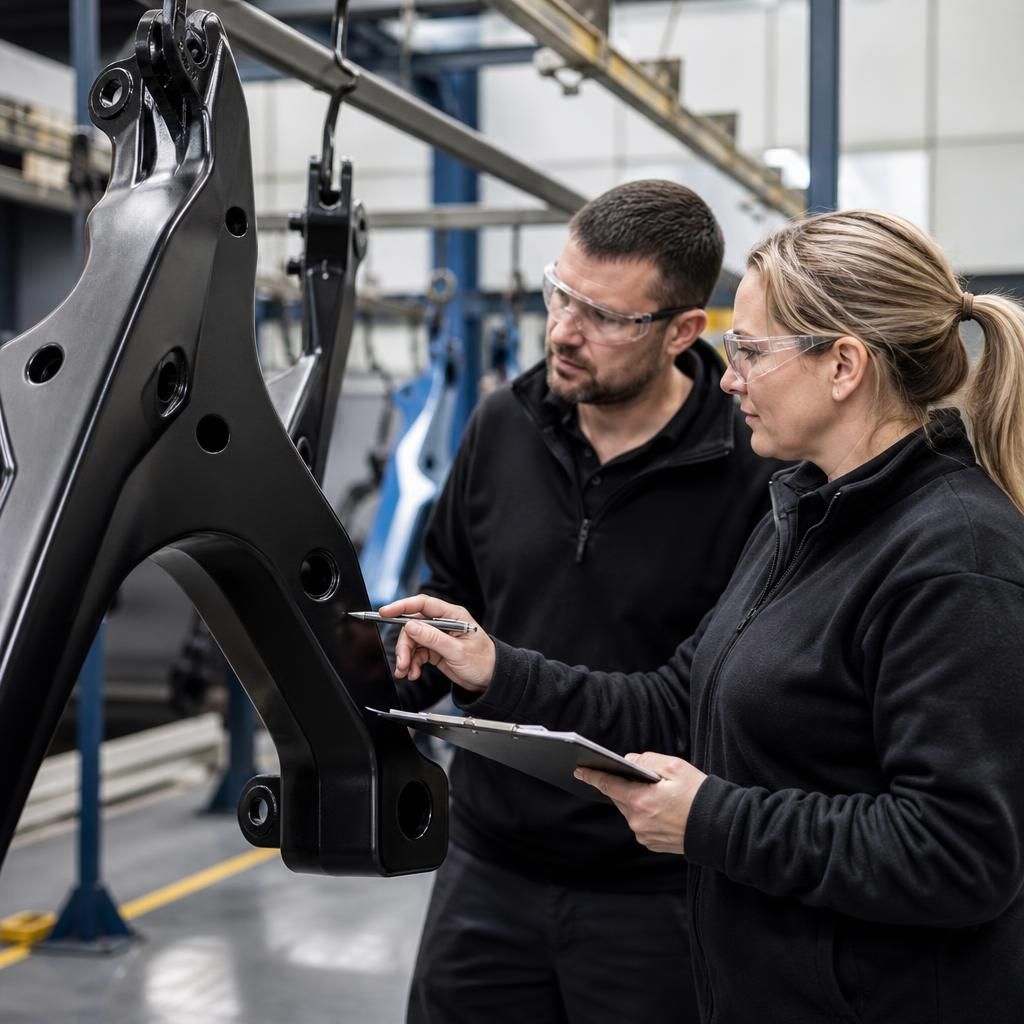
The transition should be assessed before the small-parts method is applied to full production. A process that works on compact components may not transfer directly when part dimensions, wall thickness, geometry or assembly tolerances change. Reviewing representative larger components can identify whether the design allows adequate powder access, reliable suspension, effective curing and suitable protection of mating surfaces.
This review may lead to practical design or preparation changes, such as adding an agreed hanging point, separating an assembly into coatable pieces or defining tighter masking requirements. Resolving these points before the larger run reduces the risk of discovering that a successful small-parts process is unsuitable for the finished production format.
Discuss Your Transition to Large-Scale Powder Coating
If you are moving from small parts coating to a larger production run, discuss your component range, expected volumes and finish requirements with the team. This provides a practical basis for assessing the proposed workflow before production planning begins.