

What are the key factors to consider when selecting the most appropriate type of powder coating for specific environmental or operational conditions?
Select the most appropriate powder coating by assessing the component’s exposure to UV light, moisture, chemicals, corrosion, heat, abrasion and impact, alongside the substrate and required finish. The coating must also suit the component’s operating conditions, expected service life, appearance requirements and any relevant application or pre-treatment limitations.
The most appropriate powder coating is selected by matching the coating chemistry and specification to the part’s actual service conditions, then confirming that the system can be applied, cured and inspected consistently. The decision should therefore consider both the finished component’s environment and the manufacturing constraints that affect coating performance, such as part geometry, permissible film build, cure requirements, production volume and the required service life.
Start with the coating chemistry. Different powder technologies offer different balances of flexibility, chemical resistance, hardness, weathering performance and cost. Polyester-based systems are commonly considered for components exposed to external conditions, while epoxy systems are often selected where protection and adhesion are more important than long-term appearance in direct weathering. Hybrid powders can suit controlled internal environments. Thermoplastic coatings, including nylon, may be appropriate where the component needs a thicker, flexible or particularly resistant surface. The correct choice depends on the complete duty rather than on the coating name alone.
Separate appearance from functional protection. A coating may remain protective even when its gloss or colour changes, but some applications require both properties to be maintained. Establish whether the specification prioritises colour retention, gloss retention, surface uniformity, low friction, electrical insulation, ease of cleaning or resistance to a particular process fluid. This prevents an attractive decorative finish being selected when the component actually requires a more functional coating system.
Define the operating cycle, not just the surrounding location. Components may experience repeated washing, contact with oils or solvents, temperature changes, condensation, impact from handling or continuous movement. The frequency and duration of exposure can be as important as its maximum level. A coating that is suitable for occasional contact may not be appropriate for immersion, repeated cleaning or constant mechanical contact. Where several exposures occur together, assess their combined effect rather than evaluating each condition in isolation.
Check the part and the coating interface. The material, surface condition and construction of the component influence the result. Welds, sharp edges, recesses, threaded features, folded sections and assembled joints can affect coverage and make inspection more difficult. Consider which areas must remain uncoated, whether masking is required, and whether the finished film could interfere with assembly, sliding fits, earthing points or dimensional tolerances. For close-tolerance components, the specified coating thickness should be agreed before production rather than treated as an incidental finish.
Confirm the curing window. Powder does not simply need to enter an oven; it must reach the required metal temperature for the specified time. Part mass, wall thickness, loading pattern and the way components are hung can all affect heat transfer. A coating that is under-cured may have reduced performance, while excessive heat can affect the substrate, appearance or dimensional stability. The selected powder should therefore have a cure schedule compatible with the component and the available production process.
Account for preparation and contamination risks. Oils, mill scale, welding residue, previous coatings and embedded contaminants can prevent a sound finish regardless of the powder selected. The required preparation should be compatible with the substrate and the intended duty. Hollow or enclosed sections may also require attention to drainage, trapped moisture and outgassing. These points should be resolved during specification because a coating system cannot compensate for an unsuitable or contaminated surface.
Use a written coating specification. A useful specification records the powder type, colour reference, gloss level, target film thickness, approved preparation, curing requirements, masking details, inspection method and acceptance criteria. It should also identify areas where minor visual variation is acceptable and areas where it is not. This is particularly important for repeat orders and batch production, where consistent results depend on applying the same requirements to every load.
Consider production and future maintenance. The best technical coating may not be the best operational choice if it cannot be applied consistently to the part design or replenished for later batches. Discuss expected batch sizes, colour changes, racking points, handling requirements and whether components will need repair or recoating in service. If the design or duty changes, review the coating specification rather than assuming that the original system remains suitable.
For a specialist coating provider, the practical selection process should link the component drawing, operating conditions and finish specification with a realistic application and curing method. Powder-coatings.co.uk works with manufacturers, fabricators, construction businesses and automotive companies across the Midlands and surrounding areas, including large-scale, batch and specialist coating requirements. Providing complete information about the part and its intended use allows the proposed powder system to be assessed against both performance needs and production requirements before coating begins.
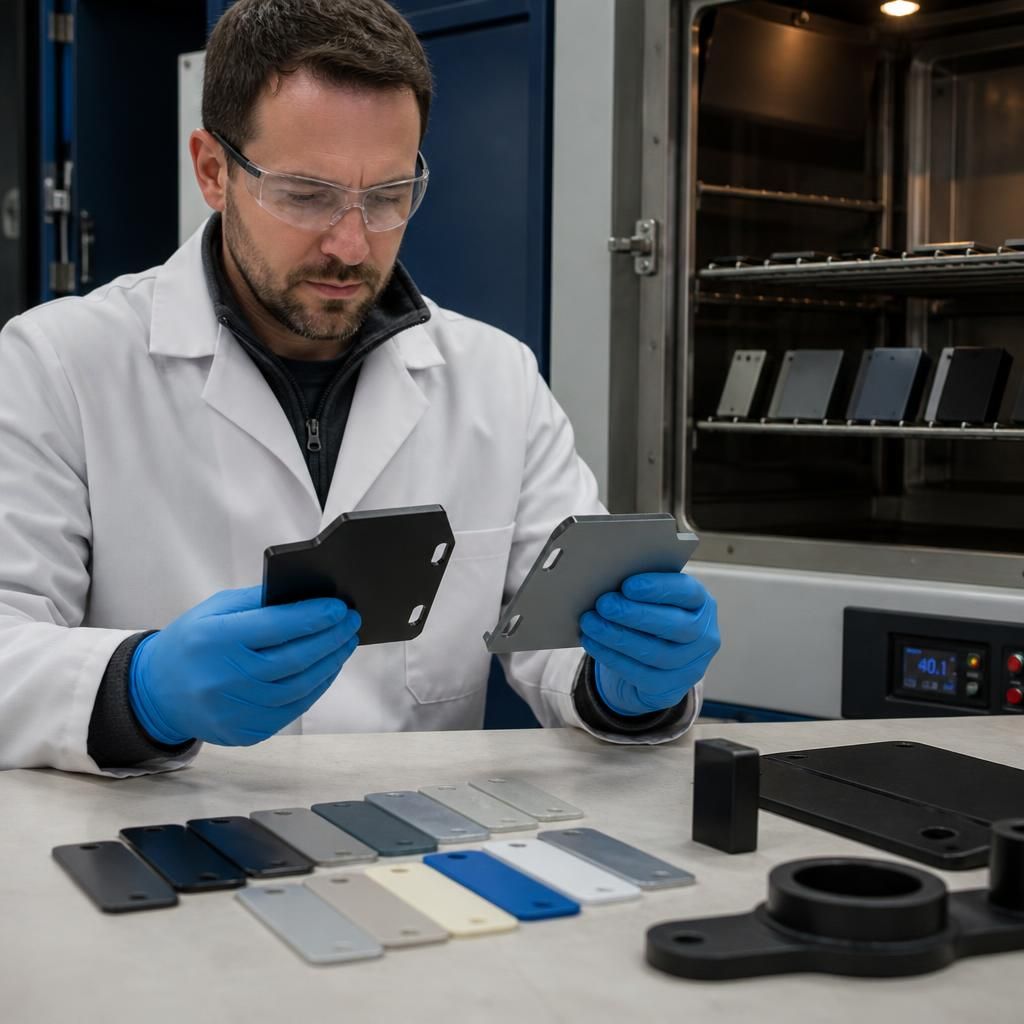
Evidence of performance is a key factor when a component will operate in a demanding environment. Technical data for the powder should be reviewed against the relevant exposure, rather than relying on a general description such as “durable” or “industrial”. Look for documented resistance to the chemicals, weathering, temperature range, abrasion or corrosion conditions that apply to the finished part.
Where the application is critical, assess whether the available test evidence reflects real service conditions. Laboratory results can indicate comparative performance, but they may not reproduce the component’s exact substrate, geometry, preparation or exposure cycle. A representative sample or trial panel can help confirm the appearance, adhesion and resistance of the proposed system before a full production batch is approved.
Also check whether the end-use specification requires a particular test method, classification or evidence from an approved coating system. This may apply to construction components, automotive parts or equipment exposed to regulated processes. Agreeing the required evidence at the quotation and sample stage avoids selecting a powder that appears suitable but cannot satisfy the project’s technical documentation requirements.
Discuss the Right Powder Coating for Your Conditions
Discuss your component’s operating conditions, coating requirements and production constraints with Powder-coatings.co.uk to help identify a suitable powder coating specification. Providing drawings, service-environment details and any required technical evidence supports a more informed assessment before production begins.