

What types of metal components are best suited for automotive powder coating and why?
The metal components best suited to automotive powder coating are rigid, heat-tolerant parts such as chassis components, brackets, suspension parts, wheels, frames and guards. Powder coating provides an even, durable finish that helps protect these parts from corrosion, impact, abrasion and automotive fluids, provided the metal is properly prepared and can withstand the curing process.
The best candidates for automotive powder coating are removable, rigid metal parts with broad, accessible surfaces and no close-tolerance interfaces that must remain uncoated. Typical examples include battery trays, pedal boxes, seat runners, engine-bay support pieces, towbar components, exhaust shields, fuel-system guards and metal interior brackets. These parts benefit from a consistent coating because they are exposed to handling, road debris, moisture, grime or temperature changes during normal vehicle use.
Removable structural and support parts are particularly suitable. Battery trays, seat supports, pedal boxes and engine-bay brackets can usually be detached before treatment, allowing the coating company to clean, prepare, coat and cure each item evenly. Their relatively simple shapes also make it easier to achieve consistent coverage across faces, edges and corners without affecting the way the component is fitted.
Fabricated guards and shields are another strong application. Metal guards protecting fuel, electrical or underbody equipment often have flat panels, folded edges or formed sections that accept powder well. A correctly selected coating system can provide a hard-wearing surface for parts that are exposed to dirt and physical contact, while the finish also makes inspection and cleaning easier.
Parts used around the engine or exhaust system need more careful assessment. Powder coating is suitable only where the component and the specified powder system can tolerate the temperatures reached in service and during curing. Heat shields and ancillary supports may be appropriate, whereas parts positioned directly in extreme heat may require a specialist high-temperature treatment or a different finish. The expected operating temperature should therefore be confirmed before the coating is selected.
Steel and aluminium components can both be considered, but they do not receive identical preparation. Steel may require removal of mill scale, rust, oil or existing coatings before the new finish is applied. Aluminium needs preparation that removes contamination without damaging the substrate, followed by a suitable pretreatment to support adhesion. Castings and fabricated assemblies may also contain pores, weld residues or trapped contaminants that need attention before coating.
The shape of the component is as important as the metal itself. Parts with open faces, accessible recesses and generous radii are generally easier to coat than items with deep blind cavities, narrow channels or complex overlapping sections. Powder is applied electrostatically, so recessed areas may receive less material than exposed faces. A review of the component drawing or a sample part can identify areas that need different racking, masking or application techniques.
Dimensional control is essential for parts with mating surfaces. Bearing seats, bushes, machined faces, earth points, threaded holes, splines and press-fit locations should normally be masked or kept free of coating. Even a relatively thin finish can interfere with assembly where tolerances are tight. The same applies to brake, steering, suspension or electrical contact interfaces, where coating must not alter alignment, conductivity or movement. These parts may still be suitable, but only when the areas requiring protection are clearly identified before processing.
Components with moving contact should be assessed separately. Hinges, sliding mechanisms and adjusters can be coated if the working surfaces are masked and there is sufficient clearance, but coating between moving faces may cause binding or premature wear. Rubber, plastic, seals, bearings and other heat-sensitive items should normally be removed before curing unless the assembly has been specifically designed for the process.
A practical suitability check should cover:
- the base metal and its condition;
- the maximum service temperature and curing requirements;
- the presence of threaded, machined or electrical contact areas;
- the number and position of recesses, cavities and overlapping sections;
- whether seals, bearings, bushes or other non-metal parts can be removed;
- the required appearance, texture and degree of dimensional control; and
- how the part will be racked, handled and returned for assembly.
Powder coating is therefore not chosen simply because a component is made from metal. The strongest candidates combine a compatible substrate with a removable design, accessible surfaces, suitable heat tolerance and clearly defined areas that must remain free from coating. Providing drawings, photographs, material details and the intended use helps the coating specialist determine whether a component is suitable and which preparation, masking and finish specification it requires.
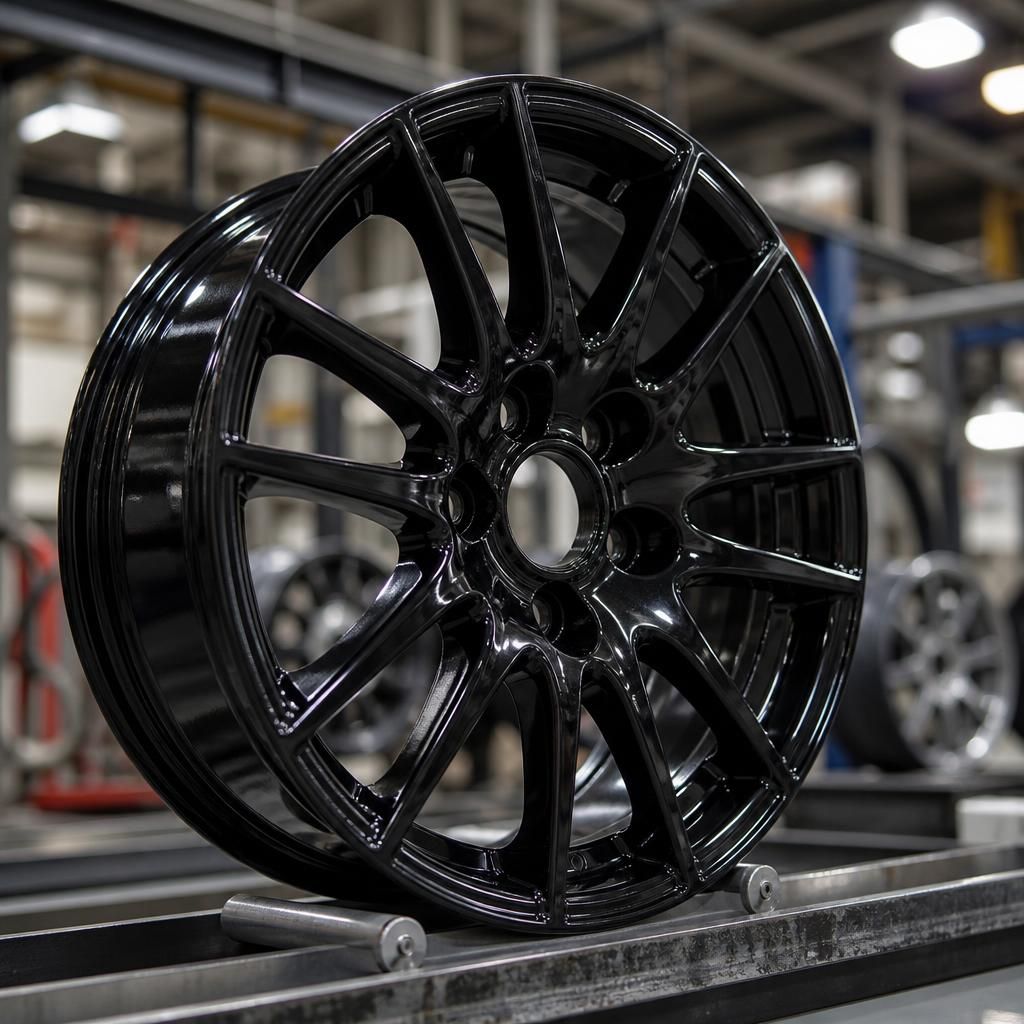
Wheels are among the strongest candidates for automotive powder coating because they face repeated exposure to brake dust, road grime, moisture and minor impact. Their broad metal surfaces allow an even finish, while the cured coating provides a hard-wearing barrier that is easier to clean than an untreated or poorly protected surface.
Suitability still depends on the wheel’s condition and construction. Steel and aluminium wheels should be assessed for corrosion, kerb damage, previous repairs and contamination before coating. Tyres, valves, balance weights and other removable items should be taken off, while hub faces, threaded holes and other fitting areas must remain free from coating so the wheel seats correctly and can be balanced after refurbishment.