

What is the maintenance required for powder-coated automotive parts?
Powder-coated automotive parts generally require regular washing with clean water, a mild detergent and a soft cloth or sponge to remove road salt, dirt and grit. Avoid abrasive cleaners, harsh solvents and pressure directed at damaged edges, and inspect the coating periodically for chips or corrosion so any damage can be cleaned, protected and professionally repaired where necessary.
Maintenance for powder-coated automotive parts is mainly preventive: protect the finish from impact, heat, chemicals and trapped moisture, while dealing with any coating damage before corrosion can develop beneath it. The precise routine depends on the component’s position, the powder system used and the conditions in which the vehicle operates.
Pay particular attention to high-risk areas. Underbody components, wheel-related parts and parts exposed to loose grit experience more mechanical attack than sheltered components. Look for scuffing around mounting points, damage caused by stones, wear where parts contact one another and coating lifted by an adjacent fastener or bracket. A small local defect is easier to manage than corrosion spreading under an apparently intact film.
- Keep coated parts clear of accumulated mud and debris, especially around seams, brackets, drain points and recessed sections.
- Make sure water can drain from hollow sections and overlapping joints rather than remaining trapped against the coating.
- Prevent coated surfaces from rubbing against untreated metal, sharp edges or loose hardware.
- Use suitable protective pads or separators where coated parts contact other components during storage, transport or installation.
Protect the coating during fitting and servicing. Use correctly sized tools and avoid dragging components across workshop floors or vehicle bodies. Do not clamp a finished surface directly in a vice unless it is adequately protected. When removing or refitting a part, take care around edges and holes, where tools can chip the coating. Fasteners should be fitted without forcing them through coated apertures, as excessive pressure can fracture the finish.
Lubricants, brake fluid, fuel, coolant and other workshop chemicals should not be left on the coating. Their compatibility varies according to the powder chemistry and the concentration or temperature involved, so the coating supplier’s care instructions should take priority. If a spill occurs, remove it using a method known to be suitable for that finish rather than applying an untested solvent or abrasive product.
Control heat and environmental exposure. Powder coating is designed for a defined service temperature, but prolonged heat from exhaust systems, braking components or engine areas can affect colour, gloss and film performance if the coating specification is unsuitable. Heat shields, correct clearances and appropriate coating selection are therefore part of long-term care. Components used near exhausts or other high-temperature areas should be assessed against their actual operating conditions rather than maintained as though they were ordinary bodywork.
After severe use, such as off-road driving, winter road treatment or exposure to industrial contamination, give vulnerable components a closer check. Pay attention to fastener interfaces, folded edges, welds and areas where dirt can remain lodged. Record recurring damage if the same location fails repeatedly; this may indicate movement, inadequate clearance, a poor mounting arrangement or an unsuitable coating specification rather than a cleaning problem.
Deal with coating damage correctly. A touch-up may provide temporary protection for a small defect, but it will not reproduce the uniformity, adhesion or cured film of an original factory-applied powder coating. Loose material should not simply be painted over. Proper repair normally involves removing contamination and weak coating, preparing the exposed substrate, treating any corrosion and selecting a compatible repair system. Larger areas, widespread corrosion or damage on safety-critical components should be assessed by a specialist and may require stripping and recoating.
When a component is removed for repair or refurbishment, check both visible and concealed faces before reinstallation. Replacing damaged seals, correcting contact points and ensuring that mounting surfaces are sound can prevent the new finish from being damaged again. Keep records of the coating system and any repair products used where the part forms part of a fleet, production vehicle or regularly serviced assembly; this helps future maintenance remain compatible with the original finish.
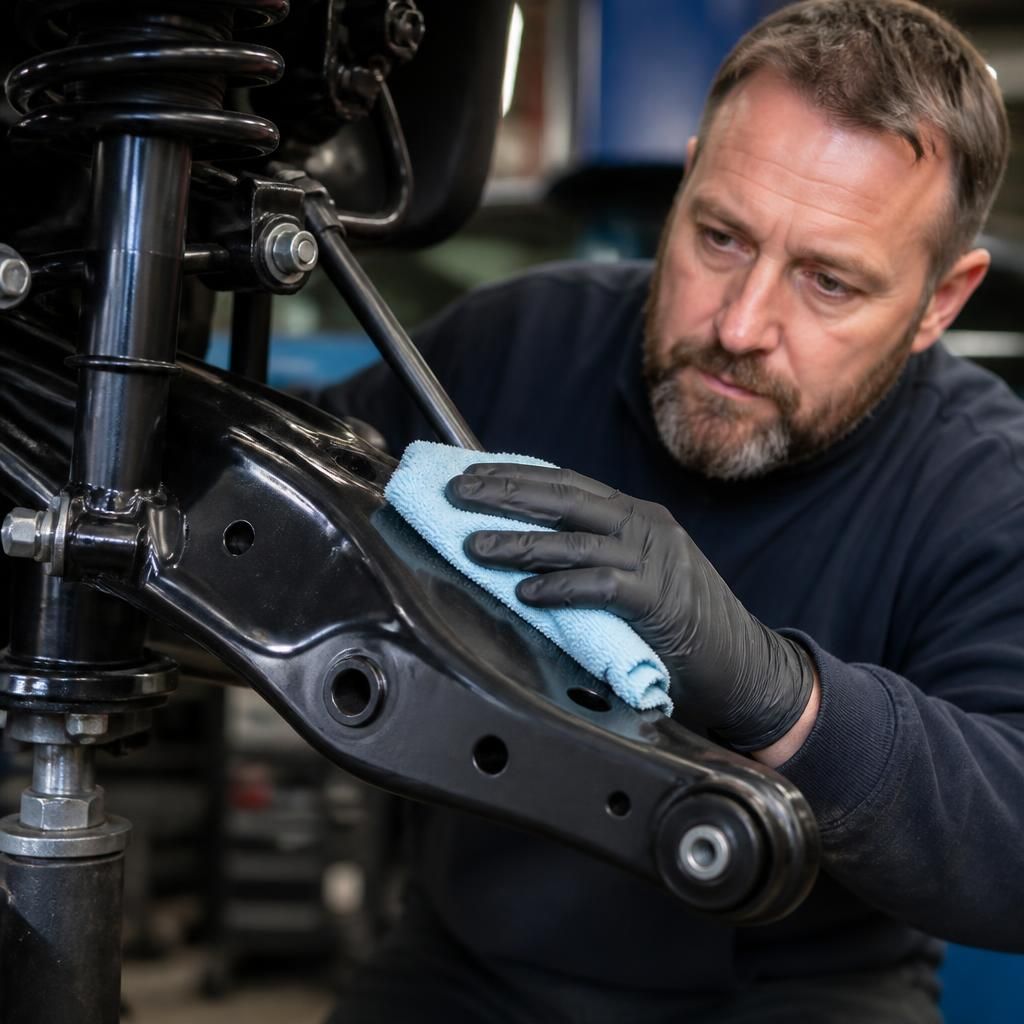
Maintenance should be matched to the powder-coated finish, rather than treating every automotive component in the same way. Gloss, satin, textured and specialist protective finishes can respond differently to cleaning products and polishing compounds. Abrasive polishes may alter the sheen or texture, while residue can remain in a textured surface if it is not rinsed away thoroughly.
Before applying a new cleaning or protection product, check that it is suitable for powder-coated metal and test it on a small, concealed area. Do not use polishing to disguise fading, blistering or surface damage; these signs require assessment of the coating and the underlying metal rather than further surface treatment.