

How does the powder coating process impact the environmental sustainability of my projects?
The powder coating process can support more sustainable projects by producing low application waste and durable finishes that help extend the service life of metal components. Its overall environmental impact still depends on factors such as pretreatment chemicals, curing energy, powder recovery and the transport involved.
Powder coating can improve the environmental sustainability of a metal project by reducing solvent-related emissions, limiting material discarded during application and helping components remain in service for longer. A meaningful assessment must consider the complete process, however, including substrate preparation, powder application, curing, transport, maintenance and eventual disposal or recoating.
Application materials and emissions
Powder is applied as a dry material rather than as a liquid paint containing a solvent carrier. This generally avoids the release of solvent vapours associated with solvent-based painting. It does not mean that every powder-coating project has no environmental emissions: cleaning agents, pretreatment chemicals and the curing stage also need to be considered. The environmental profile can therefore vary according to the specification and the preparation system used for the metal.
Unused powder may be collected in suitable application systems and, where it remains uncontaminated, potentially reused. Recovery is more difficult when different colours or materials are mixed, or when the powder has been contaminated by dust, oils or other coatings. Ask how overspray is managed for the particular component and colour schedule rather than assuming that all excess material can be recovered.
Preparation and pretreatment
Degreasing, abrading, blasting or chemical pretreatment can determine both the coating performance and the associated environmental burden. These operations may create spent abrasive, contaminated residues or wastewater requiring controlled handling. A specification should identify whether the substrate needs a particular pretreatment, whether existing corrosion or coatings must be removed, and how waste from that work will be managed.
Good preparation can also prevent premature coating failure. Reworking or replacing a component because of poor adhesion uses additional raw materials, energy and transport. Selecting a preparation method appropriate to the metal, its condition and the intended service environment is therefore an environmental decision as well as a quality decision.
Curing energy and process efficiency
The curing oven is a significant energy user because the coated parts must reach the required temperature for the specified time. Energy demand is influenced by the part’s mass, geometry, loading pattern, coating specification and oven efficiency. Efficient scheduling and suitable batch loading can avoid heating unused capacity, while correct temperature control helps prevent rejected work and unnecessary repeat processing.
When comparing suppliers or specifications, ask whether the proposed cure schedule is based on the metal’s actual temperature rather than simply the oven’s air temperature. The two are not identical, particularly for heavy or complex components. A technically correct cure helps avoid both under-curing, which may reduce performance, and over-curing, which can waste energy and affect the finish.
Design and material choices
Sustainability should be considered at the design stage. Powder coating is most straightforward when the component has suitable access for cleaning, drainage and coating, with no enclosed areas that could trap pretreatment liquids or powder. Designing for consistent coverage can reduce masking, rework and unnecessary coating thickness.
The powder type should match the environment rather than being selected only on initial appearance or price. A coating that is unsuitable for chemicals, abrasion, moisture or outdoor exposure may require early repair or replacement. Conversely, specifying a more complex coating than the service conditions require can involve unnecessary material and processing. The appropriate choice depends on the substrate, operating conditions, appearance requirements and expected maintenance regime.
Powder-coated metal can often be maintained without stripping and recoating the entire component. Cleaning methods should be compatible with the coating and should avoid harsh chemicals or abrasive treatment unless specifically justified. Prompt attention to mechanical damage can also prevent corrosion spreading beneath the finish and reduce the extent of future remedial work.
Transport and project planning
Transport forms part of the project’s environmental impact. The number of collection and delivery movements, packaging, load efficiency and the distance between the fabricator, coating facility and end site all matter. Consolidating suitable batches and planning dimensions before dispatch can reduce avoidable movements and handling. For businesses across the Midlands and surrounding areas, collection and delivery arrangements can be considered alongside these wider logistics factors.
End-of-life considerations
At the end of a component’s service life, the metal substrate may be suitable for recycling, but the coating usually remains attached and may need to be dealt with as part of the recycling process. Thermoset powder coatings do not simply melt and flow again when reheated. This makes material separation and recovery different from the recycling of the bare metal. Where future refurbishment is likely, the design should allow the component to be inspected, cleaned and recoated without excessive stripping or damage.
Questions to include in an environmental review
- What preparation and pretreatment does the substrate require?
- How are unused powder, contaminated residues and spent abrasives handled?
- What curing requirements apply to the selected coating?
- Can the parts be designed or loaded to support consistent coverage and efficient processing?
- How will the coating be cleaned, repaired and maintained in service?
- What collection, delivery and packaging arrangements are practical for the project?
- What will happen to the coated component and substrate at the end of its service life?
For manufacturers, fabricators, construction firms and automotive businesses, the strongest approach is to assess the coating as one part of the component’s full life cycle. Powder-coating services can support that assessment when the specification, preparation method, recovery arrangements, curing requirements and logistics are discussed before production begins.
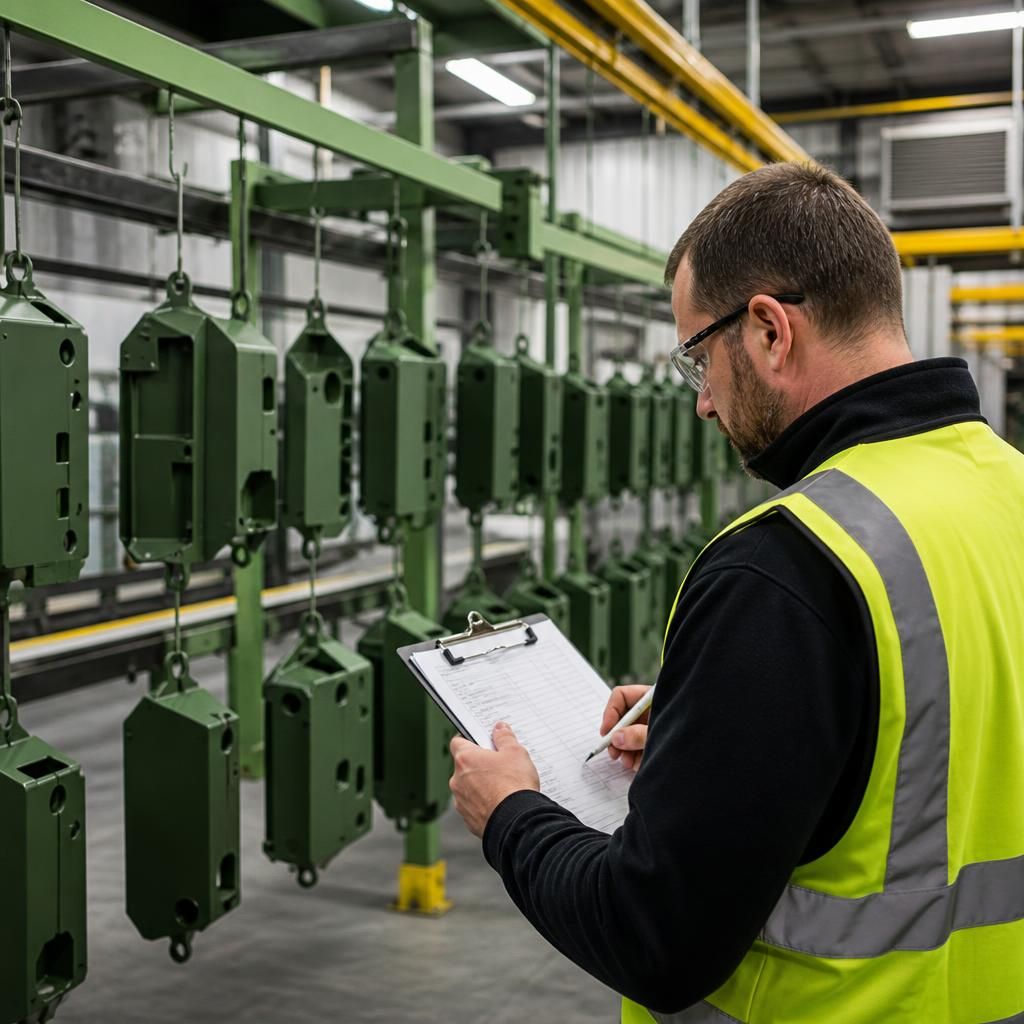
Environmental claims about powder coating should be assessed against the specific process rather than treated as a property of the coating alone. When comparing options, define the same component, finish, performance requirement and service conditions, then examine the material specification and process information provided for that application.
Ask for relevant, process-specific details such as the coating system used, recovery arrangements and the basis for any environmental statement. This helps distinguish a documented improvement from a general claim and supports a more consistent comparison between powder coating and other finishing methods.
Discuss the environmental considerations for your powder coating project
Discuss your component specifications and environmental priorities with the powder-coating team to identify a suitable coating system and process. Request process-specific information before confirming the finish for your project.