

What temperature range should high temp and heat resistant coatings withstand in your application?
High temperature and heat resistant coatings should withstand the application’s maximum continuous operating temperature, as well as any short-term temperature peaks, without losing adhesion, hardness or corrosion protection. The suitable range depends on the coating formulation, substrate, exposure duration and whether the component experiences repeated heating and cooling, so these conditions should be confirmed against the coating system’s technical data.
The suitable temperature range is the range in which the complete coating system can perform without unacceptable loss of adhesion, appearance, protection or mechanical strength. It is not determined by the phrase “high temperature” alone: the coating must be matched to the component’s normal operating temperature, peak exposure, heating pattern, substrate and surrounding environment.
Start with the actual thermal duty. Establish the temperature at the coated metal surface rather than relying only on the temperature of the surrounding air, oven or process equipment. Record:
- the normal continuous operating temperature;
- the highest temperature reached during start-up, shutdown or fault conditions;
- how long each exposure lasts;
- how often the component is heated and cooled; and
- whether different areas of the component operate at different temperatures.
A coating may tolerate a short peak that it could not withstand continuously. Conversely, repeated exposure to a temperature below the stated maximum can still cause gradual embrittlement, loss of gloss, colour change or reduced adhesion if the component undergoes frequent thermal cycling.
Read the technical data as a service limit, not a marketing category. Product information may distinguish between continuous and intermittent temperature resistance, and may describe changes in hardness, flexibility, colour or gloss as temperature rises. The relevant limit is the one associated with the required performance. A finish that remains attached to the substrate may nevertheless be unsuitable if the application also requires a stable appearance, impact resistance, electrical insulation or corrosion protection.
It is also important to separate curing temperature from operating temperature. The curing schedule activates the coating during manufacture; it does not automatically define the temperature the finished part can withstand in service. A system must be correctly cured first, then assessed against its intended operating conditions. Under-curing can leave the film with inadequate chemical and mechanical properties, while excessive heat during manufacture may affect the substrate or the coating itself.
Consider the substrate and the whole coating system. Steel, galvanised steel, stainless steel and other metals respond differently to heating. Differences in expansion between the substrate and coating can place stress on the film during repeated temperature changes. Surface preparation, film thickness, edge coverage and contamination can also influence whether the coating remains sound. Where corrosion protection is required, a temperature-resistant finish still needs suitable preparation and system design; heat resistance alone does not compensate for poor adhesion or an unsuitable substrate interface.
The surrounding conditions can reduce the practical temperature range. Moisture, salt, chemicals, oils, abrasive particles and process residues may accelerate deterioration at elevated temperature. In some applications, heat increases the activity of the surrounding chemicals or makes a previously minor defect more significant. The coating should therefore be checked against the combined thermal and chemical exposure rather than temperature in isolation.
Look for the likely failure mode at the upper limit. Common signs that a coating is being used beyond its suitable range include:
- softening, blistering, cracking or loss of cohesion;
- discolouration, chalking, gloss loss or surface oxidation;
- reduced resistance to impact, abrasion or chemicals;
- loss of adhesion after repeated heating and cooling; and
- corrosion beginning at damaged areas, edges or interfaces.
The visible appearance may change before the coating has completely failed, so acceptance criteria should be agreed in advance. For a hidden component, retained adhesion and corrosion protection may be the priority. For visible equipment or architectural metalwork, colour and gloss stability may be equally important.
Specify a margin for real operating conditions. Selecting a coating whose nominal limit is exactly equal to the measured process temperature leaves little allowance for measurement error, uneven heating, temporary excursions or changes to the equipment. The appropriate margin depends on the application and the evidence available from the coating supplier or test programme. Where the consequence of failure is significant, representative coated samples or components should be tested through the expected heating and cooling cycle.
For a reliable specification, provide the coating specialist with the metal type, surface preparation, required appearance, normal and peak temperatures, exposure duration, thermal cycle, chemicals present and any abrasion or impact requirements. The technical data can then be checked against the complete duty rather than selecting a finish from a temperature label alone. This approach is particularly important for fabricated parts, process equipment and automotive or construction components that combine heat with corrosion, handling or outdoor exposure.
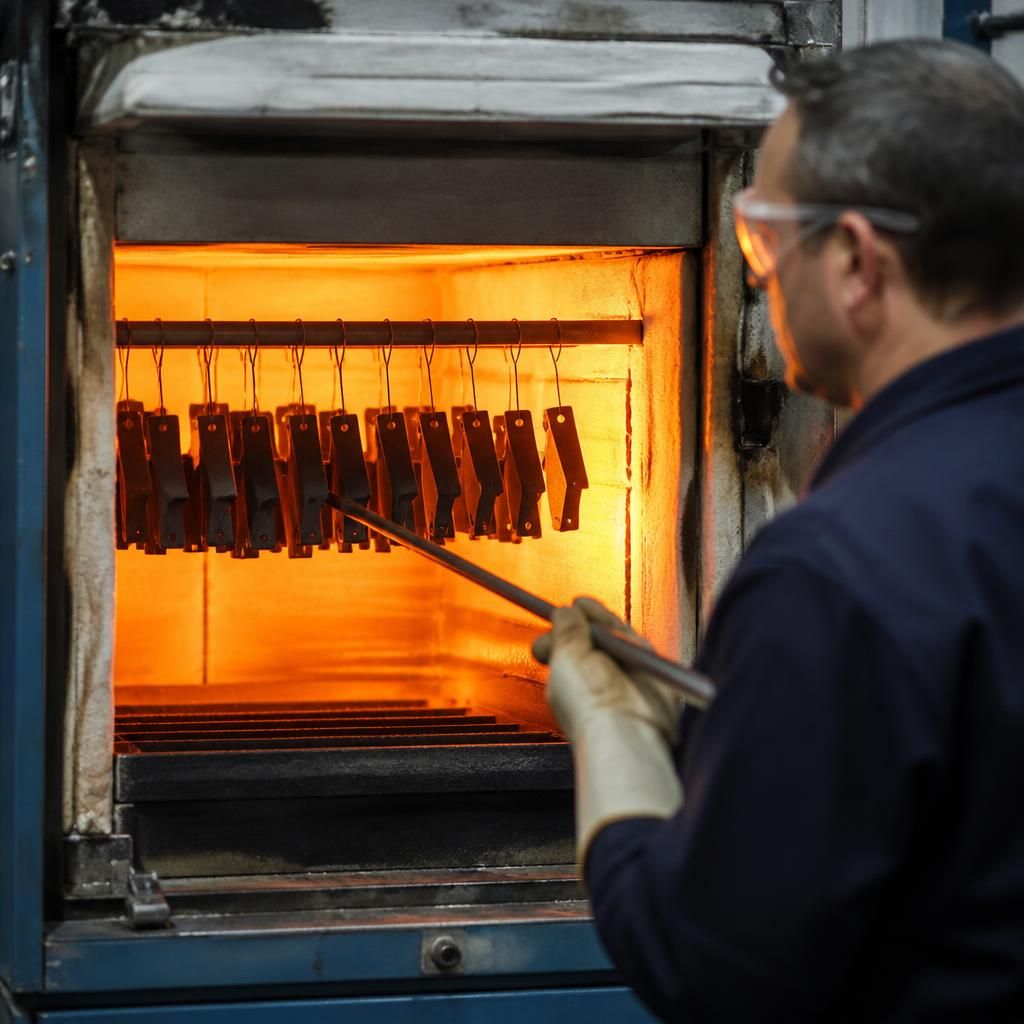
The rate of heating and cooling is an important part of the temperature specification. Two components may reach the same maximum temperature but place different demands on the coating if one heats gradually and the other experiences rapid thermal shock. Fast temperature changes can increase stress at the coating-to-metal interface, particularly where the substrate and coating expand at different rates.
For this reason, record the heating and cooling profile as well as the highest temperature. A suitable assessment should consider the temperature range, ramp rate, dwell period and number of cycles expected in service. Where the duty is severe or uncertain, testing a representative coated component through that profile provides more useful evidence than relying on the maximum temperature rating alone.
Discuss Your Application’s Temperature Requirements
Discuss your metal component and its operating conditions with the powder-coating specialist before choosing a high temperature finish. Sharing the expected thermal duty and performance requirements will help identify a suitable coating system for your application.