

What is the process for applying high temperature powder coatings, and how does it ensure durability?
High temperature powder coatings are applied by preparing the metal surface, spraying the formulated powder onto it electrostatically, and curing the coating in an oven at the specified temperature and time. Thorough preparation, even film coverage and correct curing fuse the powder into a dense finish that resists heat-related degradation, corrosion and mechanical wear in service.
High-temperature powder coating is a controlled process in which the coating specification, metal substrate, application conditions and curing schedule are matched to the component’s service temperature. Durability depends on more than selecting a heat-resistant powder: the finished system must adhere securely, tolerate thermal expansion and contraction, and resist the chemical and mechanical conditions present in use.
1. Define the operating conditions
The process starts with the component’s intended application. The relevant information includes the normal operating temperature, any short-term temperature peaks, the frequency of heating and cooling cycles, exposure to moisture or chemicals, and the level of abrasion or handling the part will receive. Continuous heat can affect a coating differently from intermittent exposure, while repeated thermal cycling can place stress on the bond between the coating and the metal.
The specification should therefore distinguish between the temperature the coating must withstand in service and the temperature needed to cure it. These are separate requirements. A powder may cure at one controlled oven condition but be designed to remain stable at a different service temperature. The appropriate resin and additive package is selected against the full operating environment rather than temperature alone.
2. Assess the component and substrate
Steel, stainless steel, aluminium and zinc-coated metals can require different preparation and application controls. The component’s shape is also important. Deep recesses, enclosed sections, sharp edges, threaded areas and welded joints can affect powder coverage and heat distribution. Weld spatter, burrs and sharp projections may interfere with adhesion or create thin areas at the edges, so these issues should be addressed before coating.
Components that contain trapped air, moisture or process residues may require additional preparation. Galvanised or zinc-coated parts can release gases during heating if they have not been prepared appropriately, potentially causing pinholes or other surface defects. Assemblies may also need to be separated where contact surfaces, moving interfaces or dissimilar metals would make coating unsuitable.
3. Prepare the surface for adhesion
Preparation removes oil, grease, mill scale, corrosion, oxides and other contaminants that could form a barrier between the powder and the metal. Mechanical preparation, chemical cleaning or blasting may be used according to the substrate and the required finish. The resulting surface should be clean, suitably profiled and free from loose particles before powder is applied.
Edges and welds deserve particular attention because coating can become thinner over a sharp edge and contamination can remain around a weld. Masking is used where coating would affect assembly, electrical contact, drainage, tolerances or movement. Correct masking also reduces the need to remove cured powder from functional areas afterwards.
4. Apply the powder consistently
During application, the component is connected to earth and the powder is charged as it passes through the spray equipment. The electrostatic attraction helps the particles adhere to the metal, but reliable coverage still depends on controlled gun settings, component positioning, powder flow and operator technique.
Coverage must be even across broad faces, edges, corners and less accessible areas. Excessive film build can lead to defects, poor appearance or difficulties during curing, while insufficient coverage may reduce protection against heat, corrosion or wear. The target film build is determined by the coating specification and the design of the component, not by applying as much powder as possible.
5. Cure the coating through the metal
Heat causes the powder particles to melt, flow and chemically cross-link into a continuous film. The important control point is the temperature reached by the component itself, together with the time it remains at the specified metal temperature. Oven air temperature alone does not confirm that a heavy or complex part has cured correctly.
Parts with different thicknesses may heat at different rates, so the schedule may need to account for the slowest-heating areas. Under-curing can leave the film with reduced hardness, adhesion and chemical resistance. Excessive or poorly controlled heat can affect colour, gloss, film performance or the substrate. Cure requirements should be taken from the selected powder’s technical data and checked against the component’s mass and geometry.
6. Inspect the finished coating
After cooling, the coating is inspected for coverage, runs, craters, pinholes, inclusions, edge coverage and visible contamination. Where required by the project specification, checks may also include film thickness, adhesion and cure response. Parts should be handled in a way that avoids marking the finish while it is still warm or before any inspection has been completed.
Inspection is particularly important for high-temperature applications because a small defect can become more significant during repeated heating, cooling or exposure to corrosive materials. A continuous, well-bonded film gives the substrate more consistent protection than a finish with local thin spots or exposed edges.
How the process creates durability
- Correct material selection: the resin and additives are chosen for the expected service temperature and surrounding environment.
- Strong adhesion: suitable cleaning and profiling allow the coating to bond to the substrate rather than sit over contamination.
- Controlled film build: consistent coverage helps avoid weak areas and defects that can develop during service.
- Proper cross-linking: accurate curing produces the intended hardness, cohesion and resistance properties.
- Thermal compatibility: matching the coating to the metal and temperature cycle helps reduce stress caused by expansion and contraction.
- Quality inspection: identifying defects before installation prevents unsuitable parts from entering service.
High-temperature powder coating is not intended to overcome unsuitable component design, continuous exposure beyond the coating’s rating or severe chemical attack that was not included in the specification. For industrial parts, the most reliable approach is to provide the operating conditions, substrate details and required finish so that preparation, application and curing can be assessed as one coating system.
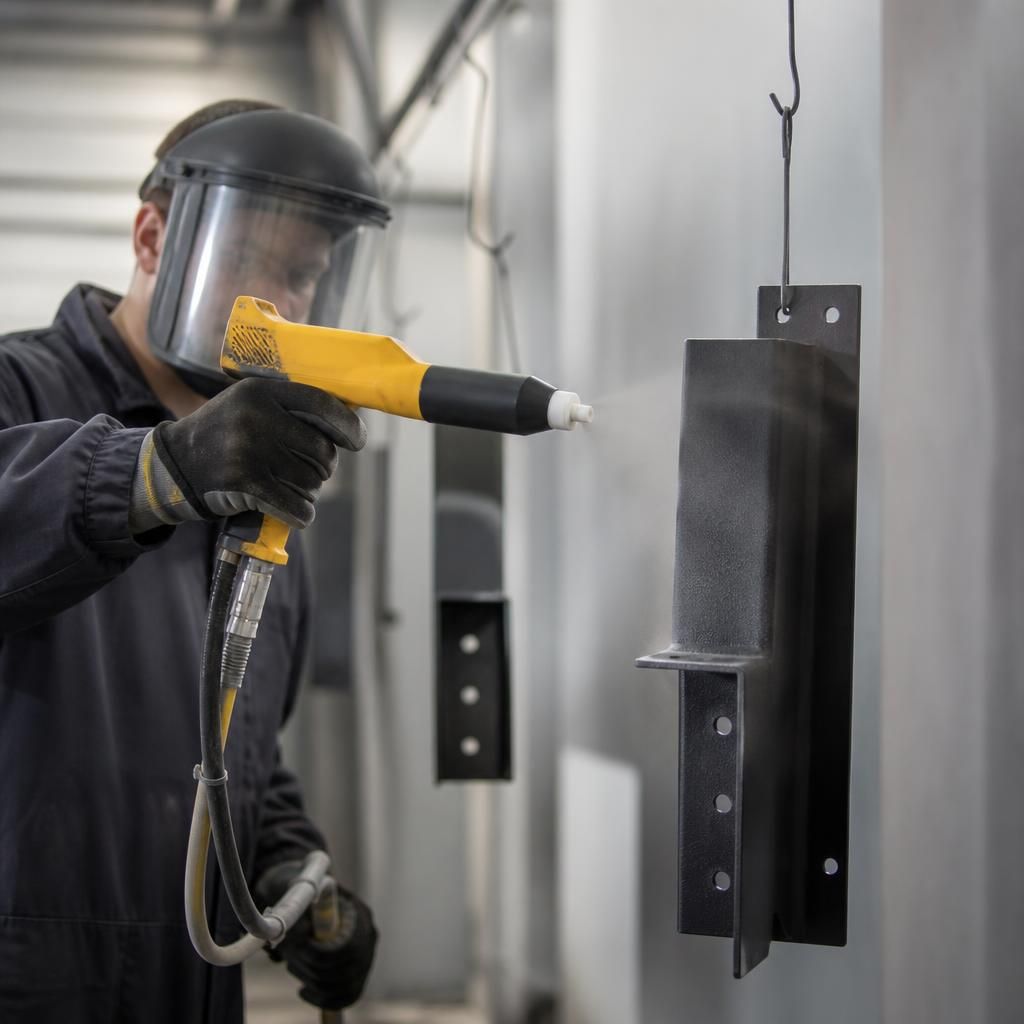
Validate the coating system on representative parts
For components with unusual geometry, mixed metal thicknesses or demanding service conditions, a representative test piece can be processed before the full batch. This allows the preparation method, powder selection, application settings and curing schedule to be assessed on a part that behaves like the finished component rather than relying only on general coating data.
The trial can also identify practical issues such as inaccessible areas, masking requirements, heat distortion or differences in finish between thick and thin sections. Resolving these points before production helps establish a repeatable process, reducing the risk that avoidable application defects will compromise durability when the coated components enter service.
Discuss Your High Temperature Powder Coating Requirements
Discuss your component’s operating conditions, substrate and required finish with our powder-coating team to establish whether a high-temperature coating system is suitable. We can then advise on the information needed to assess your requirements and prepare the next step.