

What surface preparation is required before applying powder coatings to stainless steel for high-temperature applications?
Stainless steel should be thoroughly degreased, cleaned of oils, dirt and surface oxides, then lightly abrasive-blasted or mechanically abraded to create a clean, suitable key for adhesion. The prepared surface must be free from residue and moisture before the high-temperature powder coating is applied, with welds, edges and crevices checked for contamination or imperfections.
Preparation for high-temperature powder coating on stainless steel requires more than ordinary cleaning. The stainless grade, fabrication history, surface condition, component design and intended service temperature should be assessed before selecting the preparation method. The objective is to produce a chemically compatible, mechanically stable surface while preventing contamination that could become a failure point during heating and thermal cycling.
Particular attention should be given to residues introduced during manufacture. Stainless components may carry forming oils, polishing compounds, marking materials, adhesive residues, shop dust or traces of carbon steel from shared handling equipment. Iron contamination is especially undesirable because it can rust beneath or around the coating. Abrasive media, wire brushes and handling tools should therefore be suitable for stainless steel and kept separate from equipment used on carbon-steel parts.
Welded areas require their own assessment. Heat tint, weld spatter, flux residue and sharp projections can affect coating continuity and adhesion. Any rough transitions should be blended where the component design permits, while welds should be free from porosity, cracks and trapped contamination. Sharp external edges may need suitable edge treatment because powder tends to pull away from very acute edges during application, leaving reduced film coverage at the point most exposed to wear and heat.
The required surface profile should be agreed with the coating specification rather than selected by habit. Excessively aggressive treatment can distort thin stainless sections, embed abrasive or create a profile that is unsuitable for the specified film thickness. Conversely, insufficiently controlled treatment may leave a surface that appears clean but does not provide consistent mechanical anchoring. The preparation method should also avoid introducing chloride-bearing residues or other chemicals that could contribute to corrosion under the coating.
Component design can affect preparation and the later performance of the finish. Hollow sections, folded returns and narrow crevices should be reviewed for trapped cleaning fluid, abrasive and air. Where heating is part of the coating process, enclosed volumes may require suitable venting to reduce the risk of pressure build-up or outgassing. Drainage and access points also make it easier to prepare and inspect the complete surface rather than coating only the readily accessible faces.
Areas that must remain uncoated should be identified before preparation. These may include electrical earthing points, precision fits, threaded holes, bearing seats, sealing faces and locations used for assembly. Appropriate plugs, caps or masking materials should tolerate the coating process without transferring residue to the stainless steel or interfering with the cure.
Before coating, the prepared component should be handled with clean gloves or other methods that prevent fingerprints and recontamination. It should be inspected under suitable lighting for:
- remaining oil, polishing compound, dust or abrasive particles;
- discolouration, embedded iron or other evidence of cross-contamination;
- unprepared recesses, weld defects, sharp projections and damaged areas;
- masking errors, blocked drainage paths and unwanted material in threaded or precision areas; and
- signs of moisture or cleaning residue retained in joints and hollow sections.
For demanding high-temperature service, preparation should be validated on a representative component or test panel where practical. The assessment can include visual inspection, adhesion testing and confirmation that the selected powder system has been cured according to its technical requirements. This is important because a coating may appear satisfactory after application but fail if the substrate preparation, film build or cure is not compatible with the expected operating temperature.
Finally, the preparation specification should record the stainless grade, previous treatments, permitted abrasives, masking requirements, inspection criteria and any restrictions on chemical cleaners. A documented process helps ensure that repeat batches receive the same treatment, which is particularly important where components will experience repeated heating and cooling or where coating failure would expose the stainless substrate to a demanding industrial environment.
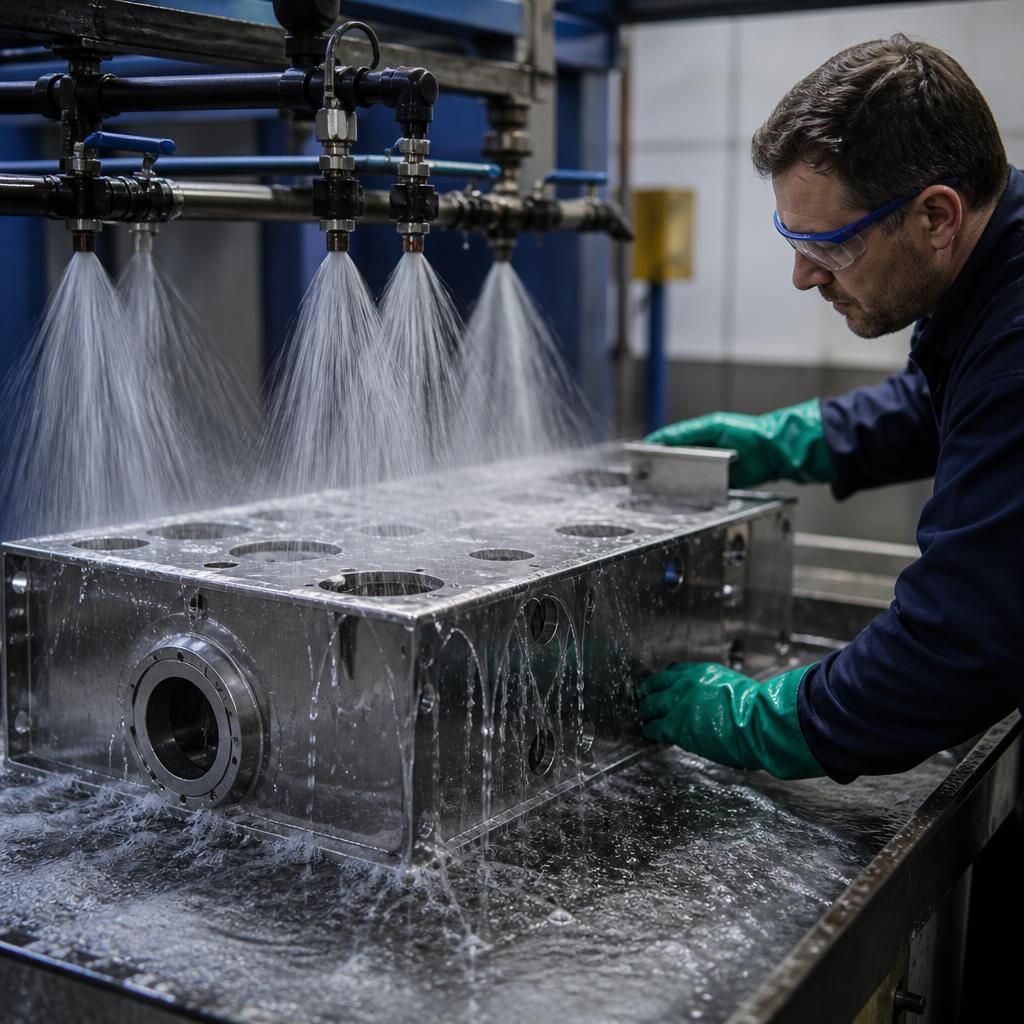
Chemical pretreatment for stainless steel must be selected specifically for the grade of steel and the high-temperature powder system. Stainless does not respond in the same way as carbon steel, so a conventional pretreatment intended for mild steel may be unsuitable or may leave residues that affect coating adhesion and performance during heating.
Where a conversion treatment is specified, its compatibility with the powder, cure cycle and operating temperature should be confirmed before production. The preparation specification should define the treatment chemistry, application conditions, rinsing requirements and drying method. A water-break check can help identify residual oil or poor wetting after cleaning, although it does not replace the agreed inspection and adhesion checks. For repeat work, the complete chemical sequence should be validated on a representative stainless panel before coating production components.
Discuss your stainless steel surface preparation requirements
Discuss your stainless steel surface preparation requirements with our powder coating team, providing the component details, stainless grade and intended operating temperature. We can help assess the preparation specification before coating work is planned.