

How do stainless steel high temp powder coatings compare to liquid coatings in terms of durability and application?
Stainless steel high-temperature powder coatings generally provide a tougher, more uniform and abrasion-resistant finish than liquid coatings, provided the formulation and curing process suit the operating temperature. Powder application requires electrostatic spraying and controlled oven curing, while liquid coatings can be sprayed onto more complex or assembled components and may offer greater flexibility where oven curing is impractical.
Stainless steel high-temperature powder coatings and liquid coatings can both protect components, but neither is universally more durable. Powder is often the stronger choice where the part can be properly prepared, coated and cured as a complete component. Liquid coating may be preferable where the design is complex, the component cannot enter an oven, or the required temperature resistance exceeds that of the available powder formulation.
Durability depends on more than the coating type. The result is influenced by the resin or binder, pigments and fillers, film thickness, surface preparation, curing or drying conditions, operating temperature, thermal cycling, chemical exposure and mechanical contact. A coating that performs well on a stainless steel enclosure may not be suitable for a component exposed to exhaust gases, solvents or repeated rapid temperature changes.
Key durability comparisons include:
- Mechanical wear: Powder coatings commonly produce a continuous, well-bonded film with good resistance to impact, scuffing and handling damage when correctly specified and cured. Liquid coatings can also provide durable protection, but performance varies considerably between products and may depend on the number of coats and the drying conditions.
- Heat exposure: High-temperature powder coatings must be matched to the component’s actual service temperature, including peaks rather than only its normal operating temperature. Excessive heat can cause loss of colour or gloss, embrittlement, softening, blistering or deterioration of the binder. Specialist liquid systems, including certain silicone or inorganic formulations, may be selected where a higher temperature range or a different heat-resistance profile is required.
- Thermal cycling: Repeated expansion and contraction can create stress at the coating-to-metal interface. Adhesion, flexibility and compatibility between the stainless steel substrate and coating system are therefore important. A coating that remains intact at a constant temperature may fail sooner when the component repeatedly heats and cools.
- Corrosion protection: Stainless steel is inherently corrosion-resistant, but contamination, surface damage and aggressive environments can still create problems. Both powder and liquid coatings can add a barrier against moisture, salts and chemicals, although the coating must remain well adhered and free from pinholes or damage. Preparation must remove grease, residues and contaminants without introducing iron contamination to the stainless steel.
- Chemical resistance: The relevant chemicals, concentration, contact duration and temperature should be reviewed together. High temperature can accelerate chemical attack, so a coating that is suitable at ambient conditions may not provide the same protection when heated.
- Outdoor exposure: Ultraviolet light, moisture and pollutants can affect colour and surface appearance. The formulation should be chosen for the environment as well as the temperature, particularly where the stainless steel component will be visible or exposed outdoors.
Powder coating application offers process advantages for suitable components. The coating is applied as a dry film and then fused to the prepared metal. This can produce a consistent finish across repeat batches and avoids the liquid coating’s solvent evaporation stage. Powder overspray can also be managed within an appropriate production process, although recovery and reuse depend on the powder system and colour-control requirements.
There are practical limitations. The component must tolerate the curing cycle, and its dimensions must suit the coating and oven equipment. Internal corners, recesses, narrow channels and enclosed sections may be more difficult to coat consistently because of electrostatic effects. Masking is also needed where threads, mating faces, earth points or close-tolerance areas must remain uncoated. Stainless steel’s surface condition is especially important: inadequate cleaning or an unsuitable pre-treatment can reduce adhesion regardless of the apparent quality of the powder.
Liquid coating is more adaptable in some applications. It can be applied to large, fixed or partly assembled items that cannot be placed in an oven, and it may reach intricate geometry more easily. Liquid systems can be selected in thin films, layered systems or touch-up formats, which can help with repairs and localised work. Drying time, solvent management, humidity, application technique and recoat intervals must be controlled, however. Runs, sags, solvent entrapment, uneven film build and contamination can all affect the finished result.
Liquid coatings may also offer a wider choice for extreme-temperature service, but the term “liquid coating” covers many different technologies. A general-purpose liquid paint should not be compared with a specialist high-temperature powder on the basis of application method alone. The technical data should identify continuous and peak temperature resistance, adhesion after heating, thermal-cycle performance, chemical resistance and any restrictions on film thickness.
For a fair comparison, assess the complete service specification:
- Record the normal, maximum and minimum temperatures at the coated surface, not just the temperature of the surrounding air.
- Identify whether heating is steady, intermittent or rapidly cycled.
- List contact with oils, fuels, cleaning agents, salts, process chemicals and moisture.
- Describe abrasion, impact, vibration and contact with other parts.
- Confirm whether the component can be dismantled, prepared and cured as required.
- Define the acceptable appearance, colour stability, gloss and tolerance at interfaces.
- Check the proposed system’s technical documentation and, where the service is demanding, validate it on representative stainless steel samples.
In practical terms, a correctly specified powder coating is often the sensible option for repeatable industrial batches of stainless steel parts that can withstand controlled curing and operate within the powder’s temperature range. Liquid coating becomes more attractive for assembled or immovable components, intricate areas, repair work or applications requiring a formulation with a different high-temperature capability. The best choice is therefore determined by the substrate preparation, component geometry, curing or drying route and complete operating environment rather than by the coating format alone.
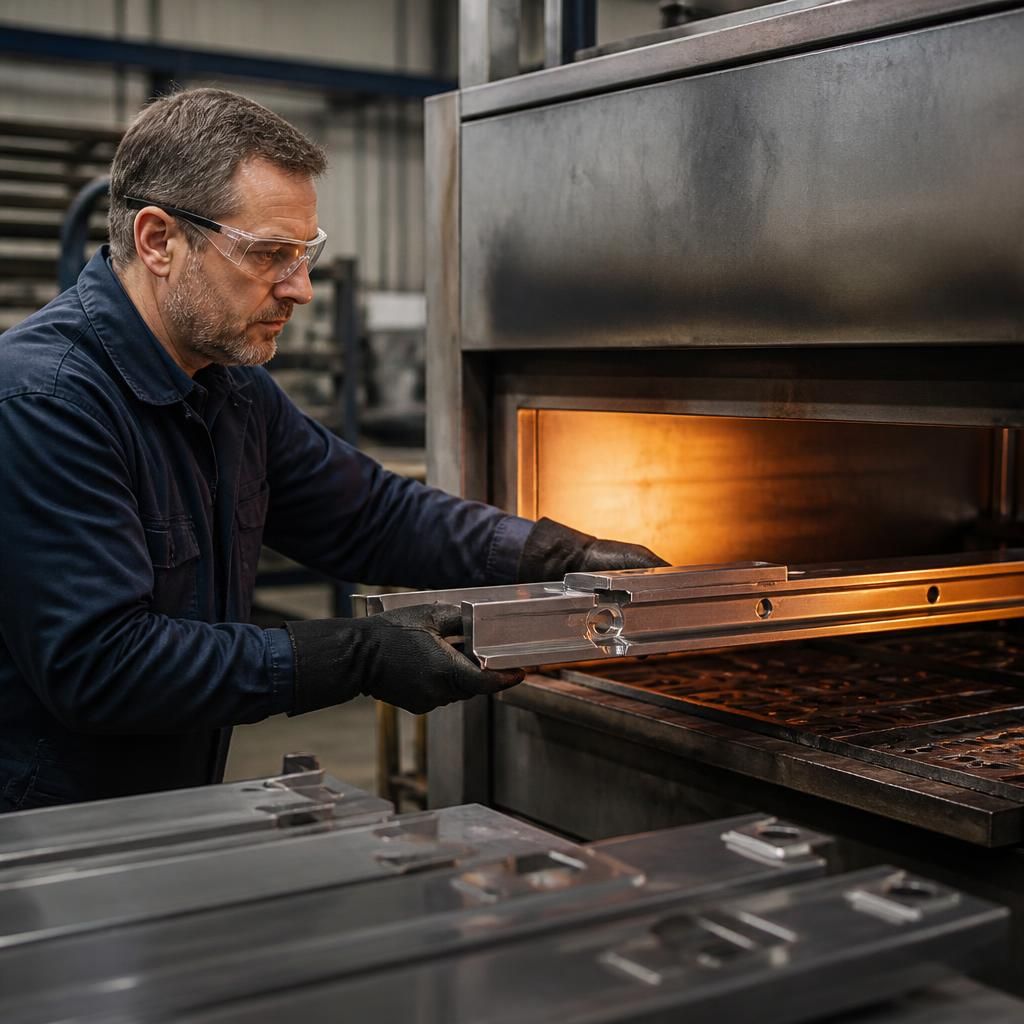
Cure control is central to a fair durability comparison. Powder coating performance depends on the metal reaching the specified cure temperature for the required dwell time; the oven air setting alone does not confirm this. A part that has been under-cured may show reduced adhesion and mechanical strength, while excessive curing can affect colour, gloss and film properties. Liquid coatings have a different risk profile: their final performance depends on complete drying and, where several coats are used, adequate recoat intervals.
For critical stainless steel components, compare systems using coatings applied under their recommended process conditions rather than by appearance alone. Record the preparation method, film build and cure or drying conditions, then assess adhesion and the finished film after representative heat exposure. This separates the inherent performance of the coating from defects caused by an unsuitable application process.
Discuss your stainless steel high temp coating requirements
Discuss your stainless steel component, operating conditions and preferred application route with the powder-coating team to assess whether a high-temperature powder system is suitable. Providing drawings, quantities and service conditions will help inform the coating recommendation.