

What types of abrasive materials are most effective for sand blasting in preparation for high-temp coatings?
The most effective abrasives for preparing metal before high-temperature coatings are usually aluminium oxide, garnet, steel grit and, where appropriate, silicon carbide, because their cutting action removes contamination and creates a suitable surface profile. The correct choice depends on the metal’s hardness, the required surface finish, the coating specification and whether the component can tolerate potential abrasive contamination.
The most effective abrasive is the one that produces the required surface profile without damaging the metal or leaving contamination that could affect a high-temperature coating. In practice, abrasive selection should be based on the substrate, the coating specification, the existing surface condition and the level of cleanliness required—not simply on how aggressively a material cuts.
Angular abrasives for heavier preparation
Angular media are generally preferred where the surface contains mill scale, oxidation, old coating or tightly bonded contamination. Their sharp edges cut into the surface and create a mechanical key for the coating. The grade must still be controlled: an overly coarse abrasive can create deep peaks that are difficult for a thin coating to cover, while a fine grade may clean the surface without producing enough profile.
Crushed glass is one option for removing corrosion and previous coatings where avoiding ferrous residue is important. It is available in different grades and can provide a relatively clean, angular profile. It should be properly processed and handled to control dust, as poorly controlled blasting media can affect visibility, housekeeping and operator safety.
Steel shot and rounded media
Steel shot has a rounded shape and is more associated with peening and cleaning than with producing a sharply keyed surface. It can be useful where the specification calls for a smoother finish or where controlled impact is needed, but it is not automatically the best choice for every high-temperature coating. The resulting surface may differ substantially from that produced by angular grit.
Rounded glass beads have a similar distinction. They can clean and produce a uniform, satin-like finish with less aggressive cutting than angular media. This may suit a sound metal surface requiring light preparation, but they may be unsuitable where heavy scale or a pronounced anchor profile must be removed. Glass bead residue must also be removed thoroughly before coating.
Non-ferrous and low-contamination options
Garnet and other non-ferrous mineral abrasives are often considered where the risk of iron contamination needs to be limited, particularly on stainless steel, aluminium or other sensitive substrates. They can provide effective cleaning and profiling while avoiding the transfer of ferrous particles associated with some steel media. The precise result depends on the grade, blasting pressure, nozzle distance and condition of the abrasive.
For softer metals, plastic media or other less aggressive abrasives may be appropriate when the aim is to remove a coating without causing excessive erosion or distortion. These materials are not a universal substitute for mineral or metallic grit: they may not remove heavy corrosion or create the profile required by a particular heat-resistant coating. They are selected when preserving the underlying component is more important than maximum cutting power.
Materials that require caution
Silica sand is generally avoided because respirable crystalline silica presents a serious health hazard. Some low-cost industrial by-products can also contain variable levels of contaminants, produce inconsistent profiles or leave residues that interfere with adhesion. Baking soda, dry ice and similar softer cleaning media may remove selected contaminants, but they normally do not create the durable mechanical profile required for a bonded coating. They are therefore specialist cleaning choices rather than default preparation media for high-temperature coating work.
How the correct abrasive is selected
- Identify the substrate. Carbon steel, stainless steel, aluminium and fabricated components respond differently to impact. Softer or thin sections need tighter control of abrasive size, pressure and dwell time.
- Check the coating specification. The coating manufacturer’s technical data should define the required cleanliness standard, surface profile and any restrictions on soluble salts, dust or embedded media. A heat-resistant coating may also have a specified maximum or minimum profile for the dry film thickness being applied.
- Assess the existing surface. Light flash rust, heavy mill scale, weld spatter and multiple layers of old paint may require different preparation strategies. A single abrasive grade may not be the most efficient option for every area of a complex component.
- Control the abrasive condition. Moisture, oil, excessive fines and repeated breakdown alter cutting performance. Recycled media should be screened and replaced when its grading or cleanliness can no longer be controlled.
- Confirm the result. After blasting, the surface should be checked for visible contamination, dust, embedded abrasive and the specified surface profile. Inspection should take place before the prepared metal is exposed to conditions that could cause flash rusting or renewed contamination.
For this reason, the “best” abrasive is not necessarily the hardest or most aggressive material. It is the media grade that achieves the specified preparation consistently while preserving the component and maintaining compatibility with the high-temperature coating system. A controlled trial on a representative area can be useful where the substrate, old coating or required finish is unusual.
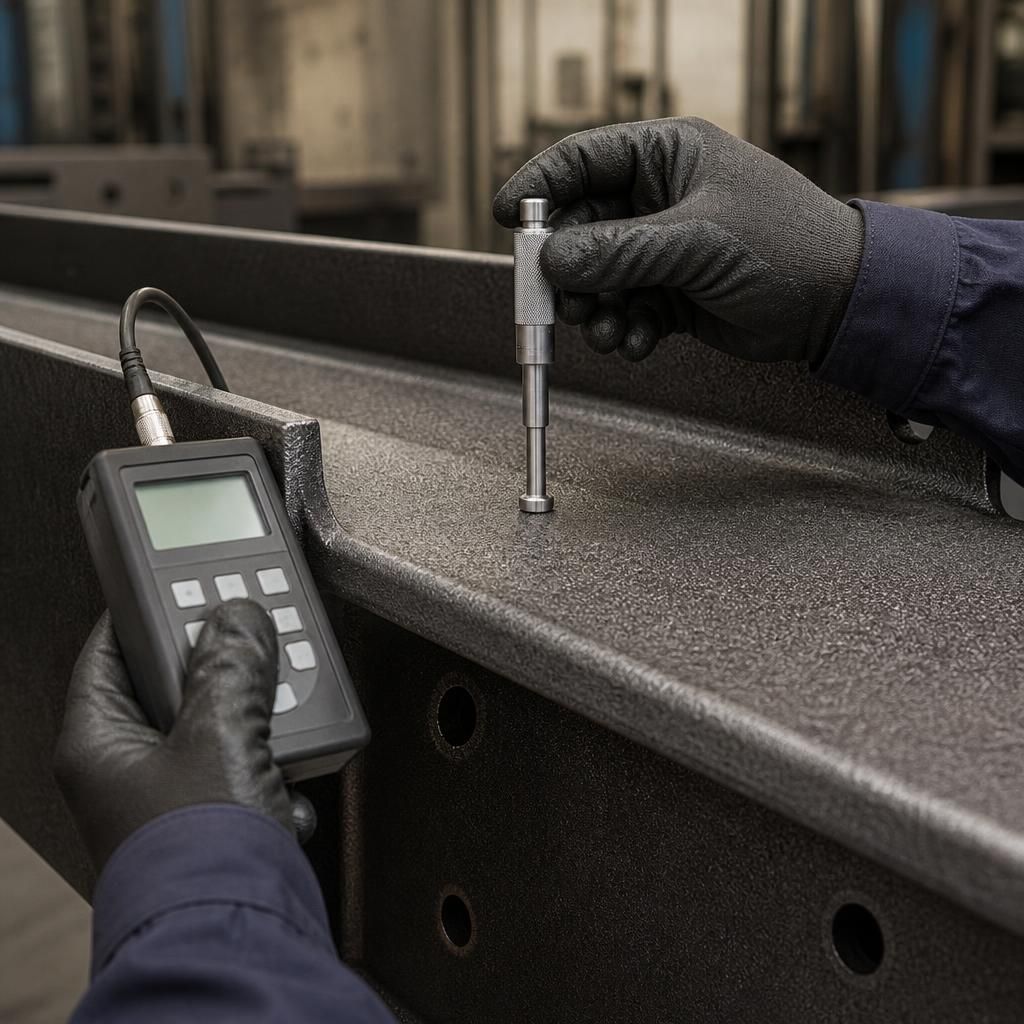
Abrasive effectiveness is determined not only by how clean the metal looks, but by the geometry of the profile left behind. For high-temperature coatings, the profile should provide consistent coverage across peaks, valleys and edges without creating isolated high points where the film may be thinner than specified.
Profile assessment should therefore consider the consistency and distribution of the surface texture, rather than relying solely on visual inspection. A surface comparator, suitable profile gauge or replica method can help confirm that the blasted finish is compatible with the coating manufacturer’s requirements. This is particularly important on fabricated parts where welds, corners and changes in section may receive a different impact from the abrasive than broad, flat areas.
Where a trial area is possible, comparing the measured profile on representative sections helps establish whether the selected abrasive and blasting settings are producing a uniform result. The same check can identify areas that need further preparation before the high-temperature coating is applied.