

What are the key factors to consider when selecting a provider for sand blasting services targeted at high-temp coating applications?
When selecting a sand blasting provider for high-temp coating applications, assess their understanding of the coating system, control of surface profile and cleanliness, choice of abrasive and equipment, and inspection procedures. Also consider their experience with the size and type of your components, ability to prevent contamination between preparation and coating, and collection and delivery arrangements for businesses across the Midlands.
The right sand blasting provider for a high-temp coating project is one that can translate the coating specification into a controlled preparation process, manage component-specific risks and provide evidence that the prepared parts are suitable for coating. Selection should therefore cover technical competence, substrate knowledge, handling methods, documentation, masking capability and the provider’s ability to work to your production and quality requirements.
Check their understanding of the complete coating system. High-temperature coatings are selected for a particular operating environment, temperature range and substrate. The preparation contractor should be able to work from the coating manufacturer’s technical data and your engineering specification rather than applying a standard blasting treatment to every part. Important details include the required surface condition, permitted profile, maximum service temperature, curing process and whether the coating has specific restrictions relating to residual abrasive or surface salts.
Ask how the provider would deal with the material itself. Carbon steel, stainless steel, castings and previously coated components can require different preparation controls. For example, blasting media or equipment previously used on one metal may introduce contamination when used on another. Cast surfaces may contain porosity or embedded residues, while welded fabrications may present weld spatter, sharp edges and heat-affected areas. A competent provider should identify these issues before processing rather than treating them as defects after coating.
Assess how they handle component geometry and masking. High-temperature parts often include bores, threads, machined faces, gasket seats, flanges or close-tolerance interfaces that must not receive abrasive treatment or coating. Selection should include a discussion of:
- which surfaces require masking or plugging;
- how masking materials will withstand blasting without lifting or shedding debris;
- how internal passages, recesses and narrow gaps will be reached safely;
- how sharp edges will be treated to reduce the risk of premature coating failure; and
- how dimensional or surface-finish limits will be protected.
This assessment is particularly important where the component will be assembled directly after coating. Inadequate protection of mating surfaces can create rework, affect fit or interfere with heat transfer in service.
Look for a defined pre-treatment assessment. Before accepting a batch, the provider should establish the starting condition of the parts, including existing paint, rust, scale, oil, weld residues and any evidence of chemical contamination. They should also clarify whether degreasing, stripping, repair or additional preparation is required before blasting. This prevents the abrasive process from being used to solve problems it is not designed to remove, such as heavy oil contamination or substrate damage.
It is also useful to agree how damaged or unsuitable items will be identified. A clear process for recording dents, corrosion pits, distortion, inaccessible areas or unexpected coatings helps distinguish an issue originating in the supplied component from one created during preparation. For repeat work, photographs or condition records can support consistent decisions between batches.
Review process control and traceability. A suitable provider should be able to explain how preparation settings are selected and kept consistent for the job. Relevant controls may include abrasive condition, nozzle or blast equipment condition, working pressure, operator technique, part positioning and the time between preparation and coating. The exact settings should be determined by the specification and component, not copied without review from an unrelated job.
Documentation is an important selection factor for B2B work. Depending on the application, useful records may include the job specification, material identification, batch or part references, preparation date, deviations, release status and any agreed hold points before coating. Traceability is especially valuable where components form part of safety-critical, regulated or warranty-sensitive equipment.
Consider how the provider manages handling after blasting. Prepared metal can be affected by fingerprints, moisture, workshop dust and contact with unsuitable surfaces before coating. Parts should be moved, supported and stored in a way that protects the prepared surface and prevents damage to edges or masked areas. Ask how components are identified during transfer and how they are kept separate from unprepared, oily or differently specified work.
Check communication and specification control. The provider should confirm what information is needed before work begins, including drawings, coating data sheets, masking plans, acceptance criteria, component quantities and any restrictions on abrasive materials. They should have a clear method for raising questions when the supplied information conflicts or when the condition of a part differs from the agreed specification. This reduces the risk of an apparently acceptable preparation process being unsuitable for the final high-temperature coating.
Finally, compare providers on their ability to support the whole workflow rather than on blasting alone. Ask whether they can manage batches consistently, identify exceptions, supply the records your quality system requires and coordinate the prepared parts with the next coating stage. A provider that combines technical assessment, controlled preparation, careful handling and usable documentation is better placed to support dependable high-temperature coating work than one selected solely on price or equipment capacity.
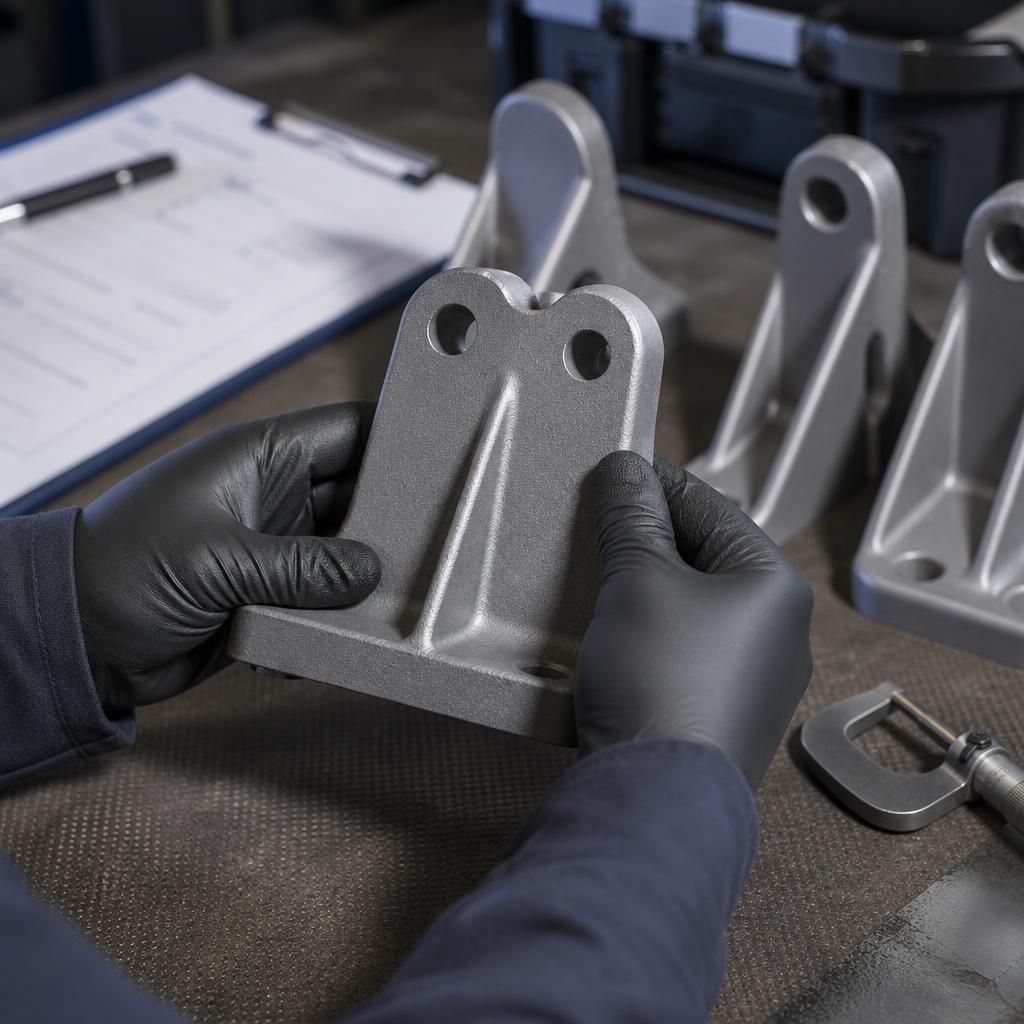
A practical way to assess a sand blasting provider is to request a representative trial piece or first-off inspection before approving a full batch. The test should use the same substrate, geometry and previous surface condition as the production components, because results from a simple flat panel may not reveal problems affecting castings, welds, recesses or machined interfaces.
Agree in advance how the trial will be assessed. The review may cover visual uniformity, removal of unwanted material, preservation of critical features and compatibility with the specified high-temperature coating system. The provider should record any agreed adjustments before production begins, so the accepted result becomes a clear reference for subsequent batches rather than relying on subjective comparisons between operators.
Discuss Your High-Temperature Coating Preparation Requirements
Discuss your component details, coating specification and preparation requirements with the Powder-coatings.co.uk team before approving a sand blasting process. This can help establish a suitable approach for your high-temperature coating application.