

How does the surface condition of the metal prior to sand blasting impact the effectiveness of high-temp coatings?
The metal’s condition before sand blasting directly affects how well the surface can be profiled and cleaned for high-temperature coating. Oil, grease, heavy corrosion, mill scale or existing coating defects can prevent consistent preparation, reducing adhesion and increasing the risk of premature coating failure.
The condition of the metal before blasting determines whether the process can produce a clean, evenly textured and structurally sound surface for a high-temperature coating. Blasting is a preparation step, not a repair process: it exposes and refines the substrate, but it cannot remove deep pitting, correct poor fabrication or compensate for unsuitable metal.
Surface soundness is the first consideration. Metal with pits, folds, laminations, cracks or porous welds can retain debris and create small voids beneath the coating. These areas may later become points of localised corrosion, blistering or loss of adhesion when the component is exposed to heat. Abrasive blasting can reveal such defects more clearly, allowing them to be assessed before coating, but it does not restore the affected area. Where necessary, fabrication repairs, dressing or replacement should take place before final surface preparation.
Fabrication quality also affects the result. Weld spatter, sharp projections, burrs and abrupt edges can prevent the abrasive from reaching every surface evenly. A coating applied over these features is more likely to be thin at edges or uneven around joints. Removing spatter, rounding severe sharp edges where the design permits, and ensuring welds are suitably finished gives blasting a more consistent starting point.
Part geometry influences how the abrasive acts. Recesses, internal corners, narrow channels and overlapping sections can be difficult to prepare uniformly. A heavily textured exterior does not necessarily mean that concealed areas have received the same treatment. Components should therefore be assessed according to their shape, access points and intended coating thickness. In some cases, the blasting method, nozzle angle or sequence needs to be adjusted so that sheltered areas are not left with a different surface condition from the rest of the part.
The original condition of the metal also affects the consistency of the surface profile. Material that has been exposed to weathering or previous processing may respond unevenly, with softer and harder areas producing different textures under the same blast conditions. This can lead to variations in coating film build and appearance. The abrasive, pressure and technique must be matched to the substrate so that sufficient texture is produced for mechanical keying without unnecessarily damaging the metal.
Heat history can be relevant to the substrate. Welded or previously heated components may have changes in scale, discolouration, distortion or differing surface characteristics between the heat-affected zone and the surrounding metal. These differences can make inspection and preparation less uniform. Blasting should be considered alongside the component’s manufacturing history, particularly where the part will return to high operating temperatures and any weakness at a weld or joint could become more significant.
Moisture and handling between preparation stages are also important. A freshly prepared surface can be affected by condensation, damp storage or contact with dirty handling equipment before the coating is applied. The part should remain protected from recontamination, and the prepared surface should be checked for loose residue, embedded abrasive and other visible changes before coating. This is especially important for complex components where residue can collect in recesses.
A practical assessment of the pre-blast condition should cover:
- the metal type, thickness and intended service temperature;
- pits, cracks, laminations, porous welds and other substrate defects;
- weld spatter, burrs, sharp edges and fabrication residue;
- recesses, blind holes, joints and areas that may be difficult to reach;
- distortion or heat-affected areas that could influence preparation; and
- the risk of recontamination before the high-temperature coating is applied.
After blasting, inspection should confirm that the surface is visibly uniform, free from loose material and prepared to the specification required by the selected coating system. Where the initial metal condition is particularly variable, it may be appropriate to separate parts by condition or identify areas requiring additional preparation. This creates a more predictable basis for coating application and helps distinguish a coating failure from a defect that originated in the substrate.
In short, the best high-temperature coating result depends on starting with metal that is structurally sound, suitably finished and accessible to the blasting process. Careful pre-blast assessment prevents the abrasive stage from being used to hide fabrication problems and makes the final coating more consistent with the demands placed on the component.
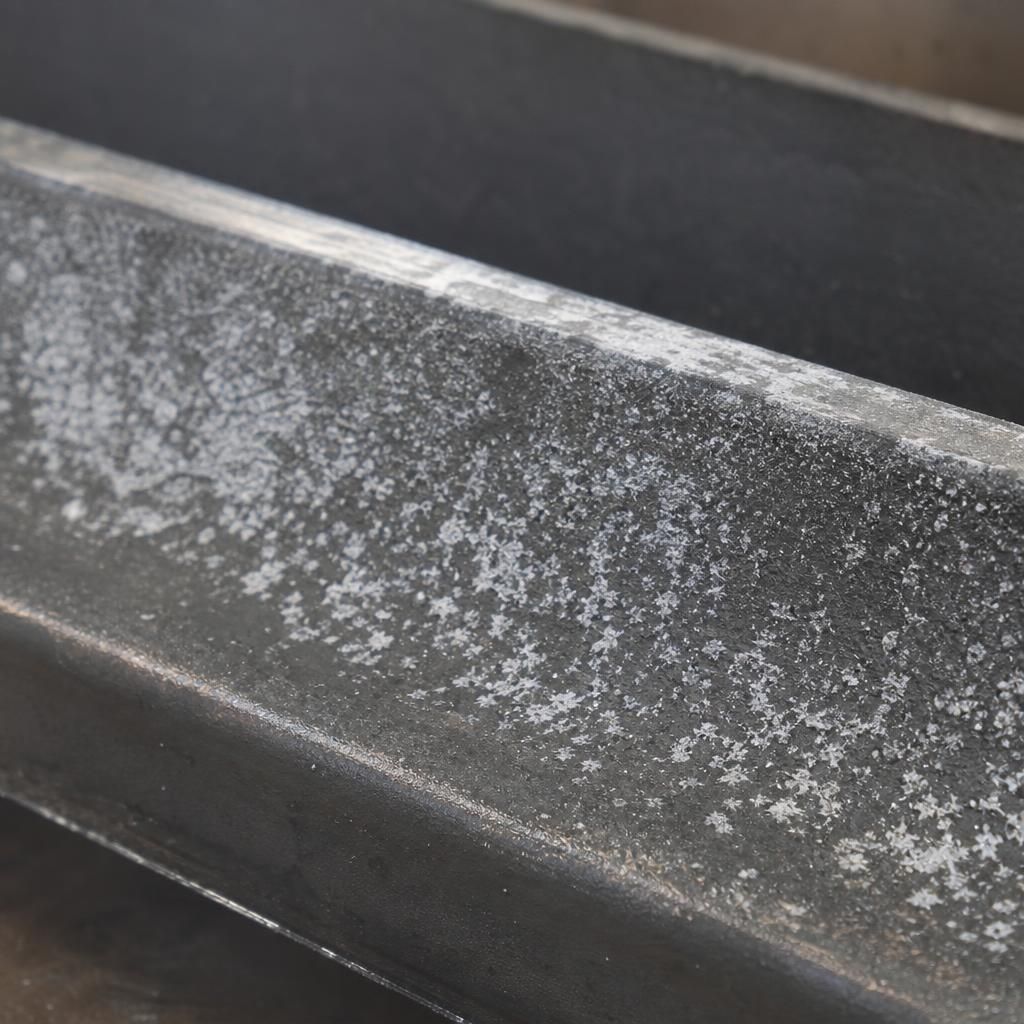
Soluble salts on the metal before blasting can remain a hidden cause of poor high-temperature coating performance. Unlike visible rust or loose contamination, salt deposits may not be obvious during a visual inspection, yet they can attract moisture beneath the coating and contribute to blistering, underfilm corrosion and loss of adhesion during service.
Where components have been exposed to marine air, road deposits, chemical processing or handling environments, salt contamination should be considered before abrasive preparation begins. Blasting can improve the surface profile without reliably removing every soluble residue. Appropriate cleaning and drying may therefore be needed before blasting, followed by inspection to confirm that the surface is suitable for the selected high-temperature coating system.
Discuss Your Metal Surface Preparation Requirements
Discuss your component’s material, operating temperature and existing surface condition with our team to establish the appropriate preparation requirements for a high-temperature coating. Provide details of any previous coatings, contamination or difficult-to-access areas so the work can be assessed accurately.