

What considerations should be made when choosing between different finishes for powder coating aluminium and steel frames?
When choosing a powder coating finish for aluminium or steel frames, assess the frame’s environment, required durability, appearance, substrate and maintenance needs. The right choice balances colour and texture with resistance to corrosion, UV exposure, abrasion, chemicals and handling during installation.
The best powder coating finish for an aluminium or steel frame is determined by the required appearance, the way the frame will be used, the tolerances of adjoining components and the level of finish consistency needed across the project. A suitable specification should therefore cover more than the colour: it should identify the surface effect, gloss level, coating system, colour standard, inspection requirements and any areas that must remain uncoated.
Consider the visual specification
Colour is often the first consideration, but the same colour can look substantially different in smooth, matt, satin, gloss or textured finishes. Gloss affects how strongly light is reflected and how visible minor surface variation may be. Textured finishes can provide a more pronounced visual effect, while smooth finishes are generally selected where a cleaner, more uniform appearance is required.
For a project involving multiple frames or components, define the colour using a recognised reference rather than a descriptive term such as “dark grey” or “off-white”. A physical sample or approved powder-coated panel is useful where the appearance is important, particularly for metallic, mica, textured or special-effect finishes. These finishes can show greater variation according to viewing angle, batch and application conditions, so the acceptance method should be agreed before production.
Match the finish to the frame’s use
Frames that are frequently handled, installed alongside other materials or exposed to regular contact may need a finish selected for its ability to disguise minor marks and maintain a consistent appearance. A highly reflective surface can make scuffs and local imperfections more noticeable, whereas a lightly textured or lower-gloss finish may be more forgiving. This is a visual and practical decision rather than an automatic indication that one finish is structurally superior to another.
Where frames form part of an assembled product, check the finish against seals, gaskets, fixings, glazing systems and moving interfaces. The selected coating should not interfere with clearances, bonding, earthing points or the operation of components. Masking requirements should be identified on the drawing, including threaded holes, bearing surfaces, hinge locations and faces that must make electrical or mechanical contact.
Allow for the difference between steel and aluminium
Steel and aluminium do not behave identically during manufacture, handling and coating. Their surface condition, design details and required pre-treatment can affect the final appearance and the suitability of a particular coating system. Welds, folded edges, corners, perforations and deep recesses should be reviewed because they can influence how consistently the powder is deposited and cured.
Aluminium frames may be specified for projects where a clean architectural appearance and low component weight are important. Steel frames may have heavier sections, welded joints or fabricated details that require closer consideration when defining acceptable visual variation. The finish specification should state whether small differences between sections, weld areas or separate production batches are acceptable.
Specify the coating system, not just the topcoat
A finish may consist of a single powder coat or a system involving more than one layer, depending on the service conditions and the performance required. If a primer, tie coat or specialist protective layer is proposed, confirm that it is compatible with the chosen topcoat and with the metal substrate. The specification should also state whether the requirement is for a standard decorative finish or a more specialised protective coating.
Coating thickness should be controlled within the limits appropriate to the powder and component design. Excessive build-up can affect holes, threads, joints and fitted parts, while insufficient coverage may produce an unacceptable appearance or reduce the intended protection. Critical dimensions should be identified before coating so that the coater can assess masking, racking and finishing requirements.
Check colour and batch consistency
When several frames will be viewed together, colour consistency is often more important than selecting an unusual finish. Use the same agreed colour reference, gloss requirement, texture and coating system across the complete order. If components will be coated in separate batches, establish how colour variation will be assessed and whether adjacent parts need to be processed together.
Samples should represent the actual substrate and, where practical, the relevant component geometry. A flat test panel may not show the same visual effect as a frame with corners, apertures and folded sections. Approval should cover the overall appearance, not merely a colour code viewed in isolation.
Define inspection and acceptance criteria
A clear specification reduces disagreement after coating. It should identify the viewing distance and lighting conditions for visual inspection, the permitted level of texture or gloss variation, and how visible marks, pinholes, inclusions or colour differences will be treated. Inspection should distinguish between areas that are visible in normal service and concealed faces that have different practical requirements.
It is also useful to record the required finish on drawings or purchase documents rather than relying on an informal description. Include the substrate, colour reference, gloss or texture, coating system where known, masking points, critical dimensions and any sample approval. This gives the powder coater and the fabricator the same basis for assessing the finished frames.
For larger or repeat requirements, discuss the specification with the powder coater before production. A Midlands specialist such as Powder-coatings.co.uk can review the proposed finish against the frame design, coating process and collection or delivery requirements, helping the final choice remain practical as well as visually suitable.
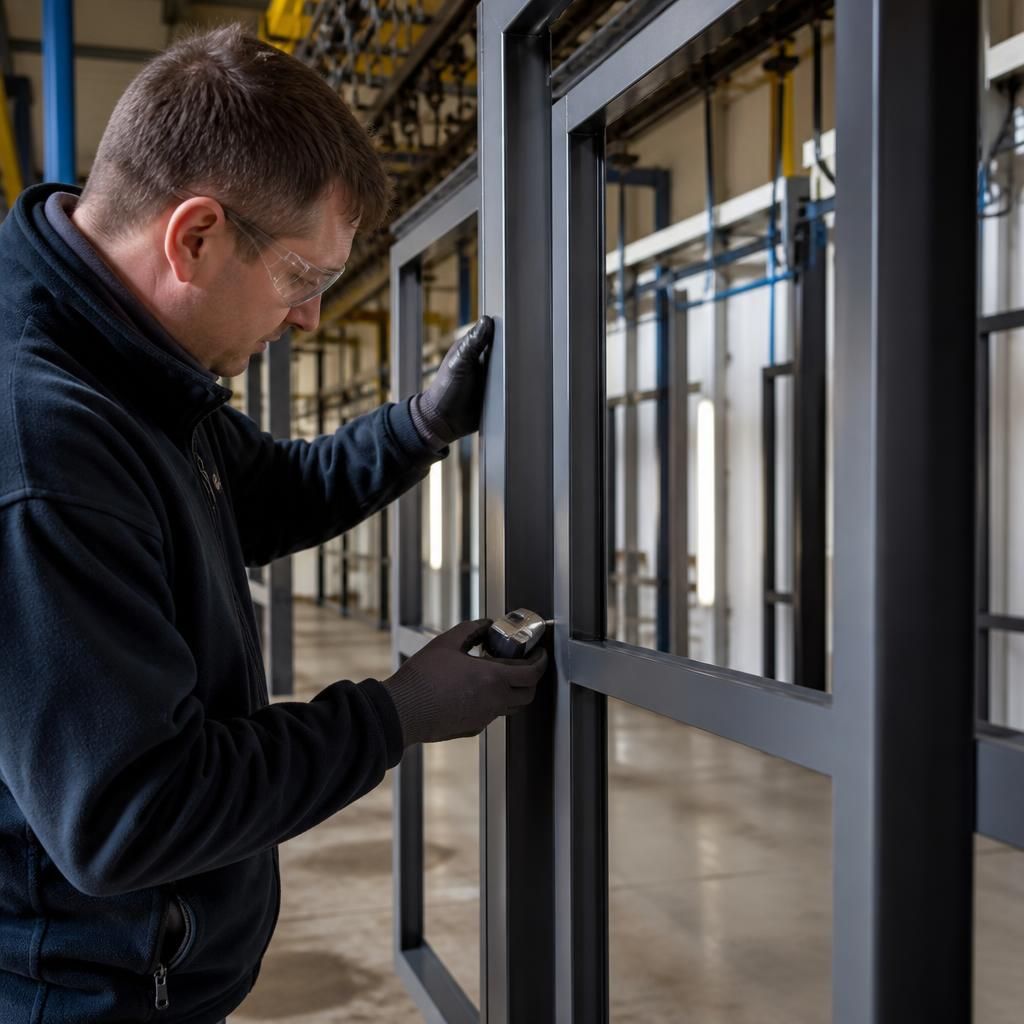
Choosing between powder coating finishes for aluminium and steel frames should include whether the coating is primarily decorative or needs to provide a specialist functional surface. Standard architectural finishes may be suitable where appearance and general protection are the main requirements, while a nylon or other protective coating may be considered for components exposed to repeated abrasion, impact, friction or chemical contact.
Functional coatings can affect dimensional tolerances, flexibility at edges and the way parts fit together. Review clearances, holes, threads, sliding faces and contact points before selecting the finish, particularly where the frame forms part of an assembly. The coating type should also be checked against the substrate, required pre-treatment and curing process for the specific aluminium or steel component.
Where performance is more important than a particular colour or surface effect, describe the service conditions to the powder coater rather than specifying a finish by name alone. This allows the proposed coating system to be assessed against the frame’s exposure, handling and contact requirements before production.
Discuss the right finish for your aluminium or steel frames
Share your frame drawings, intended use and finish requirements with Powder-coatings.co.uk for practical guidance on selecting a suitable powder coating specification. Include any critical dimensions, masking points and sample requirements so the proposed finish can be assessed before production.