

What are the maintenance requirements for powder-coated steel and aluminium frames?
Powder-coated steel and aluminium frames require routine cleaning with mild detergent and water, followed by thorough rinsing and drying to remove dirt and pollutants. Inspect the finish periodically for scratches, chips, corrosion or damaged seals, and repair any defects promptly using compatible materials to prevent deterioration.
Maintenance for powder-coated steel and aluminium frames is primarily preventative: protect the coating from aggressive chemicals, abrasion, impact, trapped moisture and unsuitable repairs. The correct approach depends on the frame’s location, exposure and use, but well-maintained powder coating should not require stripping or repainting as part of normal care.
Use suitable cleaning and care products
- Avoid abrasive pads, wire brushes, scouring powders and tools that can mark the coating or expose the substrate.
- Do not use strong solvents, highly alkaline products, acidic cleaners, paint strippers or cement-removing chemicals unless their compatibility with the coating has been confirmed.
- Remove cement, mortar, concrete splashes, metal swarf and other construction residues carefully. These materials can retain moisture or react with the surface if left in contact with it.
- Where a specialist chemical is necessary, follow its instructions and test it on an inconspicuous area before wider use.
Control water and moisture
Frames should be installed and maintained so that water can drain freely rather than collecting at joints, channels, sill areas or around fixings. Keep drainage paths clear and avoid sealing over designed outlets. Persistent dampness is particularly important on steel, because any breach in the coating can allow corrosion to develop beneath or around the finish. On aluminium, trapped moisture around dissimilar-metal fixings can contribute to galvanic corrosion, so compatible fixings and separation materials should be retained.
Protect the finish from physical damage
Powder coating is durable, but it is not immune to impact from tools, ladders, machinery, abrasive packaging or poorly controlled handling. Use protective padding when frames are moved, stacked or transported, and prevent metal-to-metal contact where components may rub together. Do not drag equipment against finished frames or use the coated surface as a working platform. Damage caused during installation should be dealt with using a repair system suitable for the original coating and the underlying metal.
Maintain associated components
Gaskets, seals, hinges, handles, brackets and fasteners affect the long-term performance of a coated frame. Replace perished seals and loose or damaged hardware before they permit movement, water ingress or fretting at the coating. Fasteners should be appropriate for the frame material and environment; incompatible metals can create localised corrosion, especially where moisture is present. Any replacement component should be fitted without cutting, drilling or grinding the coating unnecessarily.
Approach repairs carefully
Minor coating damage should not simply be covered with a generic paint. A suitable touch-up material must be compatible with the powder coating, substrate and exposure conditions, and the affected area should be prepared without spreading damage into sound coating. Larger defects, corrosion at joints or damage extending beneath the finish generally require assessment by a coating specialist. Depending on the extent and accessibility of the defect, the appropriate remedy may involve local preparation and repair or removal and recoating of the component.
Adapt the maintenance plan to the environment
Frames exposed to marine air, road salt, industrial pollutants, heavy traffic, abrasive dust or frequent handling need more careful monitoring than those in a sheltered, clean environment. The maintenance record should identify the frame location, coating system, substrate, exposure conditions and any remedial work carried out. This helps ensure that recurring problems, such as water retention or incompatible fixings, are corrected at their source rather than repeatedly repaired.
For commercial and industrial installations, maintenance responsibilities should be included in the handover and asset-management documentation. Staff should know which products and tools are unsuitable, while contractors should be told that drilling, welding, cutting or grinding near coated frames can compromise the protective system. If such work is unavoidable, the exposed area and any surrounding coating affected by heat or sparks should be treated using an agreed repair procedure.
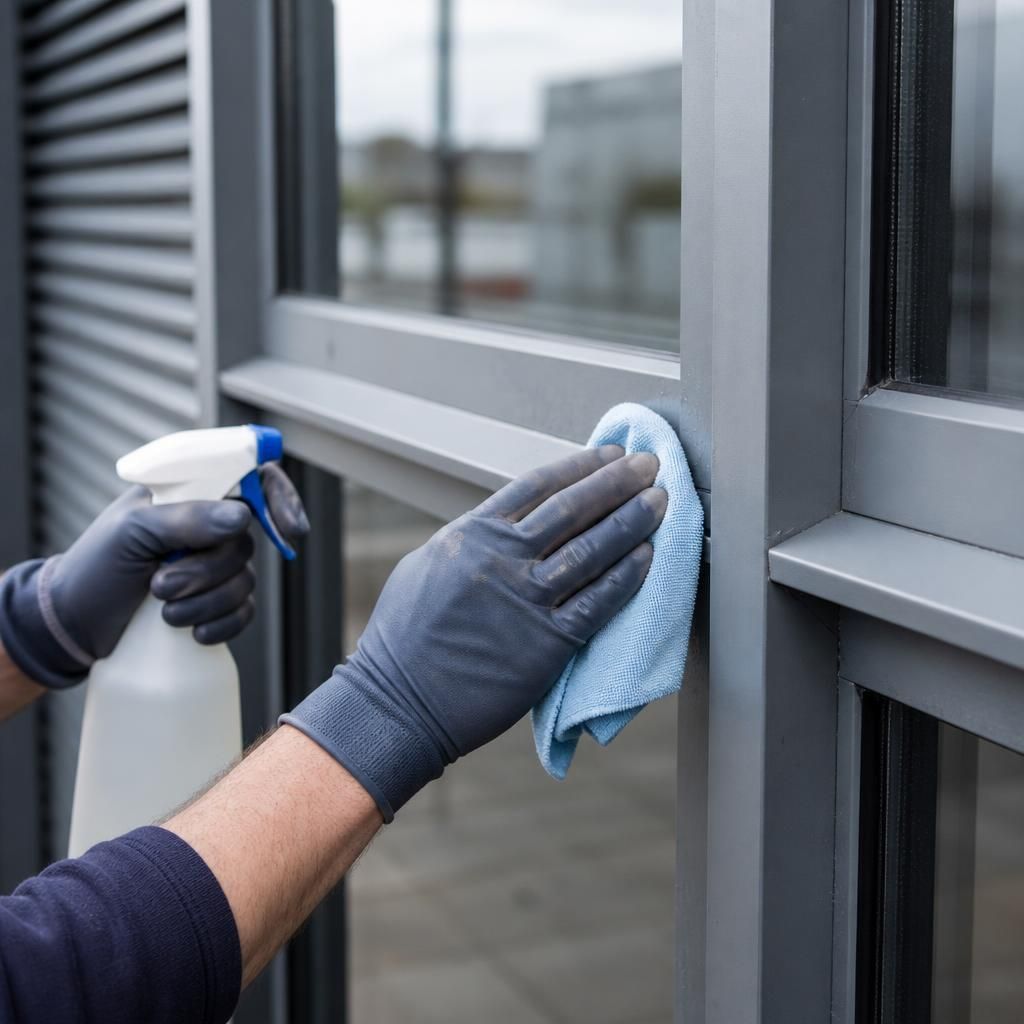
Cleaning should be controlled as well as regular. Use a soft cloth or non-abrasive brush with diluted mild detergent, then rinse thoroughly with clean water and dry the frame with a soft cloth. Avoid high-pressure jets directed at seals, joints or coating edges, as forced water can enter interfaces and contribute to premature deterioration.
Pay particular attention to ledges, recesses and lower frame sections where airborne deposits can collect. Removing these deposits before they become compacted reduces the need for aggressive scrubbing and helps preserve the coating’s appearance without abrading its surface.
Discuss maintenance requirements for your powder-coated frames
For guidance on maintaining a powder-coated steel or aluminium frame in its specific operating environment, discuss the coating system and planned use with powder-coatings.co.uk. The team can help identify suitable care requirements and repair considerations before remedial work is arranged.