

What steps are involved in the powder coating process for galvanised steel?
The powder coating process for galvanised steel involves inspecting the zinc surface, removing contaminants, preparing and pre-treating the metal, then applying powder electrostatically. The coating is subsequently cured in an oven and inspected to confirm an even, properly bonded finish.
A powder coating job on galvanised steel is carried out as a controlled sequence of assessment, preparation, coating and verification. The galvanising layer must remain intact while providing a clean, suitably receptive surface for the powder system, so the process is adapted to the condition, profile and construction of each component.
- Review the component and coating requirements. The coater first considers the steel’s dimensions, shape, intended use and required finish. The condition of the zinc coating is checked for runs, ash, storage staining, white corrosion products, sharp edges and areas affected by welding or fabrication. The powder type, colour, gloss and performance requirements are also confirmed at this stage.
- Plan racking, masking and drainage. Components are positioned so that all required faces can be reached and the parts can be safely supported during processing. Holes, threads, machined faces, electrical contact points and other areas that must remain uncoated may be masked. Hollow sections need suitable drain and vent arrangements; trapped chemicals, moisture or air can otherwise interfere with the finish or create safety issues during heating.
- Condition the galvanised surface without unnecessarily removing zinc. The preparation method is selected according to the condition of the galvanising. Loose deposits, handling marks and surface contamination are dealt with using a method that creates a suitable key while retaining the protective zinc layer. Weld spatter, sharp projections and fabrication defects may need attention because powder follows the underlying surface rather than concealing significant irregularities.
- Apply a compatible pre-treatment where specified. A chemical or conversion treatment can improve the surface’s resistance to corrosion and help establish a consistent base for the powder. The treatment must be suitable for galvanised steel and thoroughly controlled, including rinsing and drying where required. Residual chemicals or moisture beneath the powder can lead to blistering, staining or loss of adhesion.
- Allow the part to release retained gases and moisture. Galvanised steel can contain trapped air or moisture, particularly around overlaps, seams, folded sections and porous areas of the zinc coating. A controlled heating or conditioning stage may be used where the job calls for it. This reduces the risk of pinholes, bubbles and small craters appearing as the powder heats and flows.
- Protect areas that must remain functional. Masking is checked before coating, and the racking arrangement is reviewed to limit marks on visible faces. Good electrical contact is needed for electrostatic transfer, but contact points may subsequently require touch-up or be left clear by design. The arrangement therefore affects both coating coverage and the component’s later assembly.
- Apply the selected powder system. The powder is deposited in a controlled pattern so that edges, recesses, corners and less accessible faces receive appropriate coverage. Operators take account of the Faraday-cage effect, which can make deep recesses harder to coat, and avoid excessive build-up on edges or in corners. The target is a continuous film that matches the specified appearance and service requirements.
- Develop the coating in the curing oven. The part is heated until the powder melts, flows and chemically cross-links. The relevant curing condition is based on the powder manufacturer’s technical data and the actual metal temperature, not simply the oven’s displayed air temperature. Galvanised sections of different thicknesses may reach the required metal temperature at different rates, so loading and oven control affect the final result.
- Cool, demask and handle carefully. Once the coating has completed its cure, the component is allowed to cool sufficiently for safe handling. Masking is removed, contact areas are examined and any required finishing work is completed using a compatible method. Early abrasion or stacking while the coating is still warm can mark the surface.
- Carry out final quality checks. The finished part is checked for consistent appearance, coverage, runs, pinholes, craters, missed areas and damage. Depending on the specification, checks may also include coating thickness, adhesion and cure. Any defect is assessed against the agreed acceptance criteria before the component is released for assembly or delivery.
For complex galvanised fabrications, the most important decisions are usually made before powder is applied: the condition of the zinc, the design of drainage and venting, the areas to be masked, and the compatibility of the pre-treatment and powder system. These factors have a direct bearing on the durability and appearance of the completed coating.
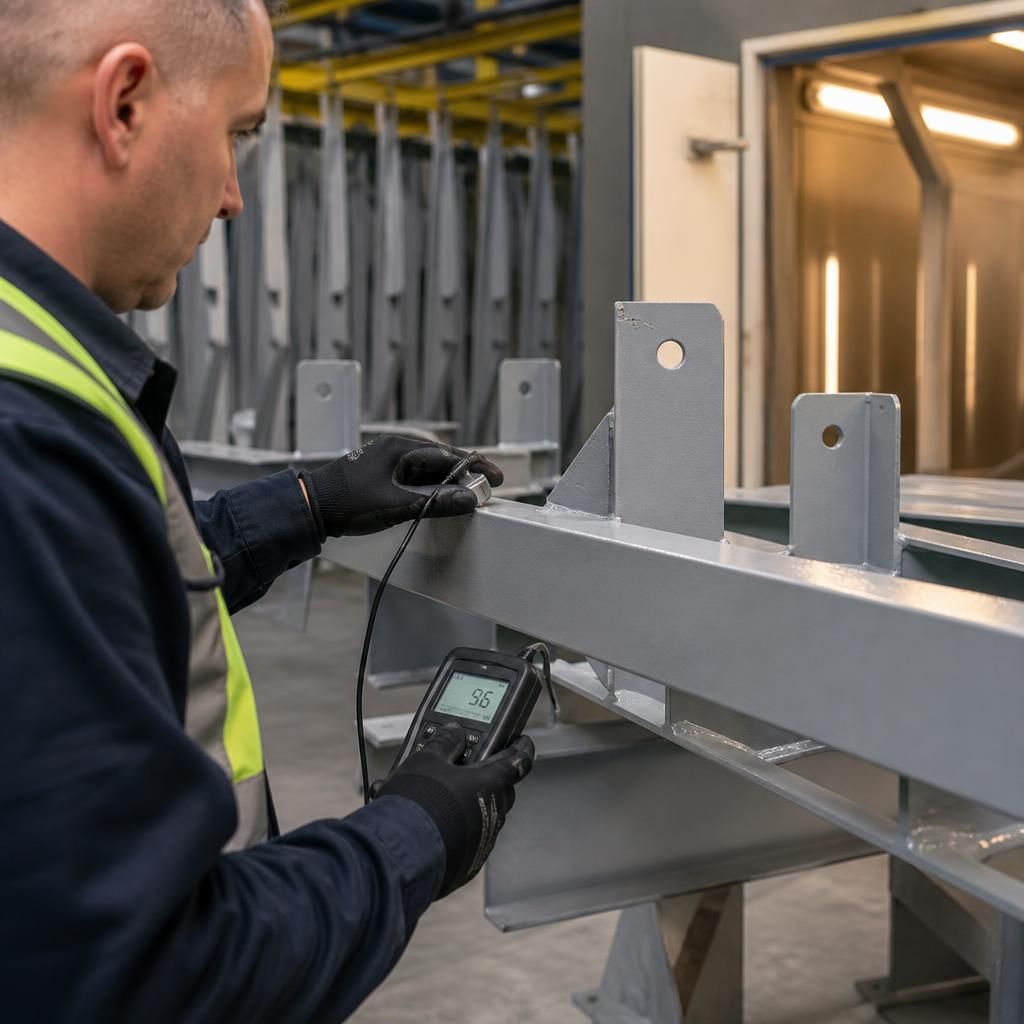
For repeat batches of galvanised steel, process control is as important as the individual coating stages. A representative component can be used to confirm the racking arrangement, powder application and curing conditions before the full batch is processed. The resulting finish is then assessed against the agreed appearance, thickness, adhesion and cure requirements, with the relevant settings and observations recorded for comparison.
This approach helps identify changes in the batch, such as differences in section thickness, zinc condition or fabrication detail, before they affect a large number of parts. It is particularly useful where components share the same specification but include different shapes, hollow sections or areas that are more difficult to coat consistently.