

What challenges and solutions exist for applying powder coating to previously painted or coated galvanised steel surfaces?
Previously painted or coated galvanised steel can present poor adhesion, trapped contaminants, incompatible coatings and surface defects that affect the new powder finish. The solution is to assess the existing coating, remove unsound or incompatible material, clean and mechanically key the surface, repair defects where necessary, then select a compatible powder-coating system and confirm it with a test area.
Powder coating previously painted or coated galvanised steel is feasible, but the result depends on the condition, chemistry and adhesion of the existing layers. The main technical decision is whether the original coating can form a stable base for the new system or whether it must be removed far more extensively to expose sound zinc or steel. A coating that appears intact may still blister, soften, release contaminants or fail when heated during powder curing.
Why existing coatings create difficulties
Galvanised steel is already protected by a zinc layer, while a previously painted component may have one or more primers, topcoats, conversion treatments or powder finishes above it. These layers can have different rates of thermal expansion. Heating them together can create stress at the interfaces, particularly around sharp edges, welds, drilled holes and areas where the original finish is thin.
Unknown coatings also create a compatibility risk. An old liquid paint may soften when exposed to cleaning chemicals or heat, whereas a cured powder coating may remain hard but have poor adhesion to the zinc beneath it. Residues from oils, silicones, processing fluids, salts or cleaning products can also be held in the existing film. When the part enters the curing oven, volatile material may escape and produce pinholes, craters, bubbles or localised loss of adhesion.
Establishing whether the old finish is a suitable base
A coating assessment should consider more than visual appearance. Areas that are lifting, cracked, chalked, blistered or visibly contaminated are unsuitable as a foundation. Sound-looking areas should also be checked for adhesion, film continuity and variation in thickness. Testing a representative area can reveal whether the old coating is firmly attached or whether it separates from the galvanised surface under mechanical stress.
The type of existing finish may need to be identified before the preparation route is chosen. Solvent behaviour, hardness, response to abrasion and the appearance of a test cut can help distinguish between common coating types, although unfamiliar or older finishes require caution. If the coating history is unknown, a small trial area or test component is more reliable than assuming that a standard pretreatment will work.
Choosing between partial removal and full stripping
Where the existing coating is firmly bonded and chemically compatible, controlled abrasion may provide a practical key for the new powder. The preparation must remove weak material and create a consistent surface without leaving polished areas that offer little mechanical grip. Edges need particular attention: feathering the transition between retained and removed coating helps prevent a visible ridge and reduces the chance of lifting at the boundary.
More extensive removal is appropriate where adhesion is inconsistent, several incompatible layers are present, or the original coating is damaged throughout. Abrasive blasting, chemical stripping or a combination of methods may be considered, but each has implications for the zinc layer. Excessive blasting can remove or thin galvanising, alter dimensions and round edges. Chemical processes must be suitable for the substrate and followed by thorough rinsing and drying, because residues can interfere with adhesion or cause corrosion beneath the new finish.
If stripping exposes bare steel as well as galvanised areas, the resulting surface may no longer be uniform. The coating system then needs to account for the different substrates rather than treating the part as though it were consistently galvanised. This is one reason a trial section should include edges, welds, recesses and any areas where the original finish has been removed more deeply.
Managing heat-related defects
Moisture and trapped gases are significant concerns when galvanised components are heated. Crevices, overlaps, folded sections and hollow fabrications can retain water or cleaning solution. Zinc and old coating layers may also release gases during the heating cycle. The component should therefore be designed or positioned to drain and vent where possible, and it must be completely dry before powder application.
Preheating may be useful in some coating systems, but it is not a universal remedy. It can improve powder flow on complex geometry while also increasing the risk of outgassing from contaminated or porous areas. The selected powder and curing schedule should be based on the metal temperature reached by the part, not simply the oven air temperature. A coating specialist can use a trial to determine whether the proposed cycle produces pinholes, blisters or excessive gloss variation.
Powder selection and intermediate coats
The new powder should be compatible with the retained coating and appropriate for the component’s service conditions. Compatibility includes more than colour and gloss: the binder chemistry, curing requirements, flexibility, chemical resistance and adhesion characteristics all matter. Applying a new powder over an unsuitable old layer can conceal the problem temporarily but will not correct weak adhesion below it.
On difficult surfaces, a compatible primer or bonding layer may be considered. Its purpose must be clear: it may improve adhesion, provide additional corrosion protection or isolate an existing layer. It should not be used to cover loose coating, contamination or moisture. Additional film build can also affect tolerances, sliding fits, threads, hinges and mating faces, so these areas may need appropriate masking before treatment.
Controlling geometry and finish quality
Previously coated parts often have rounded edges, filled recesses or accumulated material around fastener holes. Adding another coating can make these features more pronounced. Masking plans should protect earth points, threaded holes, bearing seats, identification surfaces and other areas where coating thickness would affect assembly. Racks and contact points should be positioned so that the powder reaches less accessible faces without creating heavy marks or uncoated shadows.
Inspection should cover the entire system, not just the new top surface. Useful checks include visual examination for pinholes and inclusions, coating thickness measurements, adhesion testing and confirmation that the powder has cured correctly. For critical components, the acceptance criteria should be agreed before production, including permitted colour or gloss variation, edge coverage, repaired areas and areas that must remain free of coating.
When a trial is especially important
A test area is particularly valuable when the coating history is unknown, the part cannot tolerate galvanising loss, the component has complex hollow sections, or the finish will be exposed to corrosion, chemicals or repeated temperature changes. The trial should use the intended preparation, powder and curing conditions on a representative part or section. If it passes inspection and, where required, adhesion or performance testing, the same documented method can be applied to the wider batch.
For manufacturers and fabricators, providing details of the original coating, previous service conditions, required appearance, masking points and operating environment helps determine the least disruptive route. In some cases, retaining a sound original coating is practical; in others, complete removal and a purpose-selected system is the more dependable solution. The correct choice is based on the condition of the actual components rather than on whether the galvanised surface looks clean from a distance.
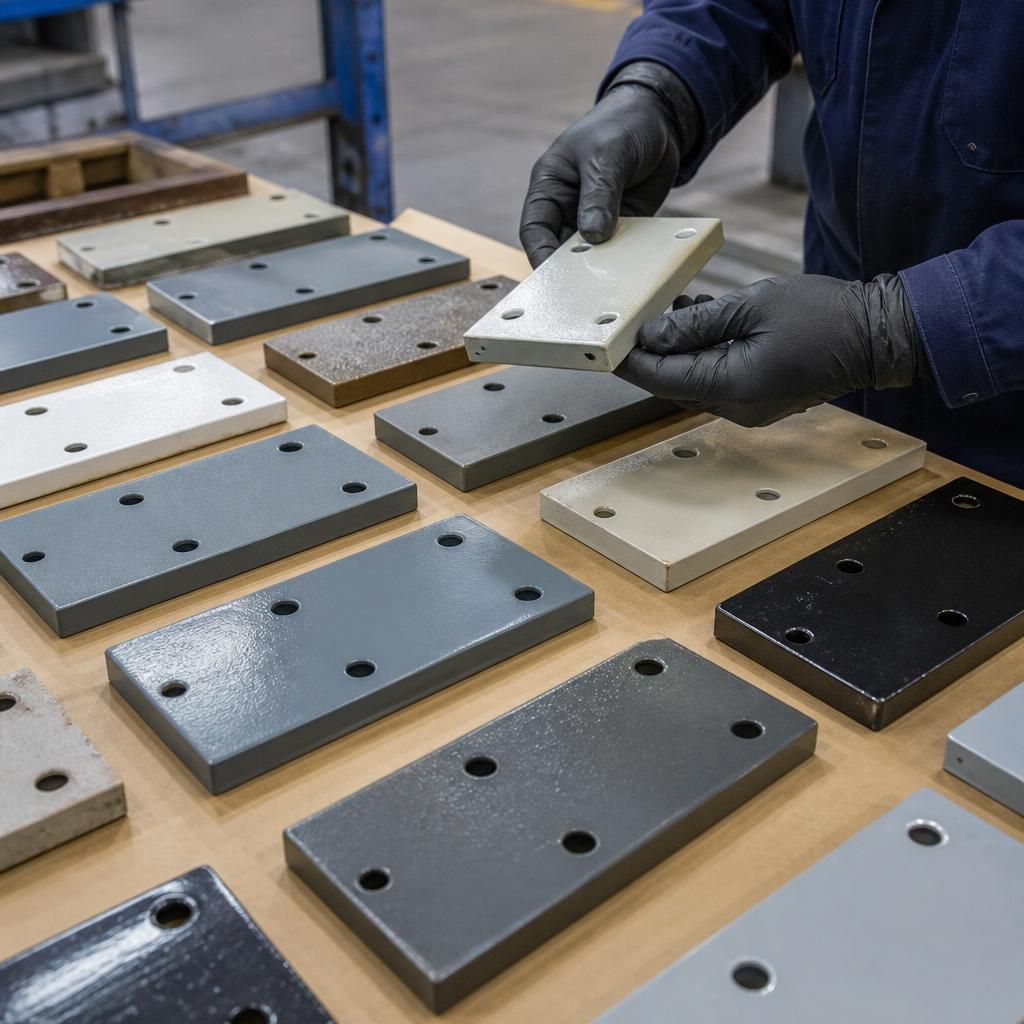
A batch of previously coated galvanised steel may contain parts with different coating histories, even when they look similar. Repairs, areas exposed to weather, local abrasion and earlier preparation can leave variations in coating thickness, adhesion and substrate condition. These differences can cause some components to respond differently during stripping, powder application and curing.
For consistent results, parts should be grouped according to their existing finish and condition before the preparation method is selected. Components with exposed steel, damaged galvanising or heavily built-up coating may need a different route from those retaining a sound, uniform finish. Recording these variations helps prevent one standard process being applied to surfaces that require different treatment.