

What are the typical high-temperature resistance levels for powder-coated galvanised steel?
Powder-coated galvanised steel typically withstands moderate continuous heat, but its practical resistance is determined by the powder chemistry rather than the galvanised steel substrate alone. Standard coatings may discolour, chalk or lose performance at elevated temperatures, while specialist high-temperature formulations are required where greater heat resistance is needed; the coating manufacturer’s technical data sheet should confirm the continuous and peak temperature limits.
Typical high-temperature resistance for powder-coated galvanised steel falls into three practical categories: standard architectural or general-purpose coatings for ordinary service conditions, enhanced formulations for sustained elevated temperatures, and specialist coatings for more demanding heat exposure. The relevant rating applies to the complete coating system, so the powder chemistry, film thickness, galvanised surface and exposure pattern must all be considered together.
Standard-temperature coatings
General-purpose polyester and similar powder coatings are commonly selected where the finished steel is exposed to ambient conditions or modest temperature increases. They can provide durable protection in many industrial environments, but their appearance and protective performance may reduce if the steel remains hot for prolonged periods. Typical signs of thermal stress include colour change, gloss loss, chalking, embrittlement and reduced resistance to impact or chemicals.
These coatings may still be suitable for equipment that experiences occasional heat rather than constant heat. A short-lived temperature excursion is not equivalent to continuous operation at the same temperature. The coating specification should therefore distinguish between the maximum continuous service temperature and the higher peak temperature that may be tolerated for a limited period.
Elevated-temperature coatings
Where galvanised components operate in a consistently warm environment, a powder formulated for elevated-temperature service is normally more appropriate than a standard decorative grade. These systems are designed to retain their physical properties and appearance more effectively as temperature rises, although resistance remains dependent on the exact formulation and exposure conditions.
Enhanced heat-resistant coatings are often considered for items near industrial machinery, heating equipment, exhaust-related components, process plant and other installations where the metal does not remain at ambient temperature. They should not be selected solely because the product is described as heat resistant: the technical data must confirm the intended continuous-use range, peak exposure, colour limitations and expected finish retention.
Specialist high-temperature systems
The highest resistance levels require specialist powder systems intended for demanding thermal service. These may be based on resin chemistries selected for improved stability at elevated temperatures rather than for purely decorative performance. They can be appropriate where standard powder would soften, degrade or lose its protective properties, but they may involve compromises in colour choice, gloss, surface appearance, flexibility or resistance to other chemicals.
Specialist systems are not automatically suitable for every galvanised component. The coating must bond effectively to the prepared zinc surface, tolerate the component’s operating cycle and remain compatible with any pretreatment. The applicator also needs to confirm that the curing schedule is suitable for the specific powder and the thickness and geometry of the steelwork.
Continuous heat compared with intermittent heat
Temperature ratings should be assessed against the real duty cycle. Continuous exposure places sustained stress on the binder, while repeated heating and cooling can create a separate problem through expansion and contraction of the steel, zinc layer and coating film. A system that performs acceptably during occasional heating may deteriorate sooner when subjected to repeated thermal cycling.
Hot spots also need separate consideration. The average temperature of a fabricated item may appear acceptable while areas next to burners, heating elements, exhausts or enclosed process zones reach substantially higher temperatures. The hottest local area, rather than the general surrounding temperature, should guide the coating selection.
Factors that alter the practical resistance level
- Powder chemistry: the resin and additives largely determine resistance to heat, oxidation, colour change and loss of mechanical properties.
- Colour and gloss: darker or highly saturated colours can show thermal discolouration more noticeably, while gloss may decline before the coating visibly breaks down.
- Film thickness: an uneven or excessive film can affect curing and performance. The specified thickness should be achieved consistently across edges, recesses and large flat areas.
- Surface preparation: contamination, poor cleaning, trapped residues or inadequate preparation of the galvanised layer can cause premature adhesion failure, particularly when heat accelerates existing weaknesses.
- Component design: sharp edges, welds, overlaps and enclosed sections may experience different temperatures or coating conditions from the main surface.
- Atmosphere: moisture, salt, chemicals, smoke and process vapours can combine with heat to accelerate corrosion or coating degradation.
- Thermal cycling: repeated temperature changes can be more damaging than a stable temperature because they impose movement and stress at the coating-to-zinc interface.
How to interpret the technical rating
For a meaningful assessment, obtain the powder coating’s technical data sheet and check whether the stated limit refers to continuous exposure, intermittent exposure or a short-term peak. Also check how the rating was established, whether it applies to the selected colour and gloss level, and whether the test relates to coated galvanised steel or to a different substrate.
The stated temperature limit should be treated as a design reference rather than a guarantee of unchanged appearance. Some coatings remain attached and protective after visible colour or gloss changes, whereas others may retain their appearance but lose flexibility or chemical resistance. The acceptable result depends on whether the component is primarily decorative, corrosion-protective, structural or exposed to handling and impact.
For industrial work, the specification should record the operating temperature, highest local temperature, duration of exposure, heating cycle, surrounding atmosphere and required finish. Supplying those details before coating allows the system to be matched to the actual service conditions rather than relying on a generic heat-resistance description. Powder-coating specialists handling galvanised steel can then advise whether a standard, elevated-temperature or specialist system is technically appropriate, subject to the coating manufacturer’s published limits.
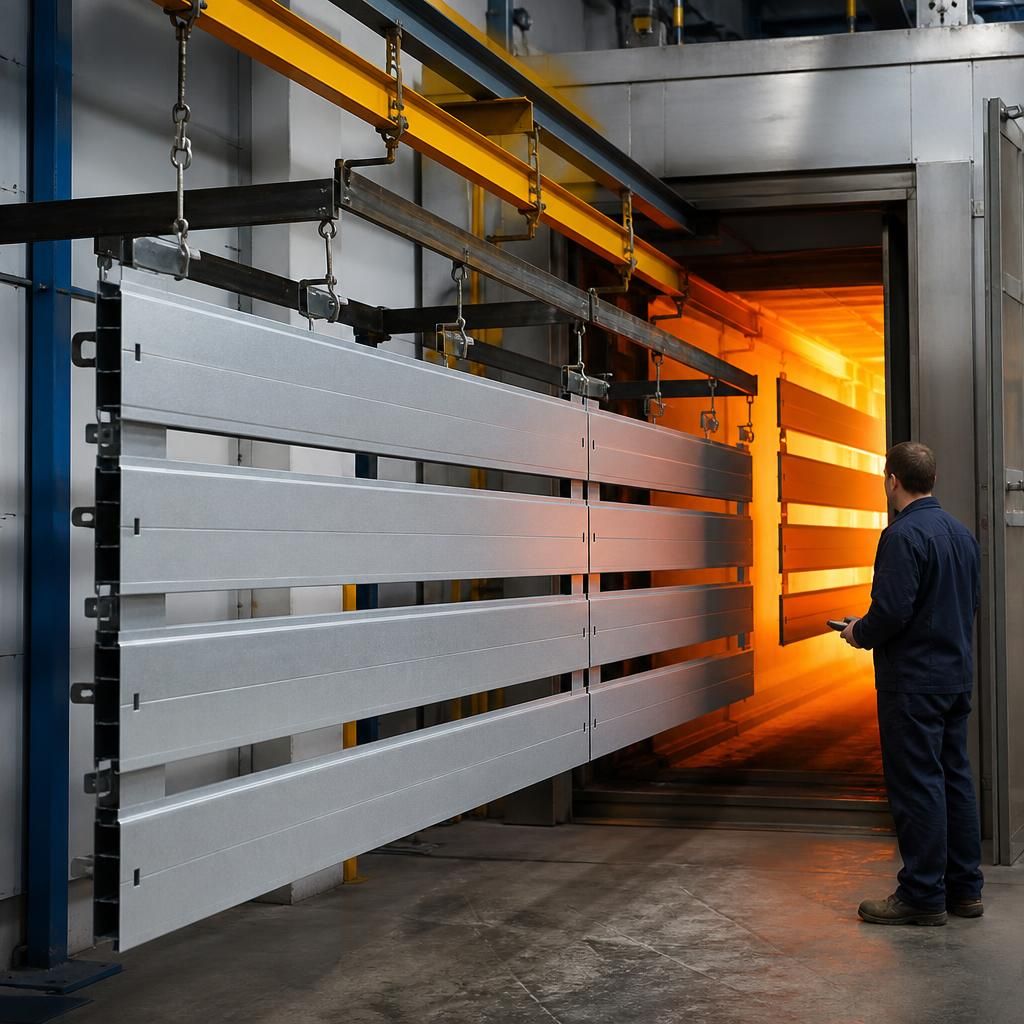
Curing temperature is not the same as operating-temperature resistance. Powder coating is heated during manufacture to create the finished film, but that short curing cycle does not mean the coating can withstand the same temperature continuously in service. The relevant rating is based on the coating’s behaviour during the intended period of use, including any loss of colour, gloss, flexibility, adhesion or chemical resistance.
For galvanised steel components, keep the curing specification and the service-temperature specification separate. A powder may cure successfully on the prepared zinc surface yet be unsuitable for equipment that remains hot during operation. The technical data sheet should therefore be checked for both the required curing schedule and the stated long-term temperature performance.