

What are the environmental considerations when powder coating galvanised steel?
Powder coating galvanised steel generally has a lower environmental impact than liquid coating because it produces minimal volatile organic compound emissions and unused powder can often be collected for efficient use. Environmental considerations still include the energy required for curing, responsible management of preparation residues and coating waste, and selecting a process that avoids unnecessary rework.
The environmental impact of powder coating galvanised steel depends on the complete coating system, not just the powder itself. The main considerations are the durability and service life of the finished component, preparation of the zinc surface, management of residues, energy used during curing, and the potential for recovery or recycling at the end of use.
Galvanised steel already has a zinc coating that protects the underlying steel from corrosion. Applying powder coating over it can provide an additional barrier and, where the system is correctly specified and prepared, help protect the component for longer in its intended environment. A longer-lasting finish can reduce the frequency of stripping, recoating, replacement manufacture and transport. This potential benefit should be assessed against the service conditions, because premature failure caused by poor adhesion, trapped gases or unsuitable coating selection can lead to avoidable rework and additional material use.
Preparation is an important environmental control point. The galvanised surface may need cleaning, degreasing, profiling or other pretreatment to remove contaminants and provide a suitable key for the powder. The selected method affects the type and quantity of waste produced. Abrasive preparation can generate spent media and removed surface material, while chemical pretreatment can create liquid residues requiring controlled collection and disposal. A suitable process should therefore use only the preparation necessary for the specification, prevent residues from entering drains or soil, and keep different waste streams separate where this supports compliant handling or recovery.
Galvanised steel can also release gases during heating if moisture, treatment residues or gases held within the zinc layer are not properly managed. This may cause pinholes, blisters or other defects in the powder film. Although this is primarily a quality concern, it also has an environmental consequence: defective parts may require stripping and recoating, increasing powder consumption, energy use and waste. Correct cleaning, drying, storage and the use of appropriate application and curing conditions help reduce this risk.
Powder selection should take account of both environmental exposure and the required service life. A coating that is unsuitable for the component’s temperature, chemical contact, weathering or mechanical use may degrade early, while an unnecessarily complex specification can use more material or require additional processing. The appropriate system should provide the required protection without adding coating layers or pretreatment stages that do not serve a clear technical purpose.
Material efficiency can be improved through accurate application control. Overspray should be collected where the equipment and powder system allow it, with recovered material used only where its condition and colour requirements make that appropriate. Powder that cannot be reused should be kept out of general waste when a suitable specialist disposal or recovery route is available. Contaminated wipes, filters, masking materials, abrasive residues and chemical containers should be managed according to their composition rather than treated as one mixed waste stream.
Curing ovens are another part of the environmental assessment. Their energy demand is influenced by the mass and design of the steelwork, the coating specification, oven loading, insulation, airflow and temperature control. Efficient loading and consistent process control can reduce unnecessary heating and prevent repeated curing caused by avoidable defects. It is important not to reduce curing below the powder manufacturer’s requirements, however, because an under-cured film may have inadequate performance and create rework or early replacement.
The environmental assessment should include transport and handling as well as the coating line. Batch planning, suitable packaging and careful handling can reduce damage, repeat processing and unnecessary movements of components. Collection and delivery arrangements can be considered alongside load consolidation and the distance between the fabricator, coater and end user, particularly for large or heavy galvanised parts.
At the end of a component’s useful life, steel is widely recyclable, but the presence of zinc and the cured organic coating means that the material enters a recycling process with surface coatings attached. This does not normally remove the steel from the recycling chain, but recyclers may manage coated and galvanised scrap through established processes. Avoiding unnecessary mixed materials, clearly identifying special treatments and retaining relevant coating information can assist responsible downstream handling.
For a B2B project, useful environmental evidence includes the powder and pretreatment specifications, waste-handling arrangements, curing requirements, preparation method and any controls used to prevent discharge of residues. These details allow the coating system to be compared on a whole-process basis rather than judging it solely by the absence of liquid solvent. For galvanised steel, the most responsible approach is generally one that achieves the required protection with controlled preparation, efficient material use, minimal rework and documented management of waste and residues.
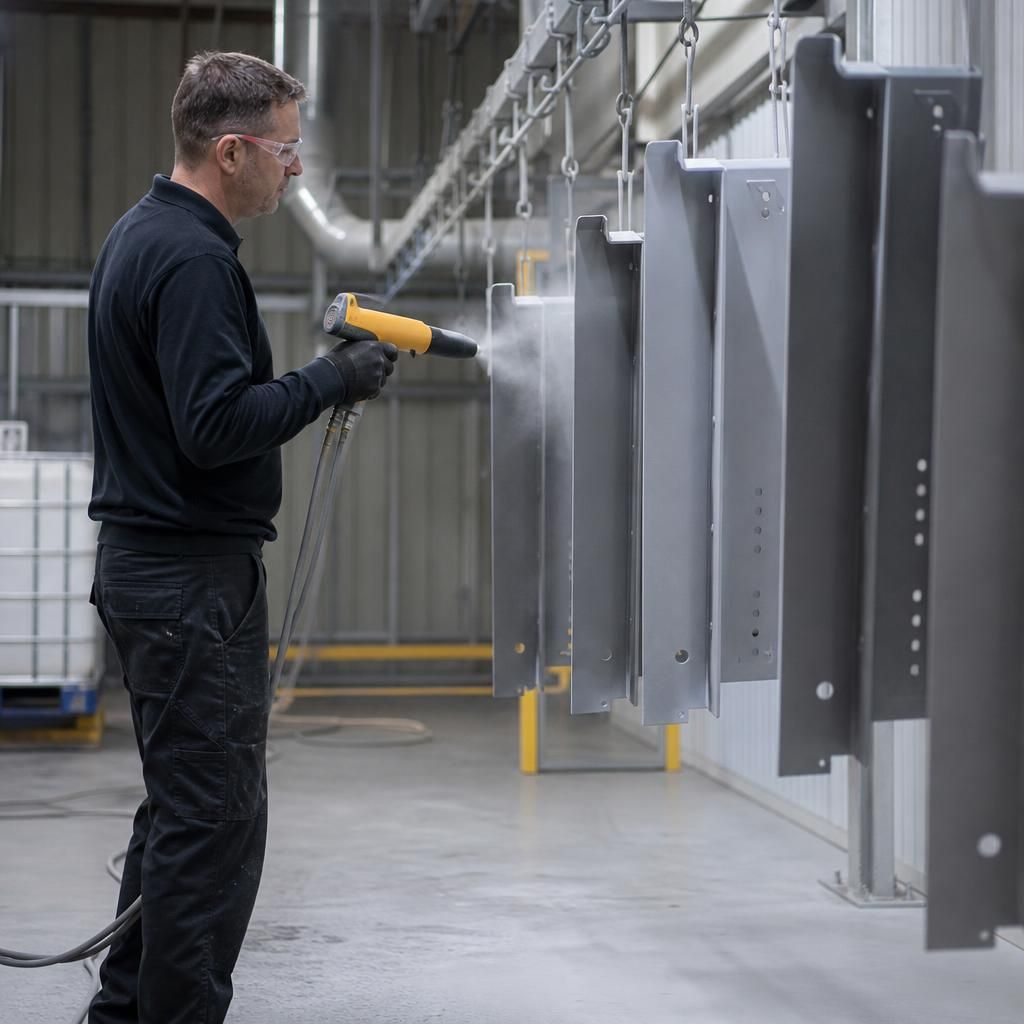
The environmental performance of powder coating galvanised steel should be assessed over the component’s intended service life, rather than by looking at powder use or VOC emissions in isolation. A coating system that uses slightly more processing but remains sound for longer may have a lower overall impact than one that needs early repair, replacement or repeat transport.
For a meaningful comparison, define the item being assessed and record the main inputs associated with that item:
- the mass and type of powder applied;
- the preparation and pretreatment required for the galvanised surface;
- energy used for curing, including any rejected or reprocessed work;
- transport and packaging associated with the coating route; and
- the expected maintenance, removal and recycling arrangements.
This approach prevents a narrow environmental claim from hiding impacts elsewhere in the process. It also gives manufacturers and fabricators a clearer basis for comparing coating specifications, especially where two systems provide similar corrosion protection but differ in preparation, curing or maintenance requirements.