

How does powder coating ensure effective adhesion on galvanized steel surfaces?
Powder coating adheres effectively to galvanised steel when the surface is thoroughly cleaned, lightly profiled and given a suitable pretreatment to remove oils, passivation residues and other contaminants. Correct powder selection and curing then allow the coating to form a durable bond with the prepared metal surface.
Effective adhesion on galvanised steel results from a controlled interface between the powder coating and the zinc layer, rather than from the powder simply bonding to bare steel. The coating must be able to wet the surface, anchor to its texture and remain compatible with the zinc during heating and service. If the interface contains unstable zinc compounds, trapped moisture or residues, adhesion can fail even when the visible finish appears satisfactory.
The zinc surface is the critical bonding layer. Galvanised steel is protected by zinc, so the powder coating is normally bonding to zinc and its surface oxides, not directly to the underlying steel. Zinc changes naturally when exposed to air and moisture, producing oxide and carbonate compounds. These products can be stable enough to support a coating, but loose or excessive deposits can form a weak boundary layer. Any coating attached mainly to that loose material may peel away from the zinc rather than remain firmly bonded.
Surface condition affects the strength of the interface. New galvanised sections may contain passivation treatments, oils or handling residues, while older material can have white rust, embedded dirt or corrosion products. The condition can also vary between smooth sheet, castings, fabrications and areas affected by storage or weathering. This is why the same powder and curing schedule may perform differently on two galvanised components that appear similar at first inspection.
Adhesion is created by both physical and chemical effects. Light surface profiling gives the molten powder a fine texture in which to anchor as it flows and cures. Suitable pretreatment can also alter the surface chemistry, improving compatibility between the zinc and the coating system. The result is not just a rougher surface; it is a more stable interface with fewer weak contaminants between the metal and the cured film.
Outgassing must be controlled during heating. Galvanised steel, particularly porous castings or heavily fabricated parts, may release air, moisture or gases when the workpiece enters the oven. If these escape through the softening powder, they can create pinholes, bubbles or craters. These defects reduce the continuity of the film and can give moisture a route towards the interface. Controlled heating, appropriate powder selection and, where necessary, an outgassing or degassing approach help reduce this risk.
Film formation also affects adhesion. The powder must melt and flow sufficiently to form a continuous film over the zinc, including around edges, welds, corners and recessed areas. An uneven or excessively thin film can leave vulnerable points, whereas excessive build may increase the likelihood of solvent-like bubbling or other defects during curing. The required film build should therefore be considered alongside the component’s geometry and intended service conditions.
Curing converts the applied powder into a bonded coating. The relevant curing condition is based on the metal temperature, not simply the oven’s air temperature or the time that the component spends inside the oven. Sections with different thicknesses can reach the required temperature at different rates. Under-curing can leave the film with inadequate cross-linking and poor resistance at the interface; excessive heat can damage the finish or affect the zinc substrate. A controlled schedule matched to the powder system and the component mass is therefore important.
Several practical checks help confirm that adhesion is likely to be reliable:
- Inspect the galvanised layer for flaking material, white corrosion products, sharp irregularities and contamination before coating.
- Check welds, folded edges, holes and sheltered sections separately, as these areas often retain residues or behave differently during heating.
- Confirm that any chemical pretreatment is suitable for zinc and has been properly rinsed or removed where required.
- Use a powder system intended to work with galvanised substrates and follow its specified application and curing requirements.
- Assess the finished film for pinholes, blistering, craters, exposed edges and signs of poor flow before the component enters service.
- Where the application is critical, carry out an agreed adhesion assessment on representative coated parts rather than relying solely on visual inspection.
Adhesion testing may involve making controlled cuts through the film and checking whether the coating lifts around them, although the method and acceptance criteria should be appropriate to the coating specification. A result should also be interpreted alongside film thickness, cure verification and visual examination. A coating can pass a basic adhesion check yet still be unsuitable if it contains porosity or has been exposed to conditions beyond the system’s design limits.
For industrial work, the most dependable approach is to treat galvanised steel as a distinct substrate requiring its own process controls. Substrate condition, zinc-surface preparation, coating compatibility, outgassing behaviour, film formation and metal temperature during cure all contribute to the final bond. Careful control at each stage allows the powder film to remain attached to the zinc layer instead of failing at a weak or contaminated interface.
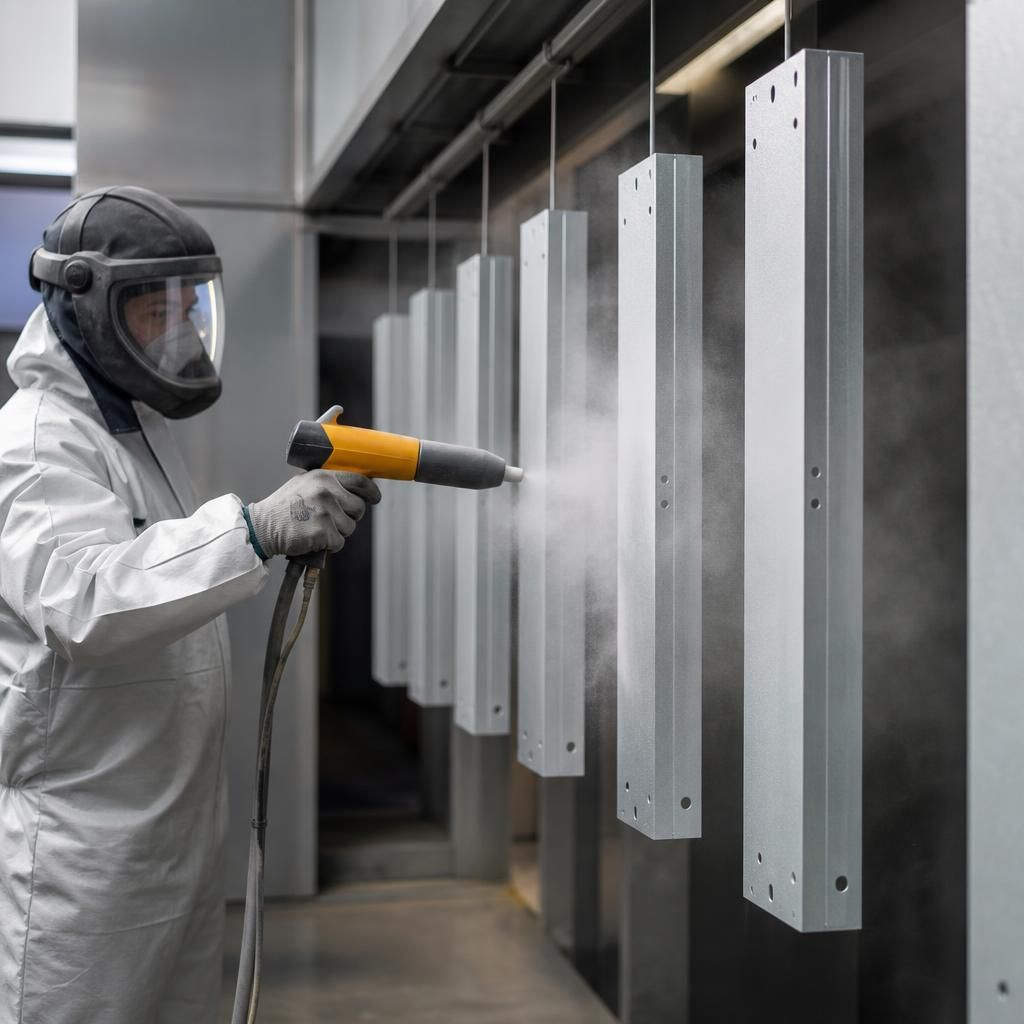
For demanding applications, adhesion on galvanised steel may be improved by using a zinc-compatible powder primer beneath the finishing coat. The primer provides an intermediate layer between the zinc surface and the topcoat, helping the complete coating system accommodate differences in surface chemistry and service conditions.
This approach is not suitable for every component or specification. The primer, topcoat and curing schedules must be compatible, and the combined film build must remain appropriate for the part. Where a multi-coat system is considered, its suitability should be confirmed against the required appearance, mechanical performance and exposure conditions rather than assumed from the use of a primer alone.