

What cleaning and preparation techniques ensure optimal adhesion of high temperature powder coatings to metal surfaces?
Optimal adhesion of high temperature powder coatings depends on removing oil, grease, rust, mill scale, moisture and previous coatings before application. Degreasing, suitable abrasive blasting or mechanical preparation, followed by thorough rinsing where required and complete drying, creates a clean, lightly keyed surface; any chemical pretreatment should be selected for the specific metal and coating system.
Optimal adhesion of a high temperature powder coating is achieved through a controlled preparation process that matches the metal substrate, the coating chemistry and the intended cure cycle. Preparation is not complete simply because the surface looks clean: the coater must also confirm that the surface condition, profile, moisture level and component design are suitable for the specified powder system.
Start by identifying the substrate and its previous treatment. Mild steel, stainless steel, aluminium, galvanised steel and castings behave differently during preparation and curing. The same abrasive, chemical treatment or preparation intensity should not be applied indiscriminately. Existing plating, anodising, galvanising, weld treatments and temporary corrosion inhibitors can affect both the preparation method and the adhesion mechanism. The coating specification should therefore record the substrate, any existing finish and the required pretreatment before work begins.
Inspect the component for defects that preparation cannot correct. Weld spatter, sharp edges, laminations, deep scratches, embedded abrasive, casting porosity and oil trapped in seams can create local adhesion failures or coating defects. Welds should be continuous and suitably finished, while sharp edges may require appropriate edge treatment so that the powder film is not excessively thin at the corner. Crevices, folded sections and hollow fabrications deserve particular attention because they can retain process residues or release trapped gas during the bake.
Control the surface profile rather than relying on appearance. A prepared metal surface needs a consistent texture compatible with the high temperature coating system. An overly smooth surface may provide insufficient mechanical keying, while an excessively aggressive profile can leave peaks that reduce local film thickness or remain visible through the finish. Profile comparators, surface roughness measurements or the preparation contractor’s documented inspection method can be used to verify consistency. The correct target should come from the coating specification and substrate requirements, not from a generic setting.
Check for invisible residues before coating. Soluble salts, acidic or alkaline residues, abrasive dust and remnants of conversion treatment may not be visible but can interfere with adhesion or contribute to under-film corrosion. Where components have been exposed to industrial handling or outdoor storage, a suitable surface contamination check can provide more assurance than visual inspection alone. Any residue identified should be traced to its source, such as rinse quality, contaminated process equipment or inadequate drainage, and the process should be corrected before coating.
Use a controlled rinse and drying stage. The final rinse should not reintroduce contamination, and components should be positioned so that water cannot collect in seams, joints, threaded holes or internal sections. Drying must remove both visible water and retained moisture. This is particularly important for porous castings and fabrications with enclosed areas. Components should be allowed to reach a stable condition before powder application; coating metal that is damp, unusually cold or carrying condensation can produce inconsistent coverage and poor bonding.
Deal with outgassing risks before production coating. Cast aluminium, porous castings, zinc-rich surfaces and fabricated parts with enclosed voids may release gas when heated. This can cause pinholing, bubbles or local loss of contact between the powder film and metal. Suitable controls may include preheating, a compatible outgassing-resistant formulation, design changes to provide venting, or a controlled trial on representative parts. Preheating must be considered alongside the specified application and cure conditions, because excessive heat can alter the way the powder melts and flows.
Pay attention to welds, edges and difficult geometries. Weld zones can contain heat-affected areas, residues and surface variations that behave differently from the parent metal. Internal corners, recesses and perforations can also receive a different powder deposit from broad exposed faces. Application settings should be checked across the whole component rather than judged only on an accessible flat area. Masking materials must withstand the coating and bake conditions, and masking should not leave adhesive residues or prevent the coating from reaching areas that require protection.
Confirm preparation with inspection records. A robust quality check can include:
- verification of the substrate and any existing surface treatment;
- inspection for weld spatter, sharp edges, burrs, porosity and trapped residues;
- confirmation that the specified surface profile has been achieved;
- checks for moisture and, where relevant, soluble salt or other invisible contamination;
- confirmation that parts are correctly masked, supported and presented for coating; and
- recording of preparation conditions so that successful results can be repeated across a batch.
Validate the complete preparation and coating route on representative parts. A trial panel or sample component should reflect the actual metal, weld condition, geometry and intended service environment. Adhesion testing after the specified cure can reveal whether the failure occurs at the coating-to-metal interface or within the coating itself. If adhesion is acceptable on a simple flat panel but poor around welds, recesses or cast areas, the preparation process needs to be reviewed at those locations rather than accepted on the basis of the flat result.
Finally, preparation must be coordinated with the high temperature powder’s technical requirements. The specified cure schedule, coating thickness, handling method and time between preparation and application all influence the final bond. Prepared parts should be protected from recontamination and handled with suitable clean equipment until coating begins. For complex metal components or demanding industrial service, a specialist powder coater can assess the substrate, agree the preparation route and establish inspection points before processing the full batch.
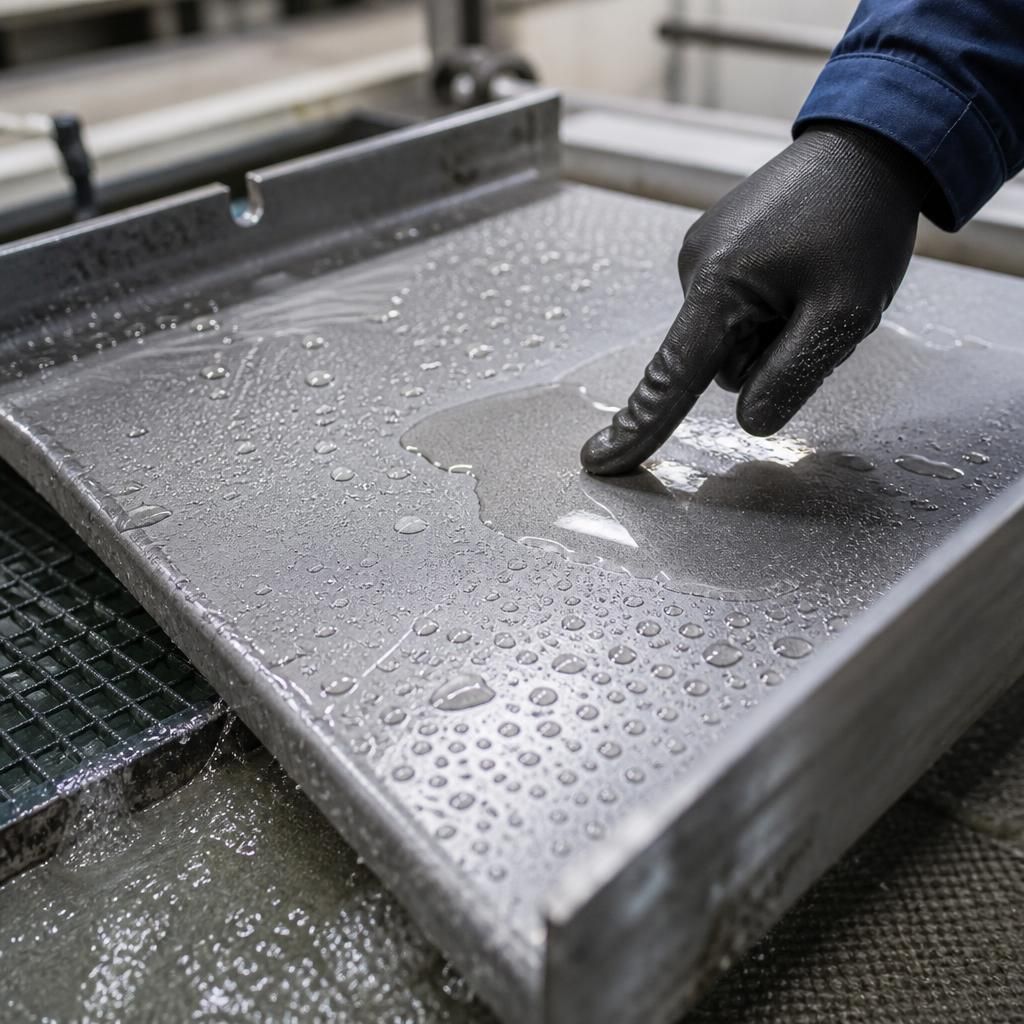
A water-break test provides a quick check that degreasing has removed oily contamination from a suitable, non-porous metal surface. After rinsing, clean areas should retain a continuous film of water; beading, gaps or rapid withdrawal indicate that grease, oil or another water-repellent residue remains.
This check should be carried out using clean rinse water and should not replace substrate-specific testing for soluble salts, chemical residues or surface profile. If the water film breaks, the component should be cleaned again and the source of contamination investigated before abrasive preparation or powder application proceeds.
Discuss Your High Temperature Powder Coating Preparation Requirements
Discuss your high temperature powder coating preparation requirements with our specialist team, providing details of the metal component, operating temperature and intended application so the appropriate preparation route can be considered.