

How can I determine the appropriate curing and bake times required for high temperature powder coatings to ensure optimal adhesion and durability?
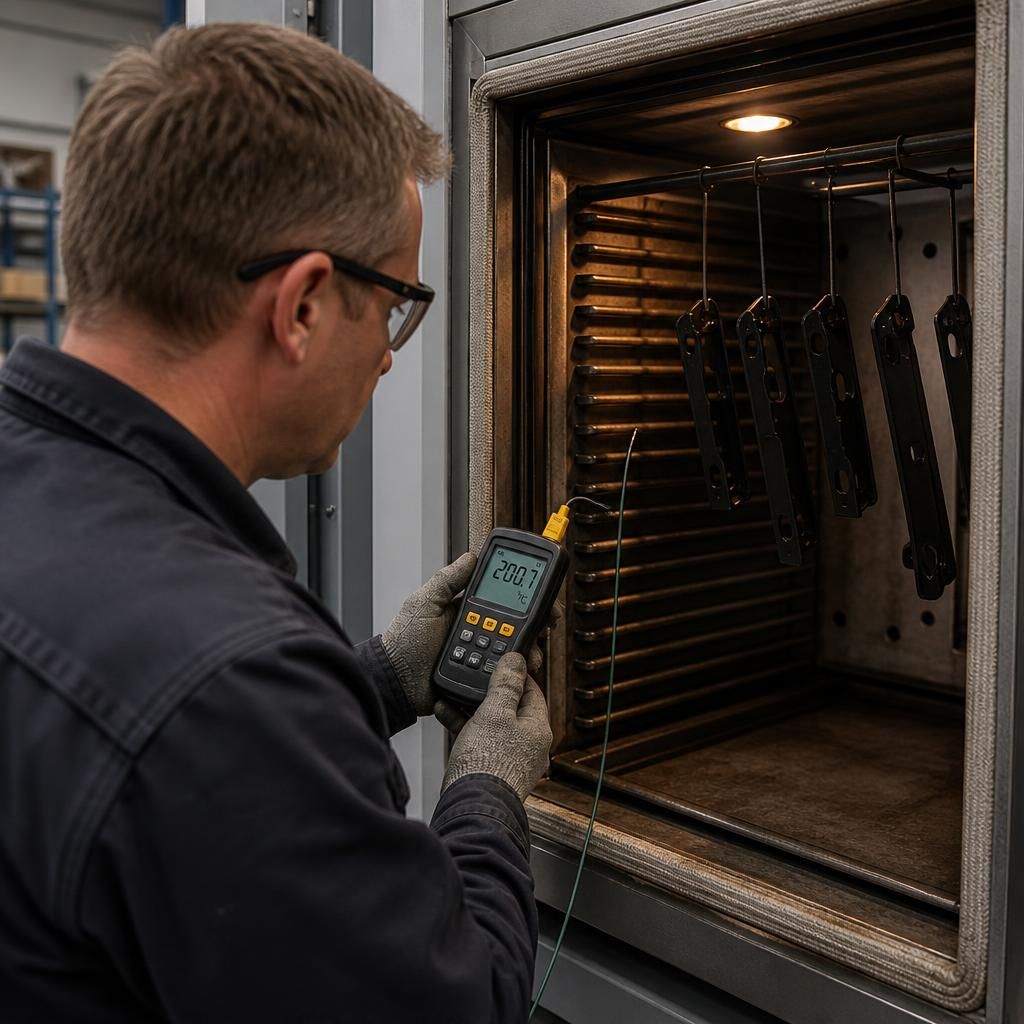
Determine the required bake time and temperature from the powder manufacturer’s technical data sheet, then base the cure on the component’s actual metal temperature rather than the oven’s air temperature. Validate the cycle with thermocouples on representative parts, allowing for coating thickness, part mass, metal type and load arrangement so the coating reaches its full cure without overheating the substrate or finish.
Determine the appropriate cycle by using the powder coating’s approved cure curve, translating it into a controlled production process, and confirming the result with relevant performance tests. The objective is not simply to make the surface feel dry; it is to achieve the intended cross-linking of the resin so the finish develops its specified adhesion, hardness, chemical resistance and durability without thermal damage.
Start with the coating’s cure specification. Powder formulations can have different cure windows, even when they are designed for similar operating temperatures. The technical documentation should identify the required cure condition and any acceptable range, together with restrictions relating to recoating, film build, substrate compatibility or maximum exposure. Treat these limits as part of the coating system rather than applying a standard oven programme to every job.
Where a cure range is provided, select a point within that range that suits the component and the production process. A cycle at the edge of the permitted window may be appropriate for a heat-sensitive assembly, while a more conservative setting may be preferable where consistent chemical or mechanical performance is critical. The chosen setting should be documented so that it can be repeated and reviewed when the powder, part design or oven process changes.
Separate heating from curing. The time needed for a component to reach the curing condition is different from the time required for the coating to remain there. A timer linked only to the oven programme can therefore produce inconsistent results if the loading pattern or component design changes. The process should account for the complete thermal profile, including the heating phase, the required dwell and the controlled cooling phase where the coating or substrate requires it.
Check the coating rather than relying on appearance. A powder finish may look smooth and fully formed while still being under-cured. Conversely, extending the cycle beyond the approved range can cause colour change, loss of gloss, embrittlement or other deterioration, depending on the formulation. Verification should use tests appropriate to the coating specification. These may include solvent resistance, hardness, impact performance, flexibility and adhesion testing. No single test proves every aspect of cure, so the selected checks should reflect the service conditions and quality requirements of the finished component.
Adhesion testing is particularly useful when establishing a new process, but it should be carried out using a defined method and on a properly prepared surface. If adhesion is poor, the cause may be preparation, contamination, excessive film build, incompatible layers or incorrect curing; increasing the bake time is not automatically the correct remedy. Test results should be considered alongside the preparation and application records.
Use production-representative trials. A small, lightly loaded test piece can heat and cure differently from the parts intended for manufacture. Qualification trials should therefore reflect the real coating thickness, assembly arrangement, hanging method and oven loading. Include the most demanding configuration that the process is expected to handle, particularly where parts overlap, contain enclosed sections or include different layers.
Before approving the cycle, check that the oven is delivering a stable and repeatable process. Relevant controls include:
- temperature controller accuracy and calibration;
- air circulation and the presence of hot or cold zones;
- burner, heater and exhaust performance;
- the effect of opening doors or changing the load;
- the cleanliness of the oven and the risk of contamination;
- the consistency of the conveyor speed or dwell arrangement; and
- the positioning of parts so that airflow is not unnecessarily restricted.
These checks matter because the displayed oven setting does not, by itself, demonstrate that every production position is providing the same cure conditions. Oven surveys and recorded process data help identify variation before it becomes a recurring quality issue.
Consider the substrate and complete assembly. The powder may tolerate a high cure condition while an attached seal, bearing, adhesive, insert or pre-treated layer does not. Some metal components may also have restrictions arising from previous heat treatment, welding, casting or galvanising. Confirm that the selected cycle is compatible with the complete part, not just the powder film. If the component cannot withstand the coating’s normal cure schedule, the solution may require a different approved formulation or a revised assembly process rather than an unvalidated reduction in bake time.
Multilayer systems require particular care. A primer, protective layer and topcoat may each have different cure requirements, and the first layer may influence the response of the next. Follow the specified sequence and confirm intercoat adhesion and final performance after the complete system has been processed. Do not assume that a visually acceptable intermediate layer has reached the condition needed for the next application.
Once the process has been approved, record the powder identification, batch details, application settings, film-build checks, oven programme, load configuration and test results. Requalification is sensible after a significant change to the powder, substrate, part geometry, loading pattern, oven control or application method. This gives the coating process a traceable basis and makes it easier to distinguish a curing problem from defects introduced during preparation or application.
A coating’s maximum service temperature is not the same as its curing temperature. The service rating describes the heat the cured film is intended to withstand during use, whereas the bake schedule is determined by the coating’s resin chemistry and formulation. A high-temperature powder coating may therefore require a carefully specified cure condition rather than simply being baked at the highest temperature the metal can tolerate.
Keep these two values separate when reviewing technical documentation and planning production. Use the approved cure schedule to develop the process, then assess whether the finished component can withstand its expected operating temperature, thermal cycling and surrounding conditions. If the required cure could affect the substrate or attached components, discuss an alternative approved formulation with the coating supplier rather than inferring a suitable cycle from the service-temperature rating.
Discuss Your High Temperature Powder Coating Cure Requirements
Discuss your high temperature powder coating requirements with the Midlands specialist team, providing the component details, coating specification and any substrate or assembly constraints. This information can support a practical review of the proposed cure process before production.