

What measures can be taken to ensure that the powder coating's curing time aligns with its specified temperature profile for optimal results?
Align curing time with the specified temperature profile by measuring the coated component’s actual metal temperature, rather than relying solely on the oven display, using calibrated probes or a temperature data logger. Validate the oven settings under representative loading, then adjust dwell time, airflow, conveyor speed or temperature so the complete part reaches and remains at the required profile, recording the results for repeatable production.
To align powder coating curing time with its specified temperature profile, treat the cure schedule as a complete process requirement rather than a single oven temperature setting. The coating system, substrate, component geometry, loading pattern, oven condition and required finish properties must all be considered together. The objective is for every coated area to receive the correct combination of temperature and time without over-curing more accessible surfaces.
Interpret the cure specification correctly. A powder coating schedule commonly defines a required substrate temperature followed by a minimum dwell period. This is different from setting the oven air to the same temperature for the same length of time. The part may need a heat-up period before the curing dwell begins, particularly where it is thick, dense, hollow or heavily loaded. Check whether the stated time is measured after the metal reaches the specified temperature and whether the schedule permits an equivalent time-and-temperature combination.
Use the complete technical data for the powder, including its recommended cure window, acceptable heating rate and any restrictions on under-curing or over-curing. A narrow cure window requires tighter process control than a formulation designed to tolerate a broader range. Different powders may also react differently to rapid heating, prolonged exposure or heat-sensitive substrates, so one general oven recipe should not automatically be applied to every coating.
Control the variables that change heat-up behaviour. Record the factors that have a direct effect on the time required for a part to reach its curing condition:
- metal thickness, mass and thermal conductivity;
- part shape, enclosed sections and areas with limited air access;
- the number of components on each rack or trolley;
- spacing between parts and their position within the oven;
- rack contact points, hooks and masking materials;
- the powder film thickness and number of coated surfaces; and
- the selected coating chemistry and substrate.
Maintain consistent racking and loading wherever possible. A lightly loaded oven and a densely loaded oven can have different heat-transfer characteristics, even when the control settings are unchanged. If a production batch differs materially from the validated load, it should be treated as a different process condition rather than assumed to follow the same cure result.
Keep film thickness within the intended range. Excessive film build can affect appearance, flow, solvent release and the way the coating responds during heating. Insufficient film may reduce coverage and protection. Check application settings, gun-to-part distance, powder delivery and grounding as part of the wider process review. Consistent film build makes curing results easier to compare and helps distinguish a thermal problem from an application problem.
Prepare the substrate consistently. Cleaning and pre-treatment affect coating adhesion and corrosion protection, although they do not replace the need to follow the powder’s cure schedule. Residual oil, moisture, conversion-coating chemicals or contamination can produce defects that may be mistaken for incorrect curing. Control drying before powder application, and ensure that trapped moisture or cleaning residues cannot be released during the bake.
Check the oven as a complete system. Temperature control should be supported by planned maintenance of burners or heating elements, fans, seals, filters, sensors and extraction arrangements. Inspect for blocked or damaged airflow paths and confirm that the circulation pattern remains suitable for the load. An oven can display a stable setpoint while delivering uneven heat to different areas if circulation, insulation or heating performance has deteriorated.
Prevent contamination from becoming part of the curing problem. Powder deposits, oil, dust and residues on the oven interior or conveyor can affect finish quality and may create local defects. Cleaning intervals should reflect the coating materials and production conditions being used. Any change to heating equipment, airflow components or oven layout should trigger a process review rather than being treated as routine maintenance only.
Use representative qualification pieces. Before approving a revised cure process, run parts that reflect the heaviest, lightest, largest and most thermally demanding items in the production range. Include complex geometries and areas that are difficult to heat uniformly. Assess the finished coating using suitable checks for the application, such as appearance, adhesion, hardness, flexibility, impact resistance, gloss or chemical resistance. The appropriate tests depend on the coating specification and the service conditions of the component.
Testing should be interpreted alongside the coating supplier’s acceptance criteria. A visually attractive finish is not proof of complete cure, while a surface defect is not always caused by insufficient bake. Orange peel, pinholing, blistering, loss of gloss, colour change and poor adhesion can result from application, contamination, substrate preparation or excessive heating as well as from an unsuitable cure profile.
Establish change control and records. Keep a process record linking the powder batch or product specification to the coating application, component type, rack arrangement, oven recipe, loading condition and quality checks. When a problem occurs, change one relevant variable at a time where practical. This makes it easier to identify whether the cause is the powder, film thickness, part mass, airflow, loading pattern or thermal process.
For repeat production, define approved operating limits rather than relying on operator judgement alone. Include instructions for unusual component sizes, mixed loads, changes in racking and periods when the oven has been altered or maintained. Requalification is appropriate when the coating system, substrate, component design, oven configuration or production loading changes significantly.
For complex batches or specialist requirements, a powder coating contractor can review the coating specification, component geometry and production method before processing. This is particularly relevant to large fabricated parts, heavy metal sections and mixed-size batches, where a standard bake recipe may not represent the thermal behaviour of every component.
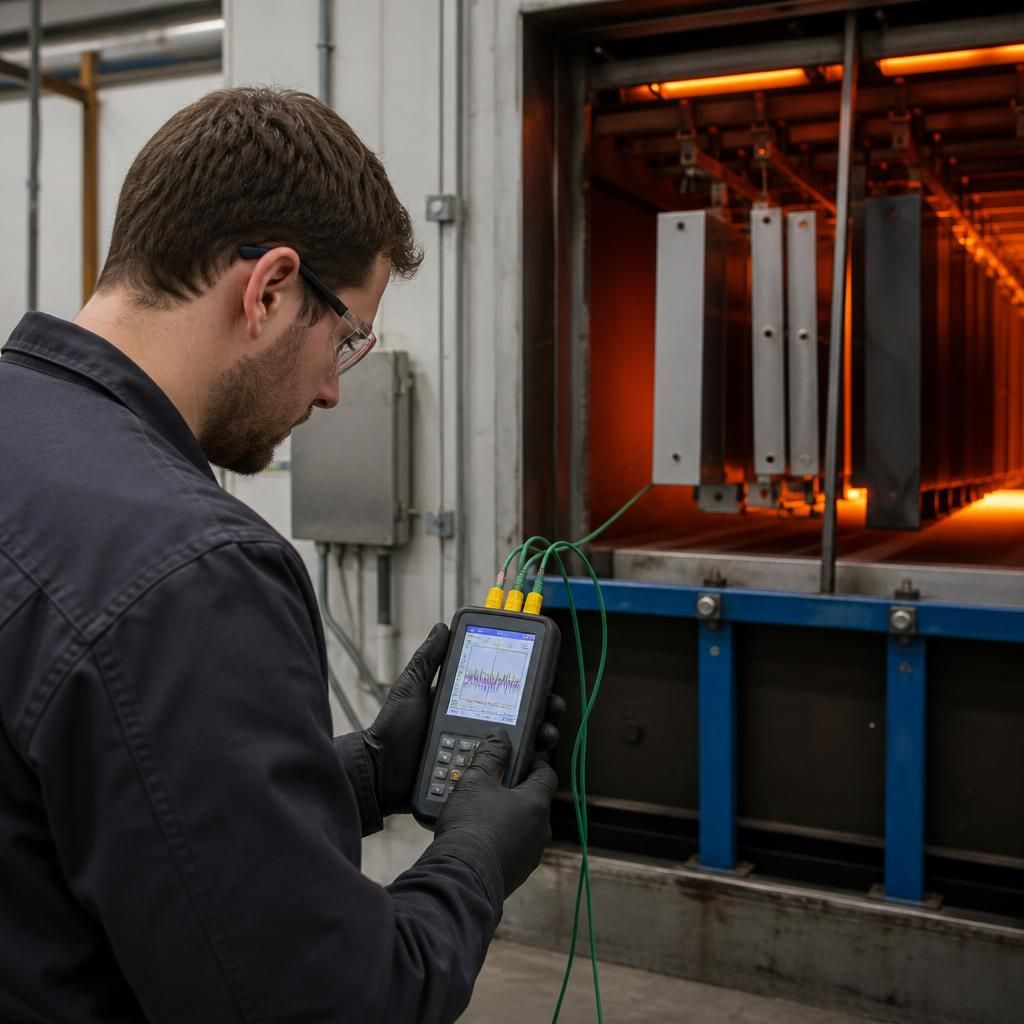
A cure profile is the complete temperature history of the coated part, not just the final bake temperature. It includes the rate at which the metal heats, the period held at the target temperature and the way it cools afterwards. A part that reaches the target too quickly may develop defects such as pinholing or solvent release, while a slow heat-up can leave the coating under-cured if the planned dwell begins too early.
When validating a process, compare the recorded profile with the powder’s technical requirements and identify where the part enters the specified cure window. Use this point to define the dwell period, rather than starting the timer when the oven reaches its setpoint. If the required profile cannot be achieved consistently, review the heating rate and load arrangement before simply increasing the oven temperature, as excessive heat can damage the finish or substrate.
Review Your Powder Coating Cure Requirements
Share your powder specification, component details and required finish with our team so the curing requirements can be reviewed against the proposed coating process. We can help identify the information needed to establish a suitable, repeatable cure profile for your parts.