

What types of metal components are best suited for high temp powder coating?
Metal components best suited to high temperature powder coating are those exposed to sustained or repeated heat, including industrial oven parts, heat shields, exhaust components, engine parts and high-temperature machinery casings. Steel, stainless steel and other heat-resistant metal substrates may be suitable, but the coating must be matched to the component’s operating temperature, substrate and service conditions.
The best candidates for high temperature powder coating are rigid metal components that experience elevated operating temperatures but remain within the coating system’s specified service range. They should also tolerate the powder’s curing temperature, have a suitably prepared surface and be designed so that heat can be distributed consistently during both use and curing.
Typical suitable component groups
- Fabricated steel assemblies: Frames, brackets, guards, supports, access panels and other fabricated parts can be suitable where they are exposed to heat from nearby equipment or a heated process.
- Ventilation and process-handling components: Metal grilles, duct sections, baffles, flues and covers may benefit from a heat-resistant finish when they carry warm air or sit close to a heat source. The internal and external temperatures should be assessed separately, as airflow can create different conditions across one component.
- Conveyor and production-line fixtures: Hooks, carriers, guides, rails and handling fixtures are often exposed to repeated heating and cooling. A suitable coating needs to withstand thermal cycling as well as contact, abrasion and handling during production.
- Industrial enclosures and access panels: Casings, covers and inspection doors can be appropriate when they need a durable finish around heated machinery. Their suitability depends on the temperature at the surface rather than the temperature inside the enclosed equipment alone.
- Metal grilles, racks and support structures: These components are often good candidates because their open construction allows heat to reach the metal relatively evenly. They must still be checked for distortion, trapped contamination and areas where the coating could build up excessively.
- Specialist automotive and engineering parts: Selected brackets, shields, supports and other non-sealing metal parts may be suitable where the coating’s thermal, mechanical and chemical resistance match the application. Components exposed directly to combustion gases, fuel, oil or road contaminants require particularly careful specification.
Material and construction are important
Carbon steel is commonly considered for high temperature powder coating because it is rigid and can be prepared consistently. Stainless steel can also be suitable, although its surface condition and preparation method need to be controlled to support adhesion. Aluminium and other lighter alloys may be considered where their dimensions, heat exposure and thermal expansion are compatible with the selected coating system.
Large welded fabrications need additional attention. Weld seams, corners, folded edges and enclosed sections can retain oils, moisture or chemical residues that interfere with coating adhesion. Deep recesses and narrow gaps may also receive an uneven film. A component with simple, accessible surfaces is generally easier to coat consistently than one with concealed faces or tightly assembled parts.
Operating conditions determine suitability
Maximum temperature is only one part of the assessment. A component that remains at a steady temperature may place different demands on a coating from one that repeatedly moves between ambient conditions and high heat. Thermal expansion, vibration, impact, abrasion, moisture and exposure to chemicals can all affect performance.
- Identify the expected surface temperature, not just the temperature of the surrounding process.
- Consider the duration and frequency of heat exposure.
- Record whether the component experiences rapid heating, cooling or repeated thermal cycling.
- Check for contact with oils, solvents, cleaning chemicals, salt, combustion by-products or abrasive materials.
- Assess whether adjacent materials, seals, fasteners or insulation can tolerate the same conditions.
A coating selected solely because it has a high stated temperature rating may still be unsuitable if the component flexes, rubs against another part or is exposed to chemicals that degrade the finish. The coating specification should therefore be matched to the complete service environment.
Component design and preparation affect the result
Parts should be capable of being cleaned and prepared across all surfaces that require protection. Rust, mill scale, welding residues, oil and embedded contaminants can compromise the finish. Cast or heavily textured surfaces may need particular preparation because pores and irregularities can retain contamination.
Design features also matter during curing. Blind cavities, overlapping plates and enclosed tubes can trap air or contaminants, while sharp edges can receive less coating coverage than broad flat areas. Drainage and venting provisions may be necessary for hollow fabrications, both to support preparation and to reduce the risk of pressure-related problems during heating.
When another coating approach may be more appropriate
High temperature powder coating is not automatically suitable for every heat-exposed metal part. Components whose operating temperature exceeds the selected system’s limit, changes temperature very rapidly or contacts intense flames may require a different protective solution. The same applies where the substrate cannot tolerate the curing cycle, where close dimensional tolerances could be affected by coating thickness, or where a joint, thread or moving interface must remain free of coating.
Before coating a production batch, the intended substrate, component drawings, service temperature, heating pattern, contaminants and required finish should be reviewed together. This allows the coating type, preparation method, masking requirements and curing conditions to be evaluated as one system rather than judging suitability from the component’s material or appearance alone.
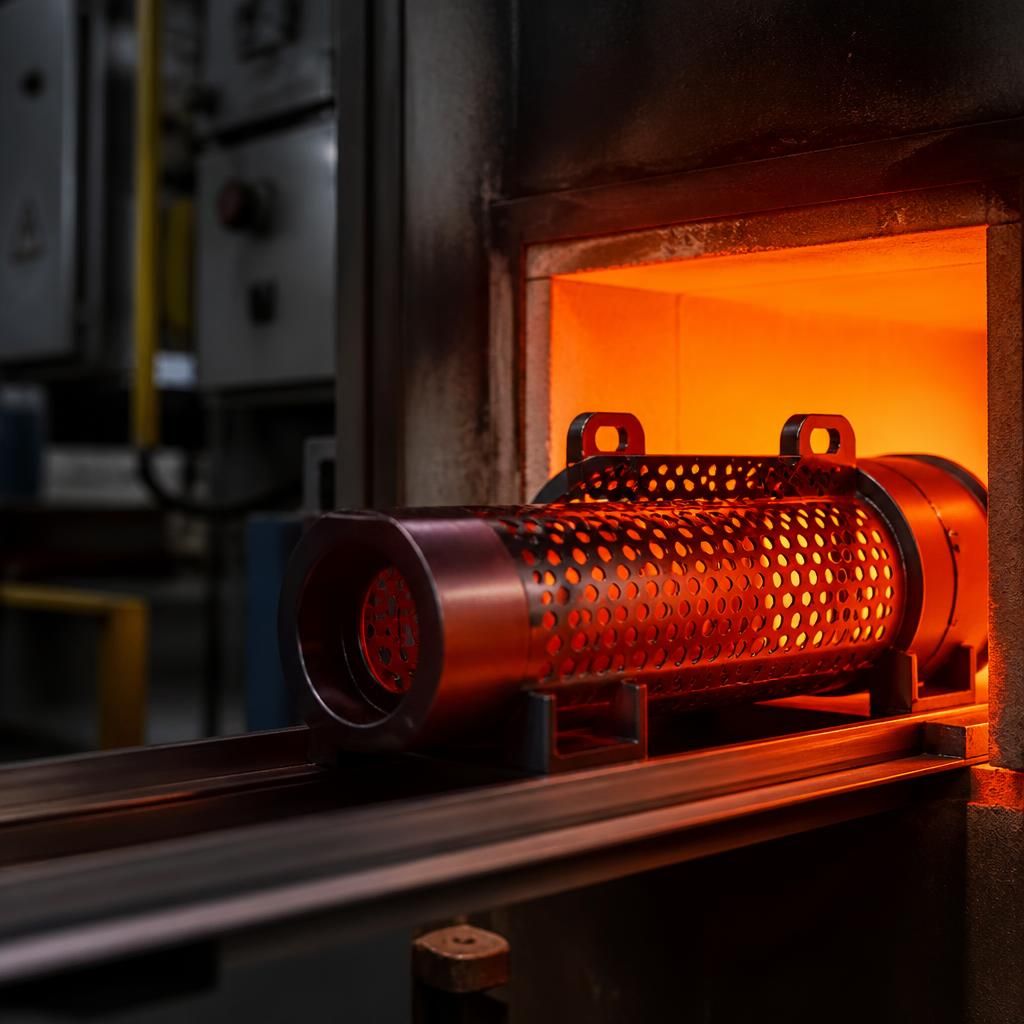
Heat distribution is a key suitability check. A component may be exposed to the same process temperature across its general area while developing much hotter zones near burners, exhaust outlets, mounting points or poorly ventilated sections. The coating specification should therefore be based on the highest expected metal surface temperature, not an average or surrounding air temperature.
Where exposure is uneven, review the component’s heat pattern alongside its material and geometry. Parts with clearly understood hot spots can be assessed more reliably, while untested temperature gradients may lead to localised coating degradation even when most of the component remains within the stated service range.
Discuss Your Components’ Suitability for High Temp Powder Coating
Discuss your component drawings, substrate and operating conditions with Powder-coatings.co.uk to assess whether high temperature powder coating is suitable. This review can help identify the appropriate coating specification and any preparation or masking requirements before production.