

What specific types of high temperature resistant powder coatings are available to suit different thermal environments and substrate requirements?
High temperature resistant powder coatings commonly include silicone-based formulations for sustained elevated heat, heat-resistant epoxy systems for moderate thermal exposure, and specialised hybrid or ceramic-filled coatings where additional chemical or thermal resistance is required. Selection depends on the operating temperature, exposure conditions, required finish and the substrate—such as steel, stainless steel, cast iron or aluminium—including its preparation and ability to tolerate the specified curing cycle.
High temperature resistant powder coatings are available in several performance classes, and the correct choice depends on the complete thermal profile rather than a single maximum-temperature figure. Important variables include continuous operating temperature, short-term peaks, heating and cooling rates, contact with chemicals or oils, exposure to moisture, required corrosion protection, appearance and the metal’s ability to tolerate the curing process.
Silicone-modified systems are commonly selected where a coating must retain its integrity during repeated exposure to elevated temperatures. The proportion and chemistry of the silicone component affect flexibility, adhesion, colour stability and resistance to thermal degradation. These systems can be suitable for fabricated steelwork, exhaust-related parts, heat shields, industrial housings and other components that experience regular heating and cooling. The specification should distinguish between continuous service and brief temperature excursions, as the two conditions place different demands on the coating.
Heat-resistant epoxy systems can be appropriate where the temperature is elevated but remains within the resin’s operating range, particularly when adhesion, chemical resistance and corrosion protection are important. They are not automatically suitable for every high-temperature application: prolonged exposure beyond their design range can cause loss of hardness, gloss or adhesion. They should therefore be considered for the actual service temperature and surrounding environment, rather than selected solely because the component is described as heat-resistant.
Silicone-polyester hybrids and other modified resin systems can provide a compromise between appearance, processability and thermal performance. They may be considered where the part needs a more conventional decorative finish but will still encounter higher temperatures than a standard architectural or general industrial coating can tolerate. Their suitability depends on the formulation, pigment package and intended film thickness, so technical data for the specific product is essential.
Inorganic and ceramic-filled powders are used for applications where resistance to heat, thermal shock, abrasion or aggressive process conditions is especially important. Ceramic fillers can alter hardness, thermal stability and surface durability, but they can also affect flow, finish and flexibility. A coating that performs well on a rigid component may be unsuitable on a part that flexes or expands substantially during operation. These materials are therefore normally assessed alongside the component design and its expected thermal cycling.
High-temperature primers and compatible coating systems may be needed where corrosion protection is required beneath the finish. The primer, topcoat and any pretreatment must be compatible both chemically and thermally. A standard primer beneath a high-temperature topcoat can become the limiting layer, even if the topcoat itself has a higher temperature rating. Interfaces, welds, edges and areas exposed to condensation deserve particular attention because failure often begins at these locations.
The substrate affects both application and long-term performance:
- Mild or carbon steel: normally requires thorough removal of mill scale, rust, oil and other contaminants, followed by a preparation method that provides a suitable key and corrosion resistance.
- Stainless steel: needs a controlled preparation approach because its relatively passive surface may provide weaker adhesion than an appropriately profiled surface. Contamination from ordinary steel processing should also be avoided.
- Cast iron: can contain pores, graphite and trapped contaminants that lead to outgassing during curing. Heating, cleaning and trial coating may be necessary to establish whether pinholes or surface defects are likely.
- Aluminium: requires preparation suited to its oxide layer and must be checked for distortion or loss of dimensional accuracy during the cure. Differences in thermal expansion between aluminium and the coating can also influence long-term adhesion.
Thermal expansion is particularly important when dissimilar metals, pressed sections, welds or tightly assembled components are involved. As the part heats, the substrate and coating expand at different rates. A rigid coating on a flexible or highly expanding substrate may crack, craze or detach during repeated cycles, even if its nominal temperature rating appears adequate. Components should be assessed in their finished form, including joints, sharp corners, threaded areas and contact points.
The temperature rating must also be read in context. Some technical data describes a continuous temperature limit, while other information relates to short exposure, intermittent operation or a specific test method. Colour and gloss can change before the coating loses adhesion or structural integrity, so the required appearance should be stated separately from the minimum functional performance. Dark pigments, bright colours and metallic effects may not behave identically at elevated temperature.
Application details influence the result as much as resin selection. Excessive film build can impair curing or increase the risk of cracking during thermal cycling, while insufficient coverage can leave edges and recessed areas vulnerable. Parts should be designed or masked so that threaded holes, bearing seats, electrical contact faces and close-tolerance interfaces are not unintentionally coated. The curing schedule must be based on the metal temperature, not simply the oven air temperature, and the component must be able to withstand that schedule without distortion.
For a reliable specification, record the normal operating temperature, highest expected peak, duration and frequency of peaks, heating and cooling rate, atmosphere, chemical contact, cleaning regime, appearance requirements and substrate condition. Confirm that the selected powder, pretreatment and primer are compatible with one another and with the curing cycle. Where the service environment is severe or unusual, a sample coating and thermal-cycle assessment can reveal adhesion, blistering, cracking, colour change and corrosion issues before production parts are processed.
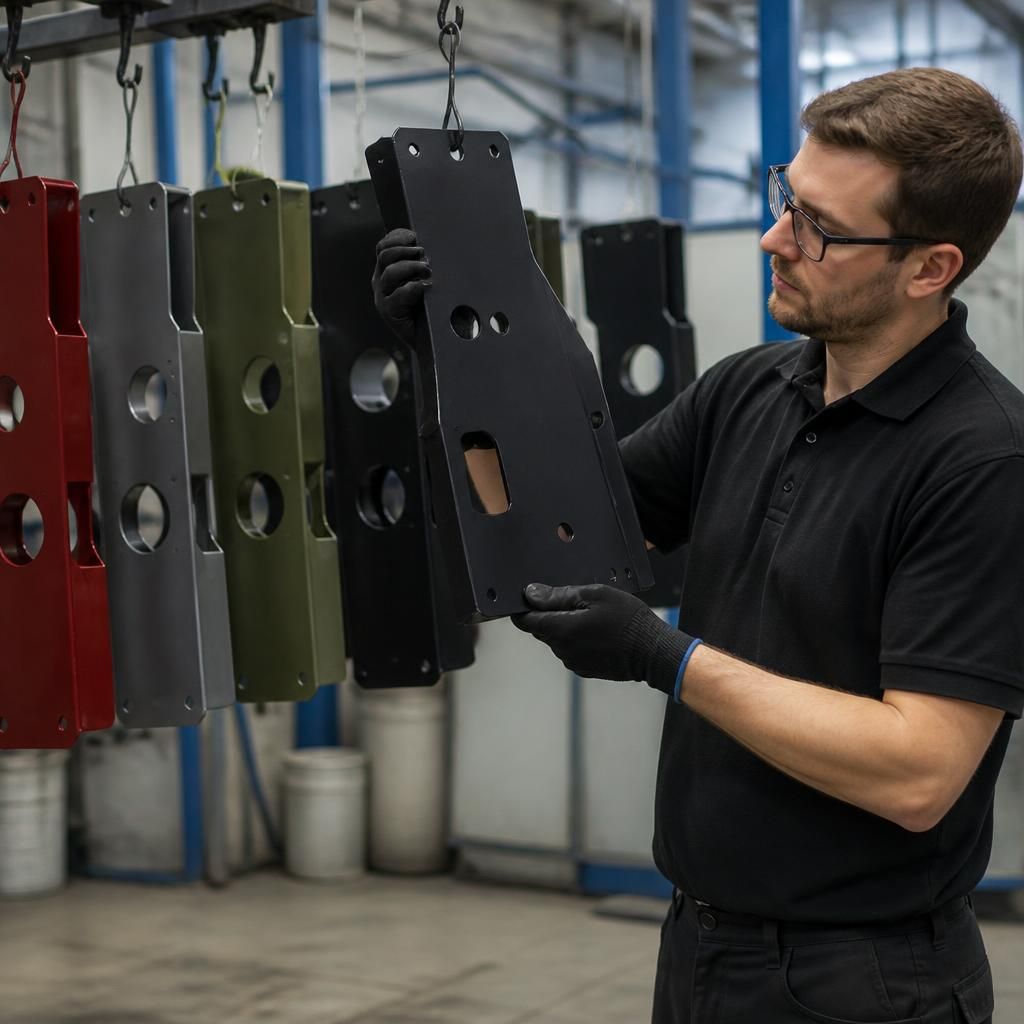
High temperature resistant powder coatings are not available in the same unrestricted colour range as standard industrial powders. Heat can alter pigments, gloss levels and metallic effects, so the required colour should be assessed at the component’s operating temperature rather than judged only from an untreated powder sample.
Where appearance is important, specify the acceptable change in colour and gloss separately from the coating’s functional heat resistance. A technically suitable formulation may therefore be rejected if it cannot maintain the required visual finish, while a visually stable option may need to be balanced against corrosion, chemical or thermal performance.
Discuss the right high temperature powder coating for your application
Discuss your component’s operating conditions and substrate with the powder-coating.co.uk team to help identify a suitable high temperature powder coating specification. Collection and delivery options are available for businesses across the Midlands and surrounding areas.