

What factors should be considered when choosing a high temp powder coating for specific industrial applications?
Choosing a high temperature powder coating requires matching its continuous and peak temperature resistance to the application, while also considering the metal substrate, heat cycling, chemical or corrosive exposure, required film properties and appearance. The coating system must be compatible with the component’s preparation and curing requirements, so the expected service conditions and production process should be reviewed before selection.
The right high temperature powder coating is selected by assessing the component’s complete service and manufacturing requirements, not by choosing the coating with the highest stated temperature rating. The decision should also account for exposure duration, part geometry, dimensional tolerances, required functional performance, production method, compliance obligations and the evidence needed to verify suitability.
Define the actual operating duty. A component may experience different conditions across its surface or during different stages of operation. Record where heat is applied, how long the component remains at operating conditions and whether particular areas are shielded, exposed or in contact with other materials. This information is more useful than relying on a single nominal temperature for the whole part. It also helps identify whether the coating must tolerate localised hot spots or temperature gradients.
Match the coating chemistry to the end use. High temperature powders are formulated for different combinations of thermal exposure and functional demands. Some applications place greater emphasis on retaining adhesion, while others require resistance to abrasion, gases, oils, solvents or repeated handling. The coating’s binder system and formulation should therefore be considered alongside the service environment rather than treated as interchangeable alternatives. Technical data should be checked for the relevant exposure conditions and test limitations.
Consider the component’s geometry and tolerances. Powder coating adds a measurable film to the part, which can affect close-fitting assemblies, threaded holes, bearing seats, sliding surfaces and electrical contact points. Recesses, sharp edges and enclosed sections can also influence powder deposition and film consistency. A coating specification should identify surfaces that require masking, uncoated contact areas or controlled thickness, particularly where the finished component forms part of a precision assembly.
Assess functional requirements beyond heat resistance. The selected finish may need to provide one or more additional properties, such as:
- resistance to impact, abrasion or repeated handling;
- electrical insulation or controlled conductivity;
- protection against oxidation or specified industrial contaminants;
- stable friction or release characteristics at contact surfaces;
- resistance to cracking, flaking or loss of adhesion during service; or
- a defined surface texture where components must be cleaned or handled regularly.
These requirements can rule out a coating that performs well thermally but is unsuitable for the component’s mechanical or electrical function.
Review how the part will be processed. Part size, mass, shape and loading method affect how consistently a coating can be applied and processed. Large or awkward components may require suitable racking, lifting points or a coating sequence that allows all required surfaces to be reached. Assemblies may need to be separated before coating to prevent uncoated interfaces, trapped contamination or restricted access. The production method should also allow the specified finish to be inspected without damaging the component.
Check for distortion and assembly risks. Thin sections, welded fabrications and components containing dissimilar metals can respond differently during industrial processing. Drawings should identify areas vulnerable to distortion, movement or loss of dimensional accuracy. Masking plans should be agreed before production where threads, machined faces, earth points or sealing surfaces must remain free of coating.
Establish a practical specification. A useful specification should state the coating type, colour or identification requirement where relevant, acceptable film thickness, areas to be coated, areas to remain uncoated, required tests and the intended service conditions. It should also identify whether the finish is decorative, protective or part of a functional system. Clear requirements reduce the risk of selecting a coating on a generic product description that does not reflect the component’s actual use.
Use trials when the application is critical. For new components or demanding service conditions, representative test pieces can be used to assess appearance, adhesion, film continuity, masking, dimensional effects and performance after exposure. Test pieces should reflect the production material, geometry and proposed process as closely as possible. Results should be recorded against agreed acceptance criteria rather than judged solely by visual inspection.
Consider inspection and maintenance. The coating should be capable of being checked using practical methods appropriate to the component. Inspection may include visual examination, thickness measurement, adhesion testing or checks of masked and contact areas. The planned cleaning method and any future repair process should also be considered, since aggressive cleaning agents, abrasive maintenance or local repairs may affect the coating’s service life.
For an industrial project, the most reliable approach is to provide the coater with the component drawing, material information, operating conditions, areas requiring masking and the required performance criteria. A specialist powder coating provider serving manufacturers and fabricators across the Midlands can then help assess whether the proposed coating and process are suitable for the part, including collection and delivery arrangements where required.
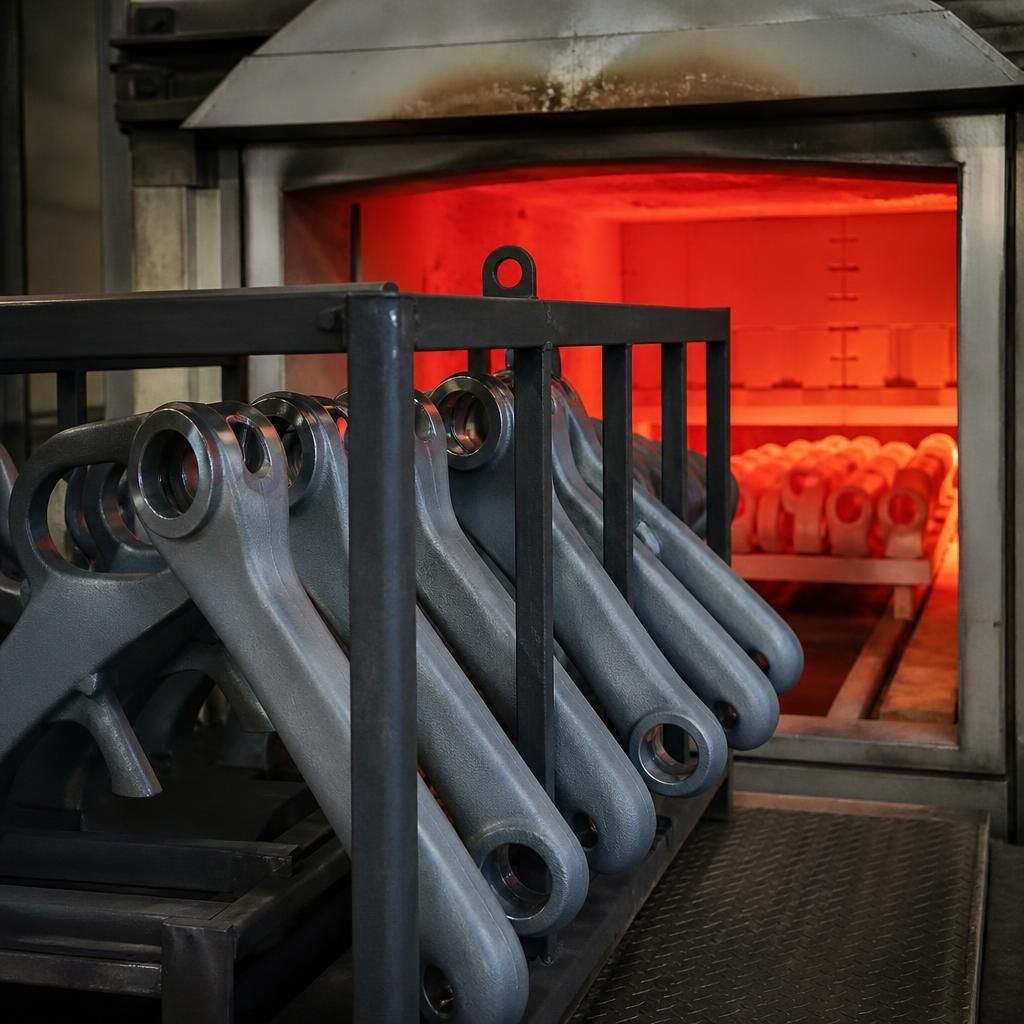
Thermal cycling should be assessed separately from maximum temperature. Repeated heating and cooling can create expansion and contraction stresses at the coating–metal interface, particularly where the substrate and coating respond at different rates. A finish that tolerates a steady operating temperature may therefore perform differently when a component is frequently started, stopped or exposed to rapid temperature changes.
For applications with repeated cycles, selection should consider the rate of temperature change, the number and severity of cycles, and the risk of cracking, blistering or adhesion loss. Representative test pieces can be exposed to the proposed cycle and inspected for changes in adhesion, film continuity and appearance. This provides more relevant evidence than relying on a maximum temperature value alone.