

What are the key benefits of high temp powder coating for industrial applications?
High temperature powder coating provides a durable, heat-resistant finish for metal components exposed to elevated operating temperatures. Its key benefits include lasting protection against heat-related deterioration, corrosion, wear and chemical exposure, helping components retain their surface performance in demanding industrial environments.
The key benefits of high temperature powder coating are its ability to provide a stable, consistent finish on metal components that operate in elevated-temperature environments, while also supporting efficient industrial production. The most suitable formulation depends on the component’s maximum operating temperature, exposure pattern, substrate and required finish, so the coating should be selected against the actual service conditions rather than temperature alone.
Improved performance during thermal cycling
Industrial components may heat up and cool down repeatedly rather than remain at one constant temperature. A suitable high temperature powder coating is designed to tolerate this type of thermal cycling, helping the finish remain bonded and functional as the metal expands and contracts. This is particularly relevant to fabricated parts used near heat sources, ovens, furnaces, exhaust systems and other process equipment.
Resistance to thermal cycling can also help reduce the risk of cracking, flaking or loss of adhesion associated with an unsuitable coating. However, the result depends on correct surface preparation, curing and compatibility between the coating and the metal substrate.
Consistent coverage across production batches
Powder application can produce an even film across suitably prepared metal surfaces when the application parameters are properly controlled. This supports repeatable results across batches, which is important for manufacturers and fabricators supplying components that need a consistent appearance or defined coating specification.
Controlled application can also help maintain a uniform finish around edges, faces and accessible recessed areas. Part geometry still matters: deep recesses, sharp edges and enclosed sections may require specific racking, spray or application considerations to achieve the intended coverage.
Efficient use of coating material
Powder coating is applied as a dry material, so it does not rely on liquid solvent evaporation to form the film. Overspray may also be collected and reused in some powder-coating systems, subject to the equipment, powder type and required quality controls. These characteristics can help make the process suitable for repeat industrial work where material handling and application consistency need to be managed carefully.
Powder application does not remove the need for process control. Contamination, incorrect film thickness, poor grounding, unsuitable recovery practices or inadequate curing can all affect the finished component.
Reduced impact on component dimensions
High temperature powder coating forms a relatively controlled dry film rather than requiring a heavy liquid coating build to achieve coverage. When the coating thickness is specified and monitored appropriately, this can help preserve the dimensional relationships between mating or assembled parts. This is useful for brackets, housings, guards, fixtures and other components where excessive coating build could affect fit.
Critical interfaces should still be masked or otherwise protected where necessary. Threads, bearing seats, electrical contact points and close-tolerance surfaces may not be suitable for unrestricted coating.
Flexible finish options for industrial components
High temperature powder coating can be specified in finishes that support both functional and identification requirements. Colour, gloss level, texture and surface appearance may be relevant where components must match an existing assembly, distinguish different equipment or meet a defined visual standard.
Appearance should not be treated as the only selection criterion. Some high temperature formulations have a more limited range of colours or visual finishes than standard powder coatings, and the chosen option must remain appropriate for the component’s thermal environment.
Support for cleaner production environments
Because powder is applied dry, the process avoids many of the handling issues associated with liquid coatings, such as solvent storage, liquid drainage and drying of solvent-bearing films. This can simplify certain aspects of industrial coating operations, although extraction, housekeeping and safe handling controls remain necessary.
The coating process should therefore be assessed as part of the whole production system. Pretreatment chemicals, blasting media, masking materials and curing equipment also influence environmental controls and workplace procedures.
Potential reduction in recoating requirements
When the coating is correctly matched to the temperature profile and prepared surface, its resistance to the relevant operating conditions can extend the useful finish on the component. This may reduce the disruption associated with removing and recoating parts, particularly where components are difficult to access or form part of larger industrial equipment.
This benefit is dependent on service conditions. Direct flame contact, severe abrasion, rapid temperature changes, chemical attack or temperatures beyond the coating’s specification may require a different protective system or a more detailed engineering assessment.
Better specification of components for their intended duty
Using a high temperature coating encourages the coating specification to reflect how the component will actually be used. Important considerations include:
- the normal and peak operating temperatures;
- the duration and frequency of heat exposure;
- the rate of heating and cooling;
- contact with oils, fuels, solvents, chemicals or process materials;
- abrasion, impact and mechanical handling;
- the metal type and condition of the surface; and
- any required electrical, cosmetic or dimensional properties.
This assessment helps avoid selecting a coating simply because it has a high temperature rating. The highest nominal temperature is not automatically the best option if the component also requires particular adhesion, flexibility, chemical resistance, appearance or application characteristics.
For manufacturers, fabricators, construction businesses and automotive companies, the practical value of high temperature powder coating lies in matching a controlled coating process to the component’s real operating conditions. A clear specification, suitable preparation and verified curing are essential to obtain the intended benefits; the coating itself cannot compensate for an unsuitable substrate, incorrect application or service exposure beyond its design limits.
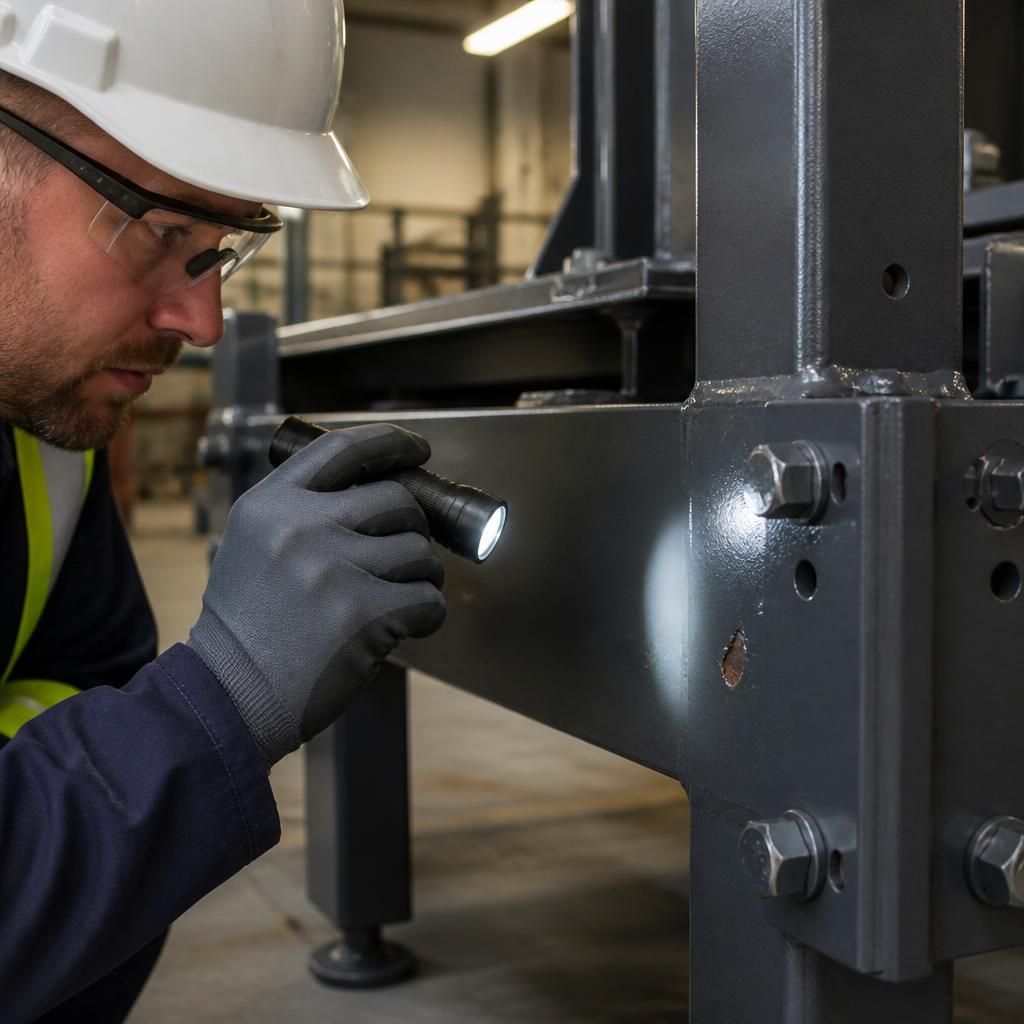
High temperature powder coating can support condition monitoring by providing a clearly defined protective surface that is easier to inspect during routine maintenance. Chips, scratches, blistering or exposed metal can be identified visually, allowing engineers to assess whether local repair, further investigation or recoating is needed before surface damage affects the component.
This is particularly useful for guards, brackets, housings and fabricated parts installed within larger systems, where the coating provides a visible indication of surface condition without changing the component’s intended function. Inspection remains dependent on access, lighting and the severity of the operating environment, so the coating should form part of a wider maintenance and protection plan.