

What is the recommended temperature range for curing different types of high temp powder coatings?
Most high-temperature powder coatings cure with the metal substrate reaching approximately 180–220°C, while specialist silicone-based or extreme-heat formulations may require around 200–250°C. Always follow the coating manufacturer’s technical data sheet, as the specified temperature and dwell time apply to the substrate temperature—not simply the oven air temperature.
The recommended curing temperature for a high-temperature powder coating is determined by its resin chemistry, intended service temperature and specified cure schedule. There is no single setting that suits every formulation: coatings designed for moderate heat exposure may use a different schedule from silicone-rich or extreme-temperature systems, even when both are described as high-temperature powders.
Formulation type is the first consideration.
- High-temperature silicone-based coatings: These are commonly selected for components exposed to sustained heat because silicone resin systems retain their properties at elevated operating temperatures. They generally sit towards the higher part of the applicable curing schedule and require careful control of both heat and dwell time.
- Extreme-heat formulations: Powders intended for particularly demanding thermal service may require the upper end of the curing conditions specified for the product. Their performance depends on achieving complete cross-linking without overheating the substrate or damaging the finish.
- Hybrid or modified resin systems: These combine properties from more than one resin type. Their curing behaviour cannot be predicted reliably from the name of the resin alone, so the product data sheet should take precedence over a general powder-coating schedule.
- Formulations for moderate heat exposure: These may cure under less demanding conditions than extreme-temperature products, but they should not automatically be substituted for a coating designed for the component’s actual operating environment. A powder that cures successfully is not necessarily suitable for continuous high-temperature service.
Cure temperature and service temperature are different specifications. The cure temperature is the heat required to form the coating film during processing. The service temperature is the heat the finished coating can withstand in use. A coating with a high service-temperature rating may still require a carefully controlled cure, while an incorrectly cured coating may lose adhesion, hardness or chemical resistance when exposed to heat.
The stated cure schedule should also be read alongside its dwell-time requirement. Dwell begins when the metal itself has reached the required temperature, not when the oven display first reaches its set point. A heavy steel fabrication, a thin pressed component and a mixed batch can therefore need different oven cycles, even when the same powder is used. The oven air temperature may need to be adjusted to deliver the required metal temperature without exceeding the coating’s permitted process conditions.
Film thickness affects the result. Excessive film build can restrict proper fusion and leave defects such as pinholes, reduced adhesion or an uneven surface. Insufficient film build may reduce protection and produce incomplete coverage. Applying the thickness specified for the formulation helps the coating reach the intended finish during the recommended cure cycle.
Oven loading, airflow and component position also influence the effective temperature. Large or closely packed parts can heat more slowly than smaller, widely spaced items. Areas shielded from direct airflow may lag behind the oven air temperature, while poorly controlled hot spots can over-cure the surface before the coldest part of the component has reached the required condition.
For production work, the practical method is to confirm the schedule with a temperature profile of representative parts. Temperature probes or profiling equipment can identify the coldest section of a component, establish when the metal reaches the required cure condition and show whether the dwell period is sufficient. This is more reliable than setting the oven solely from its controller reading.
When comparing products, check the technical data for the complete cure window, recommended film thickness, minimum metal temperature, dwell time and maximum permitted process temperature. If the application involves welded assemblies, thick sections, mixed metals or a highly variable batch, trial parts and documented profiling can help confirm that every area receives an adequate cure. For industrial batches, the coating supplier or finishing specialist should review the proposed schedule whenever the formulation, component geometry or oven loading changes.
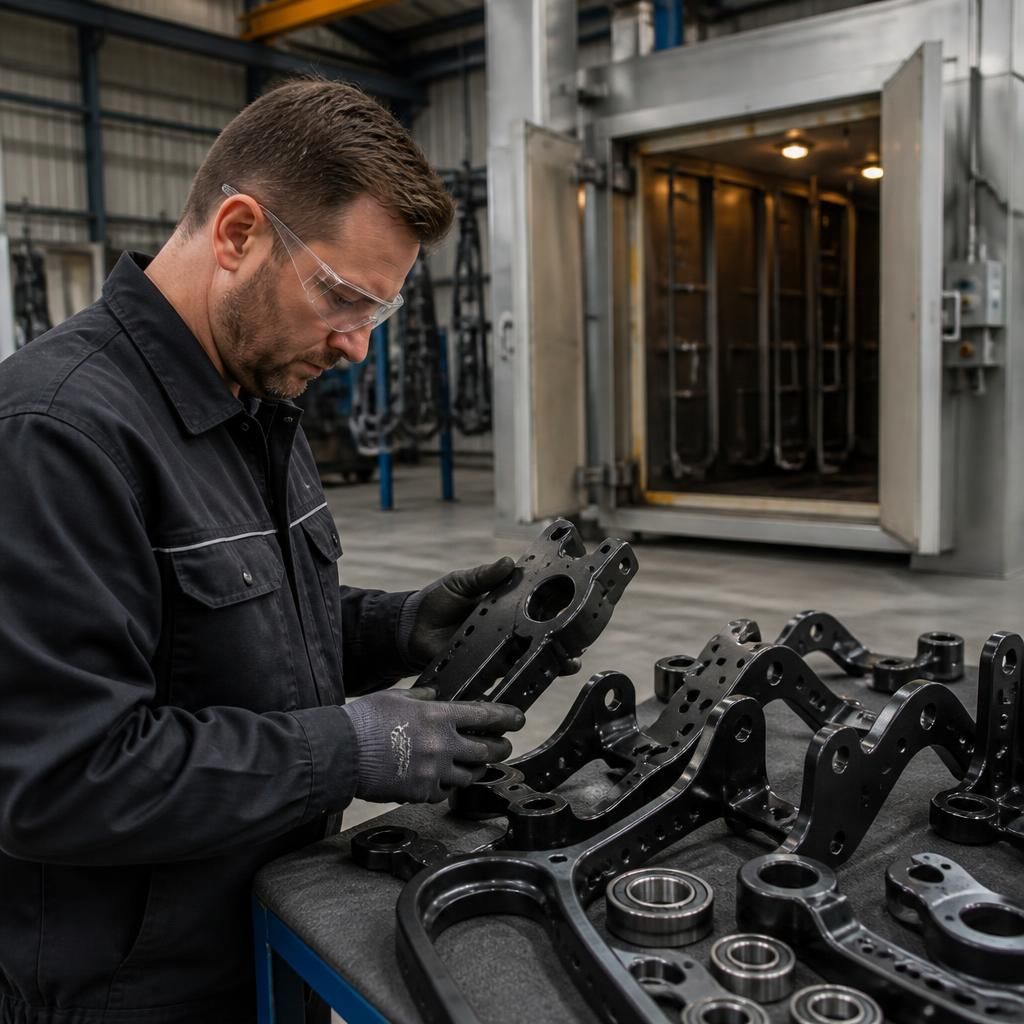
The recommended cure temperature must also be compatible with the complete component, not just the powder coating. Assemblies containing seals, adhesives, electronics or heat-sensitive metal parts may have a lower allowable processing temperature than the coating’s stated cure schedule.
Check the temperature limits of the substrate and any attached materials before selecting a high-temperature formulation. If the required cure could affect the component’s properties or assembled parts, the coating system and process should be reviewed rather than simply increasing the oven setting.