

What is the optimal project scale to balance cost-efficiency and quality in high temp powder coating?
The optimal project scale for high temp powder coating is usually a consistent batch large enough to spread preparation, colour change and oven setup costs across multiple components, without exceeding the coater’s handling or curing capacity. Grouping parts with compatible materials, coating specifications and cure requirements can improve cost-efficiency while maintaining a controlled, uniform finish.
The optimal project scale for high temperature powder coating is the smallest repeatable production lot that uses the coater’s equipment efficiently while allowing every part to be prepared, coated, cured and inspected under the same controlled conditions. The largest possible order is not automatically the most economical or the best for quality: part dimensions, geometry, coating specification, handling requirements and the consequences of a defect all influence the right scale.
Project scale should be assessed by more than the number of components. A small quantity of large, heavy or awkwardly shaped parts may occupy more oven and handling capacity than a much larger quantity of compact components. Surface area, rack loading, masking, access to recesses and the need to avoid contact marks can all affect the practical size of a coating lot.
There is also an important distinction between an economic lot and a technical lot. An economic lot spreads fixed activities across enough parts to make the work proportionate to the order. A technical lot consists of parts that can safely share the same coating system and process conditions. Components should only be combined where their substrate, preparation requirements, colour, film specification and curing requirements are compatible. Combining unsuitable parts simply to increase volume can create uneven quality or require separate process stages.
For high temperature applications, the coating specification should be confirmed before the quantity is finalised. “High temperature” can refer to the temperature the finished coating must withstand in service, whereas the powder’s curing temperature is a separate property. The selected system must be suitable for the substrate, intended operating conditions and required performance. Parts with different thermal sensitivities or substantially different mass may need separate treatment even when they are being supplied to the same project.
Quality is usually easier to control when the lot is sufficiently consistent for the operator to use one defined process route. This supports repeatable hanging, predictable heat exposure and comparable inspection results. An oversized order may need to be divided if components cannot be loaded without restricting airflow, exceeding equipment dimensions or creating inconsistent exposure. Splitting a project into controlled sub-lots can therefore protect finish quality rather than indicating that the project is too large.
Conversely, a smaller project can be appropriate where the parts are valuable, the specification is demanding or the cost of an isolated defect is high. In these cases, a controlled first-article or pilot stage can be used to confirm preparation, masking, coating coverage and curing before the full quantity is processed. This may introduce an additional process step, but it gives the specification a practical test against the actual component rather than relying only on a written description.
When comparing project scales, consider the complete cost and risk profile:
- Part handling: assess whether components can be securely racked, moved and unloaded without damaging the finish.
- Component geometry: identify deep recesses, sharp edges, threaded areas, apertures and enclosed sections that may need special treatment or masking.
- Oven compatibility: check that the largest parts and the planned load arrangement fit the available working envelope and can receive consistent heat exposure.
- Specification consistency: separate parts where colour, gloss, film build, substrate or cure requirements differ materially.
- Inspection requirements: establish which visual and dimensional checks are required and whether testing or sample approval is needed.
- Packaging and transport: plan how coated parts will be protected, particularly where the order is divided into several controlled lots.
A practical project plan should begin with the part drawings or samples, material details, dimensions, quantities, required finish and intended service conditions. The coater can then determine whether the order is best handled as one production lot, several matched lots or a staged approval run. This approach is more reliable than setting a target quantity first and attempting to make all parts fit the same process.
For manufacturers and fabricators in the Midlands, collection and delivery arrangements can also influence how a project is divided, particularly where components are supplied in production stages or need to return to another manufacturing operation. The best scale is therefore the one that balances process compatibility, handling practicality, inspection control and the total movement of parts—not simply the one with the highest item count.
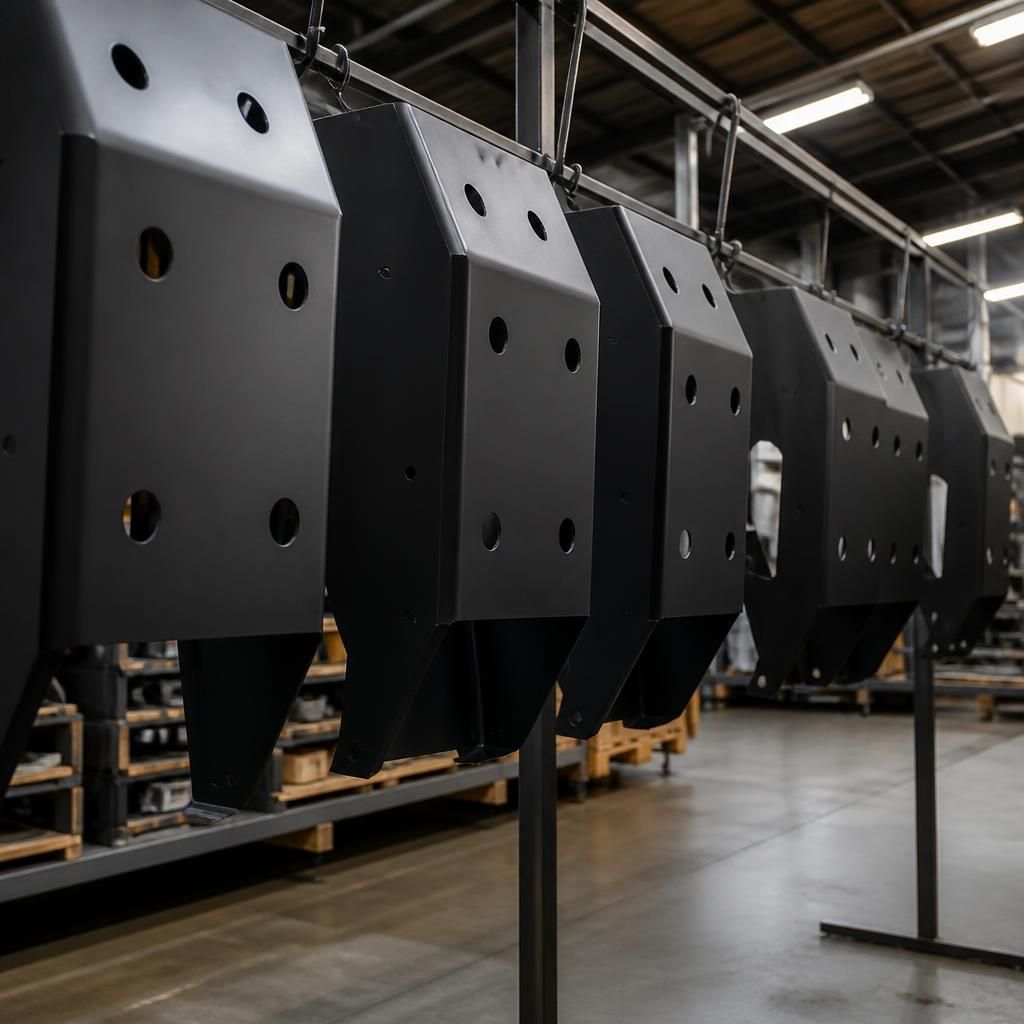
For high temp powder coating, the most cost-efficient project scale is often the batch that matches the customer’s production and installation schedule, rather than the largest quantity that can be coated at once. A larger run may reduce the frequency of processing and transport, but it can also create additional storage, packaging and stock-management requirements.
When deciding between one large batch and staged releases, assess how long coated parts will be held, whether the specification may change, and whether finished components could be damaged or mixed during storage. Smaller, planned releases can reduce these risks and make inspection and traceability easier, while a larger batch may be appropriate where demand, drawings and finish requirements are stable. The right balance is the point at which processing efficiency is gained without creating avoidable inventory or rework exposure.
Discuss the optimal scale for your high temp powder coating project
Discuss your high temp powder coating requirements with the team, providing part drawings or samples, quantities, material details and the required finish. This allows the project to be assessed and the most suitable production approach to be considered.