

What factors influence the cost of high temp powder coating projects in the UK?
The cost of a high temp powder coating project in the UK is mainly influenced by the powder type, part size and geometry, surface preparation, coating specification, batch volume, curing requirements and collection or delivery needs. A clear quotation therefore depends on the components, required finish, operating temperature and production quantities involved.
The final cost of a high-temperature powder coating project is determined by the total processing effort, the technical risk of the specification and the amount of handling each component requires. Two parts with similar dimensions can therefore produce different prices if one needs more preparation, masking, inspection or specialised processing.
Part condition has a direct effect on preparation costs. Clean, sound steel or aluminium is generally more straightforward to process than metal carrying oil, corrosion, weld spatter, old coatings or embedded contamination. Removing existing finishes may require additional mechanical preparation or stripping, while heavily corroded areas can require further attention before coating. Any repairs, dressing of sharp edges or treatment of welds should be identified before a quotation is finalised.
Design details can increase handling time. Hollow sections, recesses, threaded holes, close-fitting interfaces and complex profiles require careful positioning and may need temporary plugs, caps or masking. Areas that must remain uncoated also add preparation and checking requirements. The number and size of hanging points matter because components must be supported without compromising access to the surfaces that need coating.
Specification requirements affect both material use and process control. A project may require a defined film build, particular surface appearance, high-temperature suitability, resistance to chemicals or a coating system compatible with the component’s substrate. Tighter requirements can involve additional checks during preparation and finishing. Where the component operates at elevated temperature, the powder must be selected for the actual service conditions; using a coating that is unsuitable for the intended temperature can create a cost risk through premature failure or reprocessing.
Colour and finish choices can influence production efficiency. Standard, regularly processed finishes are usually simpler to schedule than unusual colours, textures or gloss levels. Small batches involving several colours may require cleaning and preparation between runs, increasing handling and process time. A specification should state whether colour matching, gloss control or a particular texture is essential, rather than treating appearance as an informal preference.
Quantity is not the only volume consideration. The number of components, their repeatability and how efficiently they can be loaded together all affect the cost per item. Identical parts that can be processed in a consistent batch may require less set-up and handling than a mixed collection of one-off components. Conversely, very large or heavy items may need special loading arrangements even when the quantity is small.
Inspection and documentation can add to the project scope. Requirements may include records of preparation, coating checks, visual inspection, adhesion testing or confirmation that the agreed finish has been achieved. These controls are particularly relevant where coated parts form part of a larger manufactured assembly or where the purchaser has a documented quality procedure. The more detailed the evidence required, the more time should be allowed for inspection and administration.
Packaging and transport should be considered as part of the overall cost. Finished components may need protection from impact, abrasion, moisture or contact between coated surfaces. Large, delicate or awkwardly shaped parts can require more protective packaging and careful loading. Collection and delivery arrangements also depend on the size, weight and handling requirements of the consignment, rather than simply the number of items.
Rework risk is an important pricing consideration. Unclear drawings, incomplete information about operating temperature, inaccessible surfaces or late changes to the finish can lead to extra preparation or a second processing cycle. Providing accurate dimensions, photographs, drawings, substrate details, required coating areas and service conditions helps the coater assess the job consistently and reduces uncertainty in the quotation.
For a meaningful comparison between quotations, check that each price covers the same preparation standard, coating specification, masking, inspection, packaging and transport requirements. A lower initial figure may not represent a lower total cost if important operations have been excluded. The most useful enquiry describes the component material, dimensions, weight, quantity, existing condition, areas to be coated, areas to be protected and the temperature and environment in which the finished part will be used.
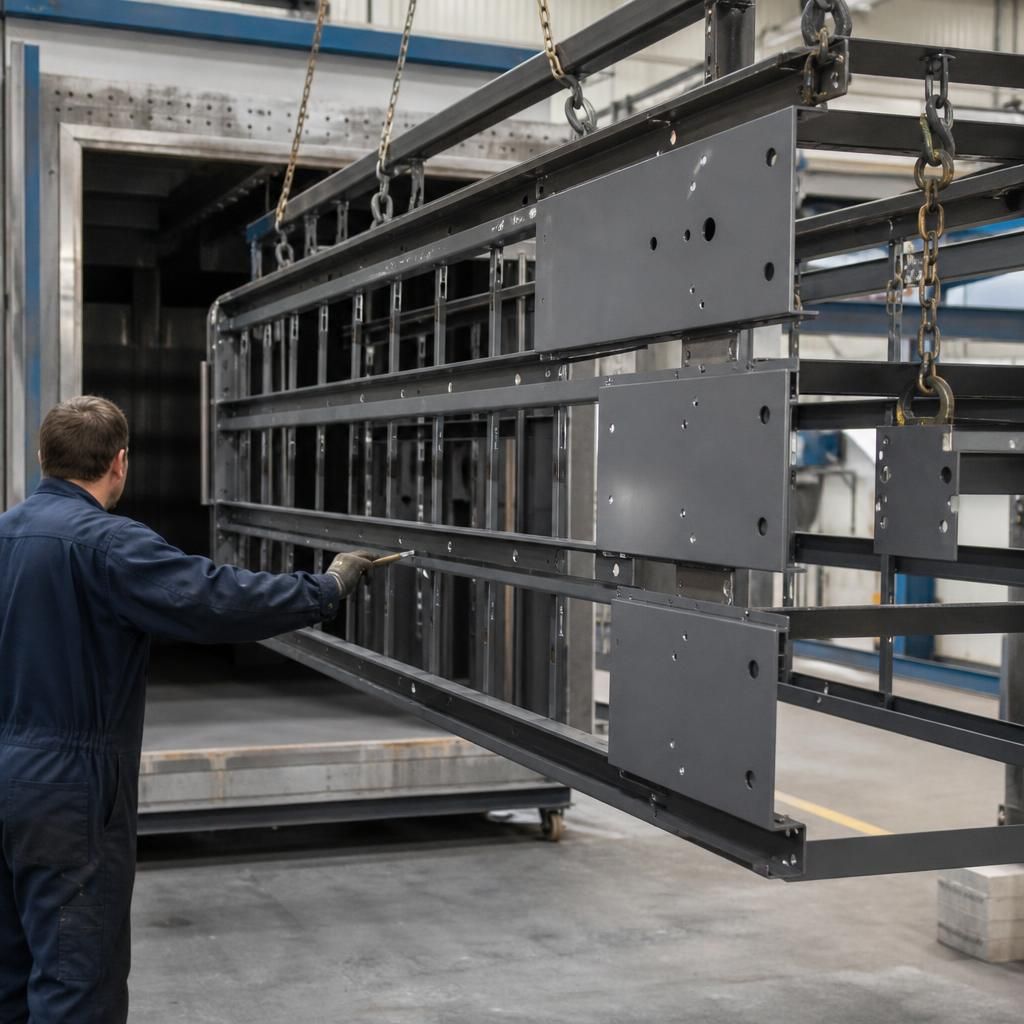
Thermal mass can influence the cost of high-temperature powder coating even when the coated area is modest. The oven must bring the component itself—not just the surrounding air—to the required curing condition. Thick, dense or heat-retaining parts may therefore need a longer controlled cycle than lightweight sections, using more oven capacity and limiting how efficiently other work can be processed alongside them.
Providing material type, wall thickness and any heat-sensitive inserts helps the coater assess the thermal cycle accurately. This is particularly important for assemblies containing different metals, as uneven heating can affect the final finish and may require more careful process control.