

What are the implications of using different curing and bake times on the cost and quality of high temp powder coating?
Different curing and bake times affect both the cost and performance of high temp powder coating: insufficient curing can reduce adhesion, hardness and durability, while excessive baking increases energy use and may impair the finish or substrate. The correct cure schedule, matched to the powder, coating thickness, component material and oven performance, helps control processing costs while achieving the required quality.
The principal implication of changing a high temperature powder coating’s cure schedule is that the process may no longer match the powder manufacturer’s requirements or the component’s thermal behaviour. Cure time is normally measured after the metal has reached the specified part-metal temperature, rather than from the moment the component enters the oven. A reliable assessment therefore considers powder chemistry, film thickness, metal thickness, component geometry and the actual temperature reached by the workpiece.
It is also important to distinguish a powder designed to withstand high operating temperatures from one that requires an unusually high curing temperature. Many high-temperature-resistant powders are applied and cured within a conventional powder-coating process, while their formulation determines how they perform in service. The technical data for the selected product should establish the target metal temperature, dwell period and acceptable process window.
How shorter or lower-temperature cycles affect quality
A cycle that is too short may leave the coating only partly cross-linked. The visible finish can appear acceptable while the film has inadequate resistance to impact, chemicals, abrasion or handling. Potential consequences include poor intercoat bonding, premature loss of gloss or colour, and damage during assembly or service. These risks are greater where thick steel sections, boxed fabrications or densely loaded oven racks take longer to heat through than small, thin parts.
Low-temperature curing powders can sometimes reduce the heat input needed for suitable components, but they are not a universal solution. The coating must still reach its specified part-metal temperature, and the substrate must be compatible with the selected system. Reducing the oven setting without confirming the temperature at the metal surface can produce an apparent time saving without achieving a valid cure.
How longer or hotter cycles affect quality
Extending the bake beyond the permitted range does not necessarily improve performance. Excessive heat exposure can alter colour, gloss and texture, particularly with sensitive pigments or special effects. It can also promote yellowing, embrittlement or loss of appearance, depending on the powder formulation. On parts containing seals, inserts, heat-sensitive alloys or pre-existing treatments, unnecessary heat may damage the component even when the powder film itself remains intact.
High-temperature service performance should not be confused with unlimited resistance to the curing oven. A coating may tolerate elevated temperatures in use yet still have a defined curing window. Conversely, a longer cure will not compensate for unsuitable powder selection, incorrect application or contamination on the substrate.
Where the cost changes
- Energy consumption: a higher oven set point, longer dwell or repeated heat-up cycle increases gas or electricity use. The cost is influenced by the oven’s insulation, loading pattern, air movement and the mass of metal being heated.
- Throughput: longer cycles reduce the number of loads that can pass through the oven within a given production period. This can raise the processing cost per component, especially for small batches.
- Labour and handling: additional cooling, inspection, masking changes or reprocessing adds handling time. A part that cannot be released because its cure is uncertain may also require extra testing before progressing to assembly.
- Rework and waste: under-cured or heat-damaged finishes may need stripping and recoating. The resulting cost includes coating materials as well as preparation, handling and any disruption caused by rejecting the batch.
- Loading efficiency: filling the oven effectively can spread the energy and operating cost across more parts, but overloading can obstruct airflow and create uneven heating. The correct balance is a process-control issue, not simply a matter of maximising the number of items per load.
A nominally faster schedule may therefore be more expensive if it produces inconsistent results. Conversely, a longer schedule can be commercially sensible where it is required to heat heavy components correctly and avoid failed batches. The relevant comparison is the total cost of producing conforming parts, rather than the oven running time alone.
Why oven temperature is not enough
Oven air temperature and part-metal temperature are different measurements. Air may reach the set point while a thick bracket, tube or fabricated frame remains significantly cooler. The part begins its effective cure period only once the coating and substrate have reached the required temperature. Temperature profiling with probes placed on representative parts can identify this difference and show whether cold spots or heavily loaded areas receive the necessary exposure.
Profiles should reflect the actual production arrangement. A light component in an empty oven may heat very differently from a heavy batch packed closely together. Changes in rack design, hanging orientation, metal thickness, batch size or oven loading can all affect the result. Rechecking the profile after a significant process change helps prevent a schedule being applied outside the conditions in which it was validated.
How to select and control a schedule
- Confirm the powder’s technical requirements, including the target part-metal temperature, minimum and maximum cure conditions, and any special restrictions for high-temperature service.
- Identify the thickest and thinnest representative sections, as well as areas that may be shielded from oven airflow.
- Measure the metal temperature during a trial load rather than relying solely on the oven controller display.
- Check film thickness, appearance and adhesion, then carry out any project-specific performance tests required for the component’s environment.
- Record the validated settings and loading arrangement so that subsequent batches can be compared with the approved process.
Quality assessment should use more than visual inspection. Depending on the specification, useful checks may include coating thickness, adhesion, hardness, impact resistance, gloss, colour and resistance to the chemicals or temperatures expected in service. Testing should be interpreted against the powder system’s data and the customer’s engineering requirements; a single result does not establish that every geometry or batch has been cured correctly.
For a powder-coating project, the most economical cure schedule is the shortest validated process that achieves the required part-metal temperature and performance without exceeding the coating or substrate limits. Establishing that window before full production helps balance energy use, oven capacity, batch efficiency and rework risk while maintaining a finish suitable for the component’s intended service.
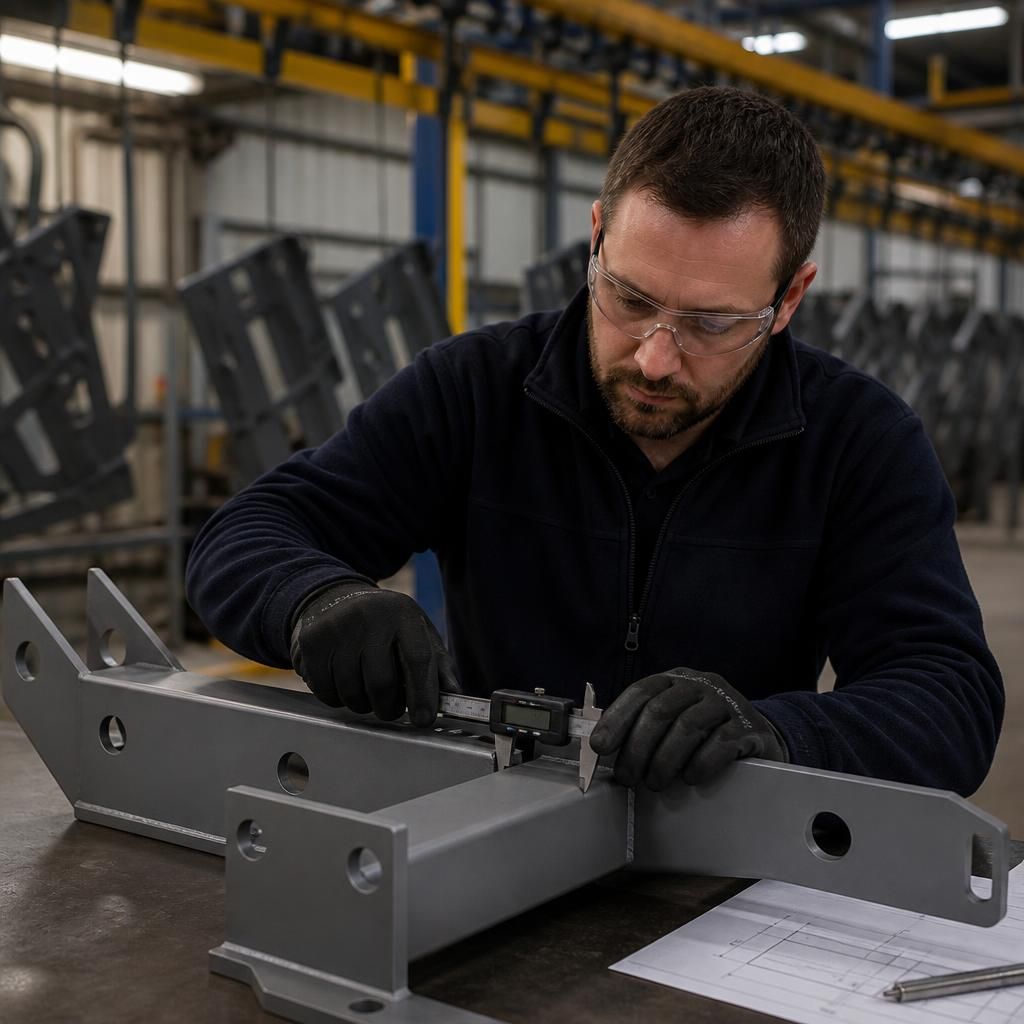
For components with tight dimensional or alignment requirements, the bake schedule can affect more than the coating film. Prolonged or repeated heating may contribute to movement, distortion or changes in fit in thin sections, fabricated assemblies and parts containing dissimilar metals. This can create quality problems even when adhesion, colour and surface appearance meet the coating specification.
Where dimensional accuracy matters, record critical measurements before coating and check them after curing. Include any required fit, alignment or assembly checks in the acceptance criteria, rather than assessing the finish by appearance alone. This helps identify whether a proposed cure schedule is suitable for the complete component, not just the powder layer.
Discuss Your High Temp Powder Coating Requirements
Discuss your high temperature powder coating requirements with the team, including the component material, geometry, powder specification and intended operating conditions. This information can help establish a suitable curing approach and identify any process considerations before production.