

What industries benefit most from high temp powder coating applications?
Automotive, manufacturing, engineering, construction and industrial process businesses benefit most from high temperature powder coating where metal components face sustained heat, thermal cycling or heat-related wear. Typical applications include exhaust parts, heat shields, oven and furnace components, machinery, fabricated enclosures and other equipment requiring a durable finish at elevated temperatures.
The industries that benefit most from high temperature powder coating are those using metal parts that experience sustained heat, repeated heating and cooling, or heat-related degradation during service. The strongest applications are found in automotive thermal systems, industrial process equipment, energy-related plant, commercial catering equipment and specialist fabrication, provided the coating system is matched to the operating temperature and metal substrate.
Automotive and transport manufacturing use high temperature finishes where components are positioned close to engines, exhaust systems or other heat sources. In these applications, the coating must tolerate not only elevated temperatures but also vibration, road contaminants, moisture and repeated thermal cycling. Selection therefore involves more than choosing a finish labelled “high temperature”: the expected peak temperature, duration of exposure and risk of abrasion all need to be assessed.
Industrial process and equipment manufacturers are major users because process machinery may operate continuously at elevated temperatures. Metal guards, housings, supports, access panels and associated fabricated parts can require a finish that maintains its protective function as equipment heats up and cools down. A suitable coating can help preserve surface protection and appearance where a standard powder coating would be unsuitable.
Oven, kiln and furnace equipment manufacturers benefit where external metalwork, frames, access components and non-direct-contact parts are exposed to heat. The correct specification depends on the location of the component. Parts inside the hottest zone may require a different material or finishing method from parts mounted on the outer casing. Components exposed to direct flame, highly concentrated heat or severe chemical attack should be assessed separately rather than assumed to be suitable for a conventional high temperature powder system.
Energy and utilities-related fabrication can involve hot pipework supports, plant enclosures, heat-management components and equipment operating in demanding environments. Here, temperature resistance is only one part of the specification. The coating may also need to withstand condensation, atmospheric moisture, process residues, handling damage and corrosion risks. A coating that performs well at a stated temperature in dry conditions may not provide the same service in a damp or chemically aggressive environment.
Commercial catering and food-processing equipment may use heated metal assemblies, cooking equipment, access panels and supporting structures. The relevant requirements can include resistance to heat, cleaning chemicals, grease and repeated washing. Where a coated part could come into contact with food, the specification must also address the applicable hygiene and contact requirements; high temperature performance alone does not establish suitability for food-contact use.
Specialist metal fabricators often benefit when producing repeat batches of brackets, frames, housings or formed components for customers operating heated equipment. Powder coating can provide a consistent finish across suitably prepared parts, but the production process still needs to account for part size, metal thickness, masking, hanging points and oven conditions. These factors affect whether the whole component reaches the required curing temperature without distorting or compromising the finish.
High temperature powder coating is usually most appropriate where the component has a defined operating range and can be processed in a controlled coating line. It may be less suitable where the metal is exposed to temperatures beyond the coating’s rating, sudden extreme heat, direct flame, molten material or severe thermal shock. In those cases, an alternative coating technology, bare engineered metal surface or locally protected area may need to be considered.
When comparing industries or applications, the following questions provide a more reliable basis for specification:
- What are the normal, maximum and occasional peak temperatures at the coated surface?
- Is the heat continuous, intermittent or cyclic, and how quickly does the component change temperature?
- Will the coating face abrasion, impact, oil, solvents, cleaning agents, moisture or corrosive process deposits?
- Does the metal substrate tolerate the coating’s curing temperature without distortion or loss of dimensional accuracy?
- Are there areas that require masking, electrical continuity, close tolerances or resistance to wear?
- Is colour retention, gloss retention or a particular appearance important after prolonged heating?
For businesses specifying components, the best candidates are therefore not defined by industry name alone. They are metal parts with a known thermal duty, a suitable surface-preparation route and enough access for the selected coating to be applied and cured correctly. Manufacturers, fabricators and industrial users across the Midlands can discuss these requirements with a specialist coating provider and arrange collection or delivery of suitable components for assessment and processing.
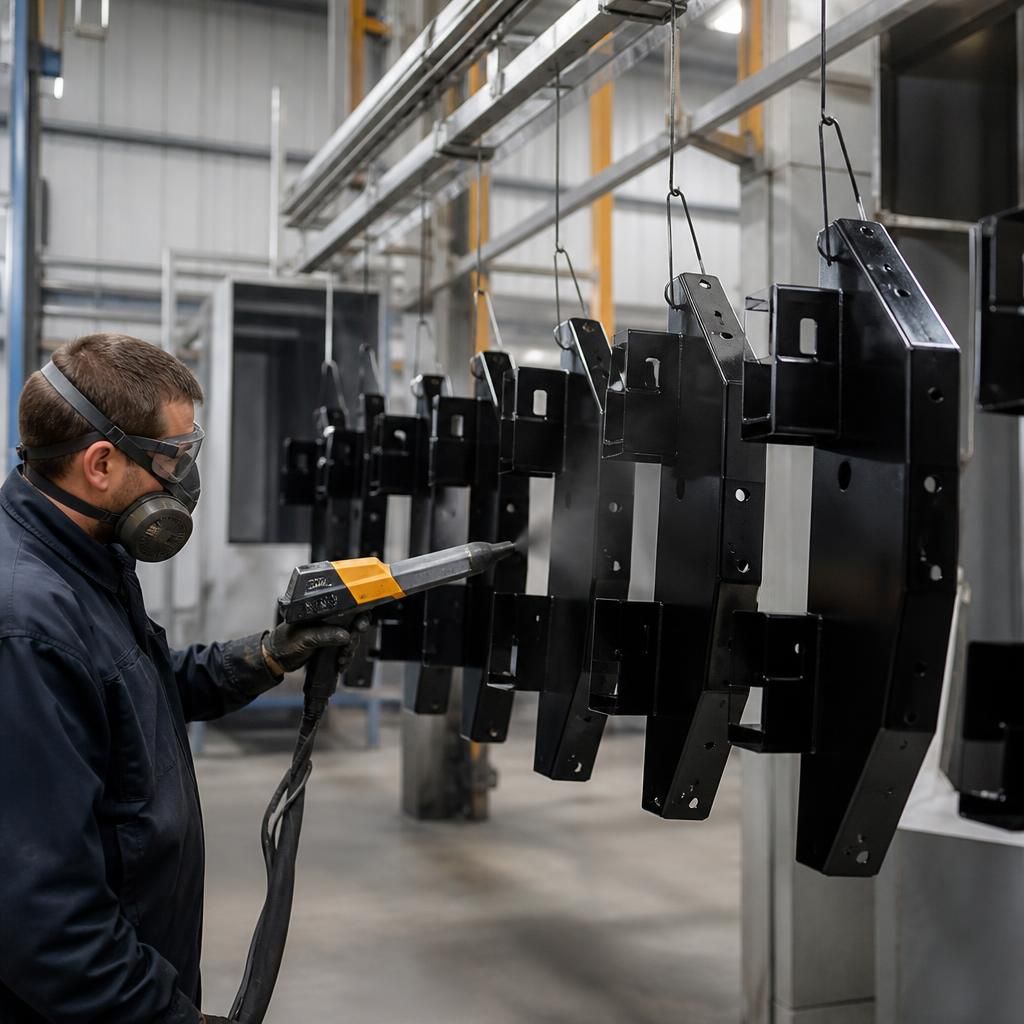
High temperature powder coating is particularly useful to maintenance-led industries that refurbish removable metal components rather than replacing them outright. Manufacturing plants, process equipment operators and automotive businesses may use it for suitable housings, guards, brackets and panels after the existing finish has been removed and the substrate assessed.
For refurbishment work, the condition of the part is as important as its operating temperature. Corrosion, weld spatter, embedded contamination, damaged edges and accumulated coating can affect preparation and the final finish. Dimensions, masking requirements and any close-fitting interfaces should also be checked before processing, because additional coating thickness can affect assembly. This makes a component survey and clear definition of its service conditions important when deciding whether high temperature powder coating is appropriate.
Discuss Your High Temperature Powder Coating Requirements
Discuss your high temperature powder coating requirements with a specialist, including the component’s operating conditions, substrate and finish specification. Providing these details will help establish whether the proposed coating system is suitable for your application.