

What benefits do high temp powder coatings offer for metal components exposed to extreme heat environments?
High temperature powder coatings are formulated to withstand elevated operating temperatures while maintaining adhesion and protective performance on metal components. They can help reduce heat-related coating breakdown, corrosion and premature substrate deterioration, supporting more reliable performance in demanding industrial environments.
High temperature powder coatings offer metal components a more stable, durable surface in applications where repeated or sustained heat would quickly affect a conventional finish. Their main benefits are improved thermal stability, better retention of the required surface properties, and reduced risk of premature coating failure when the formulation is correctly matched to the operating conditions.
Key benefits include:
- Greater resistance to thermal degradation: The coating is designed to tolerate higher service temperatures without softening, blistering, flaking or losing its intended protective function. This is particularly important for components positioned close to heat sources or exposed to hot gases.
- More reliable performance during temperature changes: Specialist formulations can accommodate expansion and contraction as a component heats and cools. This can help limit cracking, lifting and other failures caused by repeated thermal cycling, provided the coating and preparation system are suitable for the substrate.
- Retention of surface appearance: A suitable high temperature coating can help preserve colour, gloss or texture more effectively than a standard powder coating in a hot environment. The degree of colour change depends on the formulation, pigment, peak temperature and length of exposure, so appearance requirements should be confirmed during specification.
- Protection of complex metal components: Powder coating can produce an even finish across suitably prepared surfaces, including fabricated parts with multiple faces and edges. This gives manufacturers a consistent coating thickness and finish across batches when application and curing are properly controlled.
- Resistance to associated operating conditions: Heat is often accompanied by abrasion, cleaning chemicals, oils, fuels or industrial contaminants. Some high temperature powder coating systems can be selected to provide resistance to these additional conditions, rather than treating heat exposure in isolation.
- Reduced need for coating replacement: Where the coating remains stable under the actual operating conditions, the component may require fewer remedial coating operations than it would with an unsuitable general-purpose finish. This can reduce disruption associated with removing and recoating parts, although the result depends on correct preparation, application and service conditions.
The temperature rating must be interpreted carefully. A product may have a different limit for continuous exposure than for short-term or intermittent peaks, and the rating does not necessarily describe how the coating will behave during rapid temperature changes. The surrounding atmosphere also matters: dry heat, humidity, combustion gases and chemical vapours can place different demands on the coating system.
High temperature powder coating is therefore specified by considering the complete service environment, not simply the highest temperature recorded. Relevant information includes the metal substrate, expected operating and peak temperatures, heating and cooling cycle, exposure duration, surface preparation, required appearance and any contact with chemicals or abrasive materials. The coating system must also be cured in a way that is compatible with the component and the manufacturer’s technical requirements.
These benefits are most valuable when the coating’s thermal capability exceeds the demands placed on it in service. Selecting a product solely because it is described as heat resistant can lead to an unsuitable finish if the real application involves thermal shock, contamination, movement or aggressive cleaning. A technical review of the component and its operating environment is therefore an essential part of achieving dependable protection in extreme heat applications.
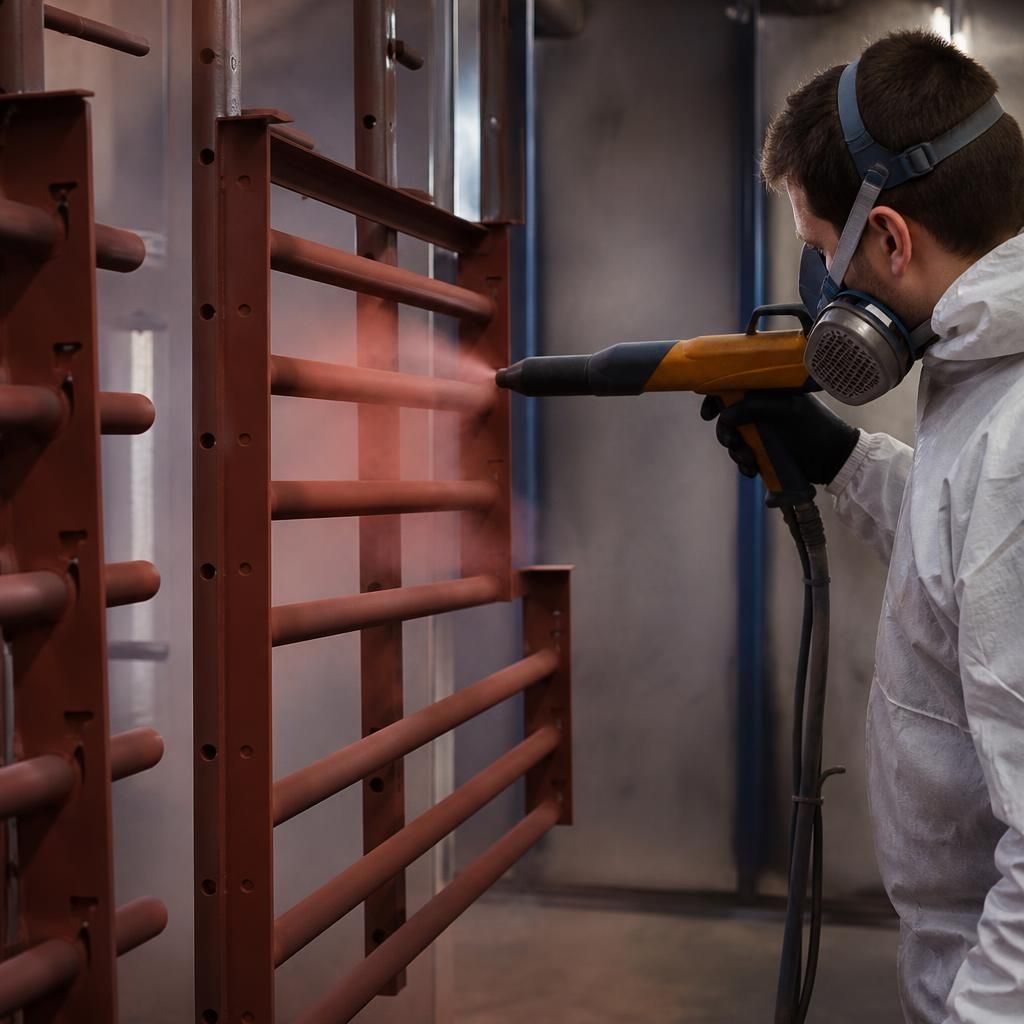
High temperature powder coating protects a metal surface from heat-related coating failure; it does not act as a thermal barrier or prevent the component itself from becoming hot. The metal will still reach the temperature created by the equipment or process, so the coating must be selected for the actual surface temperature rather than used as a substitute for insulation, shielding or temperature control.
This distinction is important when assessing performance in extreme heat environments. A suitable coating can remain bonded and protective while the component operates at elevated temperature, but it cannot correct an underspecified material, inadequate thermal design or exposure beyond its service limits. Where heat retention or reduced heat transfer is required, the coating should form part of a wider engineered solution rather than being treated as the sole means of thermal protection.
Discuss High Temperature Powder Coating for Your Components
Discuss your component’s substrate, operating temperatures and surrounding conditions with our team to assess whether a high temperature powder coating is suitable. We can help identify the information required to specify an appropriate coating system for your application.