

What are the specific material compatibility and preparation requirements when applying epoxy and polyester powder coatings to different substrates?
Epoxy and polyester powder coatings are compatible with properly prepared steel, aluminium and galvanised metal, but each substrate needs suitable degreasing, removal of rust, scale and contaminants, and a surface profile that promotes adhesion. Preparation may also require abrasive treatment, chemical pretreatment or a compatible primer, while existing coatings must be tested for adhesion and heat resistance before recoating; the selected powder should then match the substrate, service environment and required cure temperature.
Material compatibility for epoxy and polyester powder coating depends on the substrate’s composition, surface condition, electrical properties and ability to withstand the specified cure schedule. Steel, aluminium and galvanised components can all be suitable, but they require different treatment to control adhesion, corrosion risk, outgassing and dimensional changes during heating.
Carbon and mild steel: Steel usually provides a stable base for powder coating once mill scale, weld residue, oil and corrosion products have been removed. Fabricated parts should be checked for sharp edges, tight crevices, incomplete welds and trapped contamination. Weld spatter and heavy burrs can create thin areas or visible defects in the finished film, while unsealed overlaps may retain moisture and later promote corrosion beneath the coating. Abrasive preparation should produce a consistent surface rather than an excessively polished one, because the coating needs a mechanically suitable key.
Where corrosion protection is important, the preparation system must be selected as a whole. A conversion treatment, primer or zinc-containing preparation may be appropriate for the specified environment, but it must be chemically compatible with the powder and capable of tolerating the curing temperature. The coating specification should also state whether the objective is decorative protection, a higher-build barrier or a system intended for aggressive conditions; these requirements affect both the pretreatment and the choice between epoxy, polyester or a combined system.
Galvanised steel: Zinc-coated steel needs particular attention because the zinc surface may contain passivation layers, storage residues or uneven areas created during galvanising. These can interfere with bonding if they are not treated correctly. The coating process should account for the condition and age of the galvanised surface, the presence of white corrosion products and the possibility of gas escaping from the zinc during heating. Suitable preparation and a compatible powder system help reduce pinholes, craters and blistering.
Galvanised fabrications should also be designed and inspected with drainage and venting in mind. Hollow sections, boxed joints and enclosed spaces can retain pretreatment fluids or release vapour in the oven. If the design does not allow these areas to drain or vent, coating defects and safety issues may result. Existing galvanised finishes should not be assumed to be suitable simply because the underlying metal is compatible; their adhesion and surface chemistry still need assessment.
Aluminium: Aluminium forms an oxide layer rapidly after exposure, so the interval and handling between preparation and coating are important. Parts should be free from machining lubricant, cutting fluid, fingerprints and embedded abrasive residue. Aluminium is softer than steel, meaning that overly aggressive blasting can distort profiles, round edges or leave an inconsistent surface. A controlled preparation method and an aluminium-compatible pretreatment are therefore preferable to treating it exactly like mild steel.
Cast aluminium and pressure-cast components can present additional risks. Porosity may contain air, oil or moisture that expands during the bake cycle, causing bubbles, pinholes or local adhesion failure. Components with a history of machining, impregnation or exposure to process fluids may need extra cleaning, preheating or a trial coating before production quantities are processed. The part’s mass and geometry also influence how quickly it reaches the required metal temperature.
Stainless steel and other alloyed metals: Stainless steel can be coated, but its smooth, passive surface may need a preparation method that creates reliable adhesion without damaging the corrosion-resistant substrate. Nickel-plated, zinc-plated, anodised or otherwise treated metals should be identified before work begins, as the deposited layer—not just the base metal—determines whether the powder can bond successfully. Mixed-metal assemblies can also behave differently in pretreatment and during heating, particularly where dissimilar materials meet.
Existing paint or powder coating: Recoating is not automatically suitable. The original layer must be checked for adhesion, contamination, softening and compatibility with the new cure temperature. Loose or poorly bonded material should be removed rather than encapsulated. Firm coatings may sometimes be abraded and prepared, but a trial area is advisable where the original chemistry, thickness or service history is unknown. Silicone, wax, oil and some masking residues are especially liable to cause craters or fisheyes in the new finish.
Epoxy compared with polyester: Epoxy powder generally suits components where chemical resistance, adhesion and protection from corrosion are more important than prolonged direct ultraviolet exposure. Polyester powder is normally considered where colour and gloss retention outdoors are significant. This is not a substitute for substrate preparation: the powder’s chemistry cannot compensate for moisture, salts, oxides, poor drainage or a weak existing layer. Hybrid epoxy/polyester systems may be considered where indoor protection and decorative performance both matter.
The specified cure must be based on the temperature reached by the metal and the time it remains at that temperature, not simply the oven’s air-temperature reading. Thick and thin sections within the same assembly may heat at different rates. Components containing seals, bearings, adhesives, electronics or heat-sensitive inserts need those items removed, protected or assessed separately. Masking should keep threads, bearing seats, earth points and precision interfaces free of powder, with plugs and tapes selected to tolerate the cure cycle.
A practical compatibility review should confirm:
- the exact substrate and any plating, anodising, galvanising or previous coating;
- the component’s service exposure, including moisture, chemicals, abrasion and ultraviolet light;
- the required film build, appearance and corrosion-protection system;
- the part’s geometry, weld condition, porosity, hollow sections and drainage or venting;
- the powder manufacturer’s application and curing requirements; and
- which surfaces, threads and close-tolerance areas must remain uncoated.
For unfamiliar alloys, repaired fabrications, cast parts or previously coated components, a representative test piece is more reliable than assuming that a preparation used on ordinary steel will transfer directly. Inspection should then consider coverage at edges and recesses, visible defects, adhesion and the suitability of the completed system for its intended environment.
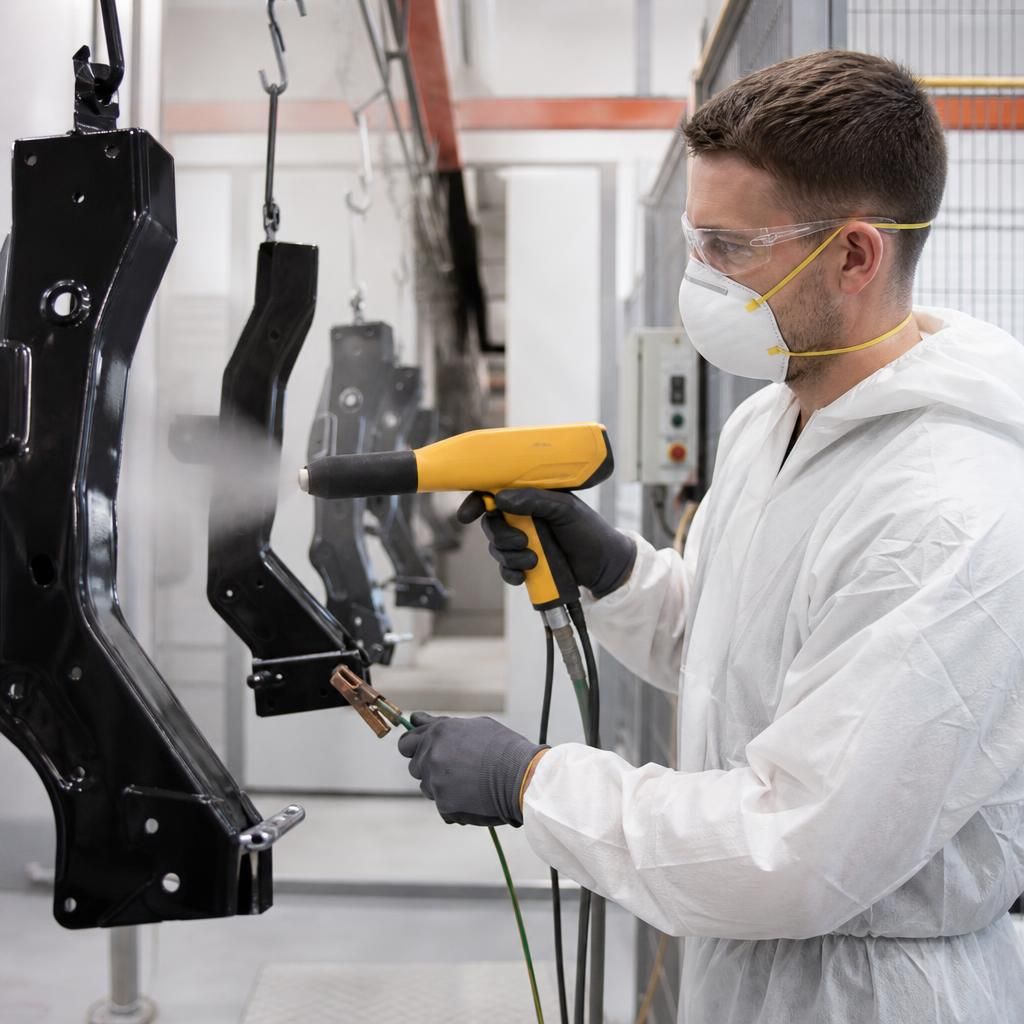
Electrical conductivity is an important compatibility check during electrostatic powder application. Bare or suitably prepared metal must provide a reliable path to earth so the charged powder is attracted evenly to the component. Anodised surfaces, thick existing coatings, heavy oxide layers and non-conductive residues can interrupt this path, reducing transfer to recessed areas and making the film less uniform.
Preparation should therefore include identifying suitable hanging or contact points and removing insulating contamination from those locations without damaging functional surfaces. Contact areas that must remain free of powder should be defined before coating, particularly on assemblies that depend on electrical continuity, earthing or close-fitting interfaces.
Discuss Your Substrate and Preparation Requirements
Discuss your component’s substrate, existing finish, service environment and preparation requirements with our powder-coating team before specifying epoxy or polyester powder. This helps establish a suitable coating system and identify any areas requiring testing or additional preparation.