

What are the environmental and sustainability benefits of using epoxy and polyester powder coatings?
Epoxy and polyester powder coatings support more sustainable metal finishing by using little or no solvent, producing very low volatile organic compound (VOC) emissions and allowing unused overspray to be collected rather than discarded. Their durable, protective finishes can also extend the service life of coated components, reducing the need for frequent recoating and replacement.
Epoxy and polyester powder coatings can reduce the environmental impact of metal finishing by using materials efficiently, limiting process waste and protecting components throughout their working life. The sustainability benefit is not automatic: it depends on correct coating selection, efficient application, suitable curing, responsible preparation and how the coated part is managed at the end of its service life.
Efficient use of coating material
Powder is applied directly to an electrically charged metal surface, where particles are attracted to the workpiece. This controlled application can place material where it is needed rather than relying on a liquid carrier to spread the coating. Powder that does not settle on the component may be captured through suitable extraction and recovery equipment. Where the recovered material remains suitable for the process, it can reduce the amount of new powder required and limit disposal.
Transfer efficiency is affected by part geometry, coating thickness, operator technique, gun settings and the colour or formulation being used. A sustainability assessment should therefore consider the whole application process rather than assuming that every powder-coating line achieves the same level of material efficiency.
Lower use of hazardous process materials
Powder formulations are supplied as dry solids, so they do not require the same solvent-handling arrangements as many conventional liquid paint systems. This can simplify storage and reduce the environmental controls associated with solvent-containing materials. However, powder is still a chemical product. Safety data, extraction, housekeeping and appropriate personal protective equipment remain important, particularly because airborne powder should not be inhaled or allowed to accumulate on surfaces.
Longer intervals between finishing operations
The environmental value of a coating is also linked to how well it performs in its intended environment. Epoxy coatings are commonly considered where adhesion, chemical resistance and corrosion protection are important, while polyester coatings are often selected for exterior exposure because they offer better resistance to weathering and ultraviolet light. Choosing the formulation that matches the service conditions can reduce premature coating failure and the associated preparation, transport and processing of replacement parts.
This is a selection issue rather than a simple claim that one resin is always more sustainable. An epoxy used outdoors without the required ultraviolet resistance may need earlier remedial work, whereas a polyester may be unsuitable for some chemical or internal applications. Hybrid epoxy/polyester systems can provide a different balance of properties where both indoor performance and appearance are relevant.
Potential reduction in replacement materials
By helping to shield steel and other compatible metal substrates from moisture, chemicals and abrasion, a suitable coating can help components remain fit for purpose. Retaining an existing component may avoid the environmental burdens associated with producing a replacement, including extraction of raw materials, metal forming, machining, transport and further finishing. The scale of this benefit varies with the component, its operating conditions and whether repair or recoating is technically practical.
Energy and curing considerations
Powder coatings require controlled heating to melt, flow and chemically cure the resin. The oven is therefore a significant part of the process energy demand. Efficient loading, correct oven settings, suitable airflow and avoiding unnecessary heating of empty space can all help reduce energy use. Parts should be cured according to the coating manufacturer’s requirements; insufficient curing can affect performance, while excessive heating wastes energy and may damage the finish or substrate.
Energy efficiency should be assessed alongside material efficiency. A coating that uses little material but is repeatedly rejected because of poor preparation or incorrect curing may have a greater overall impact than a well-controlled process using slightly more powder. Batch size, component mass, oven design and the source of the electricity or fuel also influence the result.
Preparation, cleaning and pretreatment
Surface preparation is essential to coating performance, but it can introduce additional environmental considerations. Abrasive blasting produces spent abrasive and removed contaminants that must be collected and managed appropriately. Chemical cleaning and pretreatment can generate wastewater or residues requiring controlled handling. The most suitable preparation method depends on the substrate, existing corrosion, contamination, required finish and operating environment.
Good preparation reduces defects, rejects and unnecessary reprocessing. It also helps the finished coating bond consistently to the metal, supporting the intended service life without relying on excessive coating thickness. A coating specification should therefore include substrate preparation and pretreatment, not just the resin type and colour.
End-of-life limitations
Epoxy and polyester powder coatings are thermoset systems. Once cured, they cannot normally be melted and reformed in the same way as a thermoplastic. This means the coating itself is not simply remelted during metal recycling. In many cases, the underlying metal can still enter an established recycling route, but the coating may be removed, burned off or managed as part of the scrap-processing operation depending on the facility and material stream.
Designing components for repair, separation and recycling can improve the overall result. Avoiding unnecessary mixed-material assemblies, identifying the substrate and coating specification, and preventing contamination with oils or hazardous residues can make downstream handling easier.
How to assess the sustainability of a specification
- Match epoxy, polyester or a hybrid formulation to the actual indoor, outdoor, chemical, abrasion and ultraviolet exposure.
- Specify the required film thickness and curing schedule rather than applying excess material as a precaution.
- Ask how powder overspray, packaging and preparation residues will be collected and managed.
- Consider oven energy, part loading and process controls when comparing finishing options.
- Include substrate preparation, pretreatment, inspection and repair requirements in the environmental assessment.
- Consider the component’s expected use, maintenance route and eventual metal-recycling process.
For manufacturers and fabricators, the most defensible approach is to compare the complete life cycle of the proposed finish: raw materials, preparation, application, curing, rejects, maintenance and end-of-life handling. Powder coating can be a resource-efficient option, but its environmental performance is strongest when the coating system and production process are designed together.
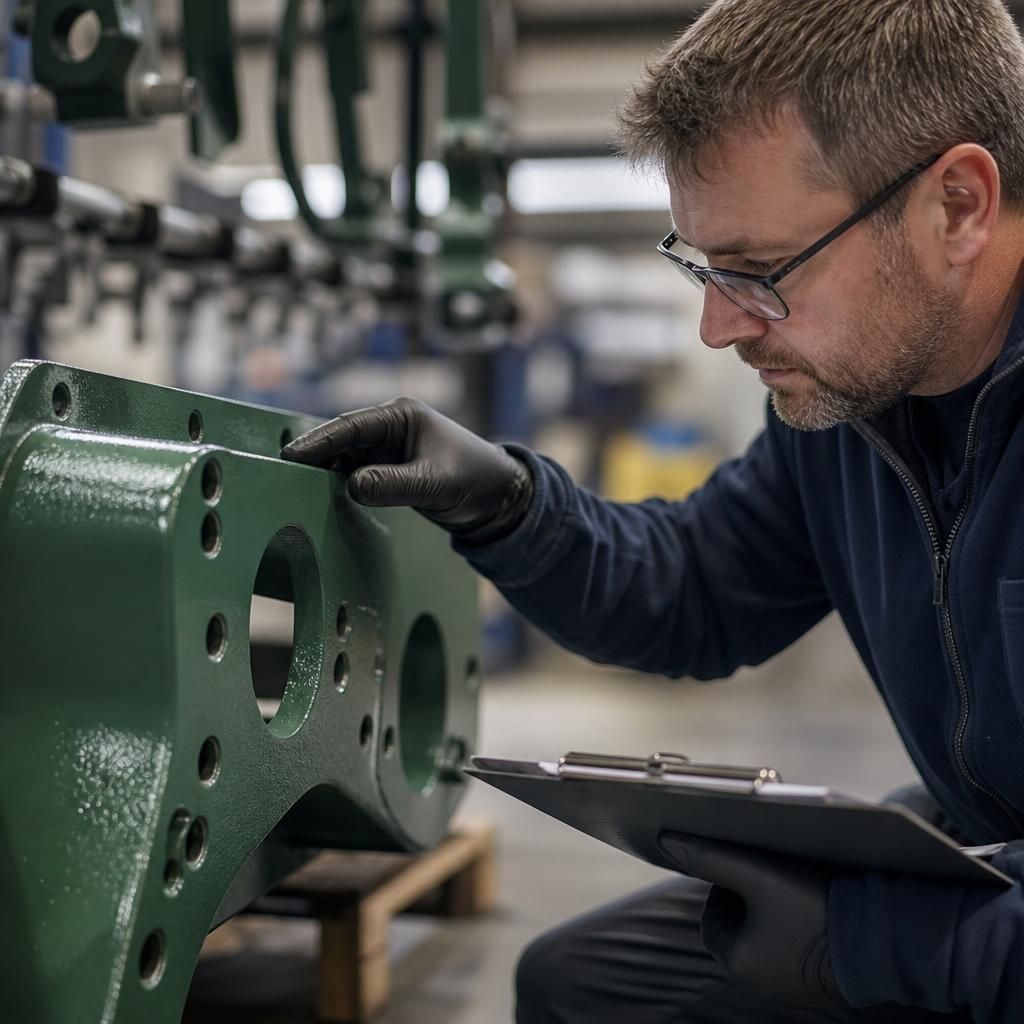
Appropriate maintenance helps preserve the environmental benefit of an epoxy or polyester powder-coated component. Regular inspection can identify damage, corrosion or contamination before a larger area requires intervention. Cleaning methods should suit the coating and service environment; unsuitable solvents, abrasive tools or aggressive chemicals can damage the film and shorten its useful life.
Where damage is localised, a suitable repair may avoid stripping and refinishing the entire component. The repair method should be checked against the original coating, substrate and exposure conditions, as an incompatible touch-up can create further defects. Keeping the coating specification and maintenance requirements with the component also helps future users choose proportionate cleaning, repair or recoating rather than replacing a serviceable part unnecessarily.
Review Your Epoxy or Polyester Coating Specification
Discuss your component, operating environment and current coating specification with Powder-coatings.co.uk to identify an appropriate epoxy, polyester or hybrid powder-coating approach. Include details of the substrate, finish requirements and expected service conditions so the environmental assessment is based on the complete application.