

What are the cost implications of choosing epoxy versus polyester powder coatings for large-scale industrial applications?
For large-scale industrial applications, epoxy powder coating can be cost-effective where strong adhesion and chemical resistance are priorities, while polyester is often the better-value choice for components exposed to weather and UV light. The overall cost depends on powder selection, surface preparation, application and curing requirements, production volume, and the maintenance or recoating needs expected over the coating’s service life.
The cost difference between epoxy and polyester powder coating is determined by the complete coating cycle, not simply by the price of the powder. For a large industrial batch, the relevant comparison includes material consumption, preparation, masking, application, curing, inspection, handling, transport and the likely cost of repair or recoating over the component’s working life.
Powder and material usage
The quoted price of a powder is only one part of the material cost. Coverage depends on the surface area, profile, geometry and specified film thickness of the parts. Complex fabrications, recessed sections and components with substantial overspray can consume more powder than simple flat sections. Powder recovery and reclaim arrangements may also affect how efficiently material is used, although the suitability of reclaim depends on the coating system and colour requirements.
Epoxy and polyester products can differ in formulation, performance specification and purchase cost. A lower unit price is not necessarily the lower-cost option if it requires a heavier specification, additional preparation or earlier remedial work. Conversely, selecting a more expensive formulation may be unjustified where the operating environment does not require its particular properties.
Preparation and masking costs
Surface preparation is often a significant part of the overall price. Degreasing, removal of rust or mill scale, abrasive preparation and the treatment of welds all influence the time and resources required before coating. Contaminated or poorly prepared steel can lead to adhesion problems, corrosion beneath the coating and additional rectification work, regardless of whether epoxy or polyester is selected.
Large assemblies may also need masking to protect threads, machined faces, electrical contact points, bearings or areas that must remain uncoated. The cost increases where masking is extensive, difficult to repeat consistently or has to be removed and replaced between coating stages. Clear drawings and defined uncoated areas help prevent avoidable rework.
Application and production efficiency
Batch size affects the cost per component. A large, consistent batch normally allows racking, loading, colour changes and inspection to be planned more efficiently than a mixed batch of irregular parts. Parts that can be coated together using the same specification may reduce handling and set-up time, whereas frequent changes in colour, finish or film requirement can add production cost.
Component design also matters. Long sections, enclosed areas and assemblies with Faraday-cage effects may require different application techniques or additional attention to achieve consistent coverage. If a coating system needs a primer, a second coat or more detailed inspection, those extra operations should be included in the comparison rather than treated as incidental items.
Curing and energy considerations
Both coating types require controlled curing, and the cost of this stage is influenced by the mass and arrangement of the parts, oven loading, process temperature and time in the production cycle. A large, dense fabrication can take more energy to bring to the required metal temperature than a small component. Poorly planned loading can also reduce throughput by leaving unused oven capacity.
The specification should be based on the actual metal temperature reached by the part, rather than oven air temperature alone. If parts are under-cured, performance may be compromised; if they are exposed to unsuitable conditions, appearance or substrate integrity may be affected. Accurate process control helps avoid rejected batches and the cost of stripping and recoating them.
Whole-life cost
The more meaningful comparison is often the expected cost over the service life:
- initial coating and preparation;
- inspection and testing;
- handling, collection and delivery;
- touch-up or repair after installation;
- planned maintenance and eventual recoating; and
- the cost of removing a failed coating or replacing a damaged component.
Polyester is generally considered where parts need resistance to outdoor exposure and sunlight, while epoxy is commonly assessed for applications where adhesion and resistance to chemicals are important. The cheapest initial option can become more expensive if it is placed in an environment for which it was not designed. Selection should therefore reflect the actual exposure, including moisture, ultraviolet light, chemicals, abrasion, temperature and handling during installation.
How to compare quotations accurately
For a reliable cost comparison, provide the coating contractor with the substrate, dimensions, estimated batch quantities, required colour and finish, operating environment, masking requirements and any specified film thickness or testing. Ask whether the price includes preparation, masking, coating, curing, inspection, packaging and transport. It is also useful to confirm how rejects, damaged parts and additional preparation will be treated, since exclusions can have a material effect on the final cost.
The practical decision is therefore not whether epoxy or polyester has the lower headline price. It is which system meets the service requirement with the fewest additional operations and the lowest credible whole-life cost. For large-scale work, an assessment based on part design, batch planning and expected maintenance is more dependable than comparing powder prices in isolation.
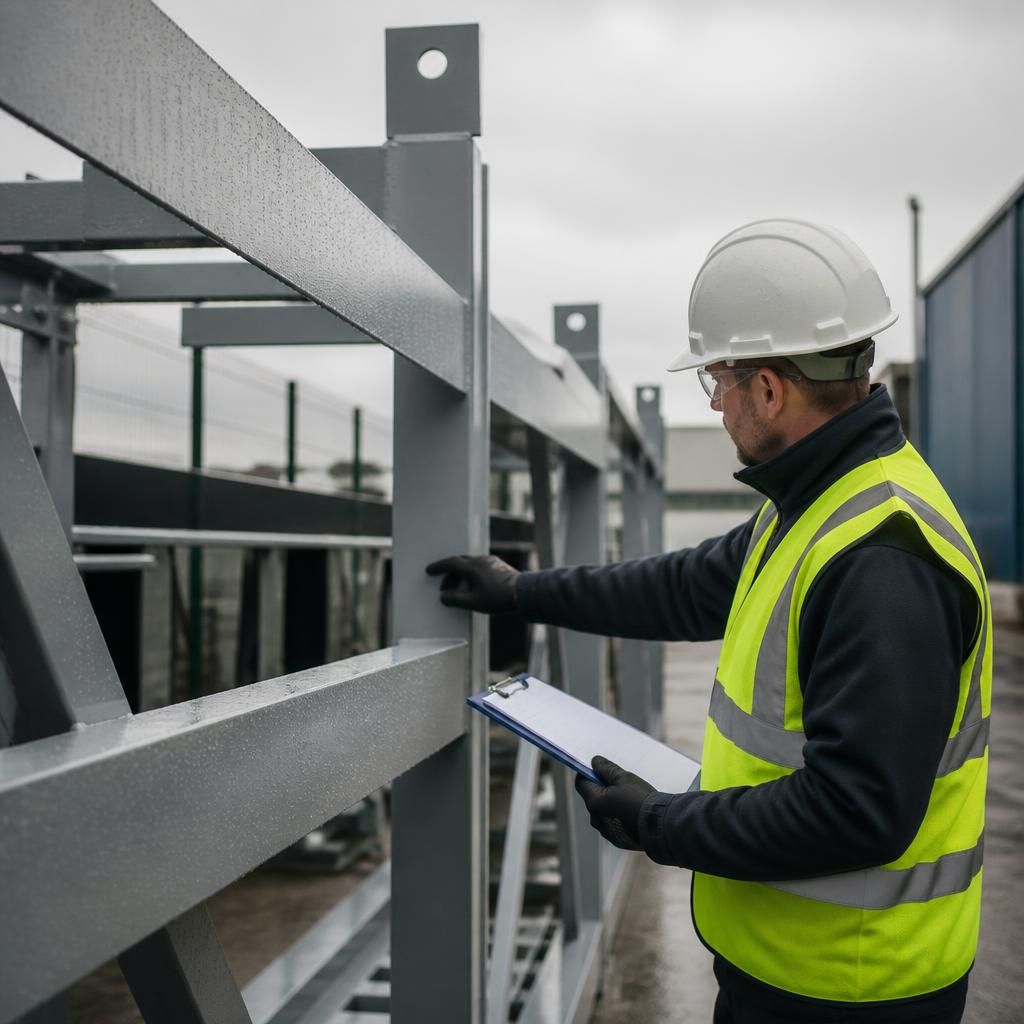
A key cost implication is the consequence of selecting a coating for the wrong exposure. Epoxy can provide strong adhesion and chemical resistance, but prolonged ultraviolet exposure may affect its appearance and suitability for exterior use. Polyester is generally better suited to components exposed to sunlight and weather, although it may not provide the same chemical resistance required in some industrial interiors.
This means the lower-priced powder can become the more expensive choice if the finish needs early refurbishment or replacement because its performance does not match the environment. The specification should therefore identify the dominant exposure before comparing coating prices, particularly where components will be installed outdoors, near chemicals or in areas subject to frequent cleaning.
Discuss Your Epoxy vs Polyester Coating Requirements
Discuss your epoxy versus polyester coating requirements with the team, including the operating environment, component design and expected production volumes. This will help establish which system offers the most appropriate overall cost for your application.