

What industries benefit the most from thermoset powder coatings?
Manufacturing, metal fabrication, construction and automotive businesses benefit most from thermoset powder coatings when their components require a durable, protective and consistent finish. They are particularly suited to metal parts exposed to handling, wear, weather or demanding operating conditions, where long-term surface performance and appearance are important.
The industries that benefit most from thermoset powder coatings are those producing metal components that need a permanently bonded finish with resistance to corrosion, abrasion, chemicals, heat or outdoor exposure. The strongest applications are found where coated parts must remain consistent through handling, installation and service, rather than simply provide short-term decorative coverage.
Manufacturing and engineering. Industrial manufacturers use thermoset coatings for machine frames, enclosures, brackets, panels, guards, housings and fabricated assemblies. These components may be exposed to workshop handling, lubricants, cleaning agents or repeated contact with other equipment. A cured thermoset film provides a hard, continuous surface and can be specified in different colours or textures to distinguish equipment, support identification or match an established product finish.
Metal fabrication. Fabricators benefit when individually made or batch-produced parts require a repeatable finish after cutting, forming and welding. Typical examples include frames, supports, cabinets, access panels and bespoke metalwork. Powder coating can cover the prepared steel or aluminium surface evenly, including complex profiles, provided the design allows suitable access for application and curing. For fabricators, the coating specification should be agreed alongside dimensions, masking requirements, hanging points and the condition of the substrate.
Construction and architectural supply. Components used in buildings and infrastructure may face rain, condensation, sunlight, site handling and contact with other materials. Thermoset coatings are therefore used on items such as structural accessories, brackets, railings, balustrade parts, doors, façade components and service-enclosure panels. The appropriate powder chemistry and film specification depend on whether the part is intended for interior use, sheltered exterior use or prolonged exposure to changing weather conditions.
Automotive and transport-related production. Vehicle and transport manufacturers, repair businesses and component suppliers can use thermoset coatings on non-decorative metal parts where resistance to impact, abrasion, road contaminants or workshop chemicals is relevant. Applications can include brackets, frames, guards, housings and other ancillary components. Parts must be designed and masked appropriately where threaded holes, press fits, electrical contact points or close-tolerance interfaces must remain free of coating.
Agricultural and equipment manufacturing. Agricultural machinery, grounds-maintenance equipment and other plant are exposed to mud, moisture, fertilisers, oils and mechanical wear. Thermoset powder coatings can be suitable for fabricated guards, covers, frames and equipment components when the substrate preparation and coating system match the severity of the environment. Areas subject to impact or constant abrasion may need a specification that prioritises mechanical resistance over appearance alone.
Electrical, control and enclosure manufacture. Metal cabinets, control panels, switchgear housings and equipment covers often require a uniform insulating and protective finish, while still retaining accurate openings, earth points and mounting interfaces. Powder coating can support a clean, durable external surface, but it is not a substitute for the electrical design of the enclosure. Masking, earthing continuity and tolerance control must be considered before production coating begins.
Retail, commercial and public-use equipment. Display structures, storage systems, seating frames, lockers and other metal fixtures benefit from finishes that withstand frequent contact and repeated cleaning. Colour and texture may be important in these settings, but the coating specification should also account for edge wear, cleaning products, sharp corners and areas where users repeatedly handle the component.
The best industry fit is determined by the component’s service conditions, not by the sector name alone. Before choosing a thermoset powder coating, businesses should assess the base metal, expected exposure, operating temperature, likely contaminants, impact and abrasion levels, required appearance, dimensional tolerances and any relevant project or industry specification. Surface preparation is equally important: oil, rust, mill scale, weld residue and other contamination can affect adhesion regardless of the industry.
Batch size and component geometry also influence suitability. Large or unusually shaped parts need sufficient oven capacity and suitable handling arrangements, while assembled items may require disassembly so that all required surfaces can be treated correctly. Small components, repeat orders and mixed batches may need a clear racking and identification plan to maintain colour and finish consistency.
For businesses across the Midlands and surrounding areas, a specialist powder-coating provider can assess drawings, samples or finished metal components before processing. Collection and delivery options may also help manufacturers and fabricators incorporate outsourced coating into their production and logistics arrangements. The relevant question is not simply whether a sector uses powder coating, but whether the chosen thermoset system, preparation method and curing process match the component’s actual working environment.
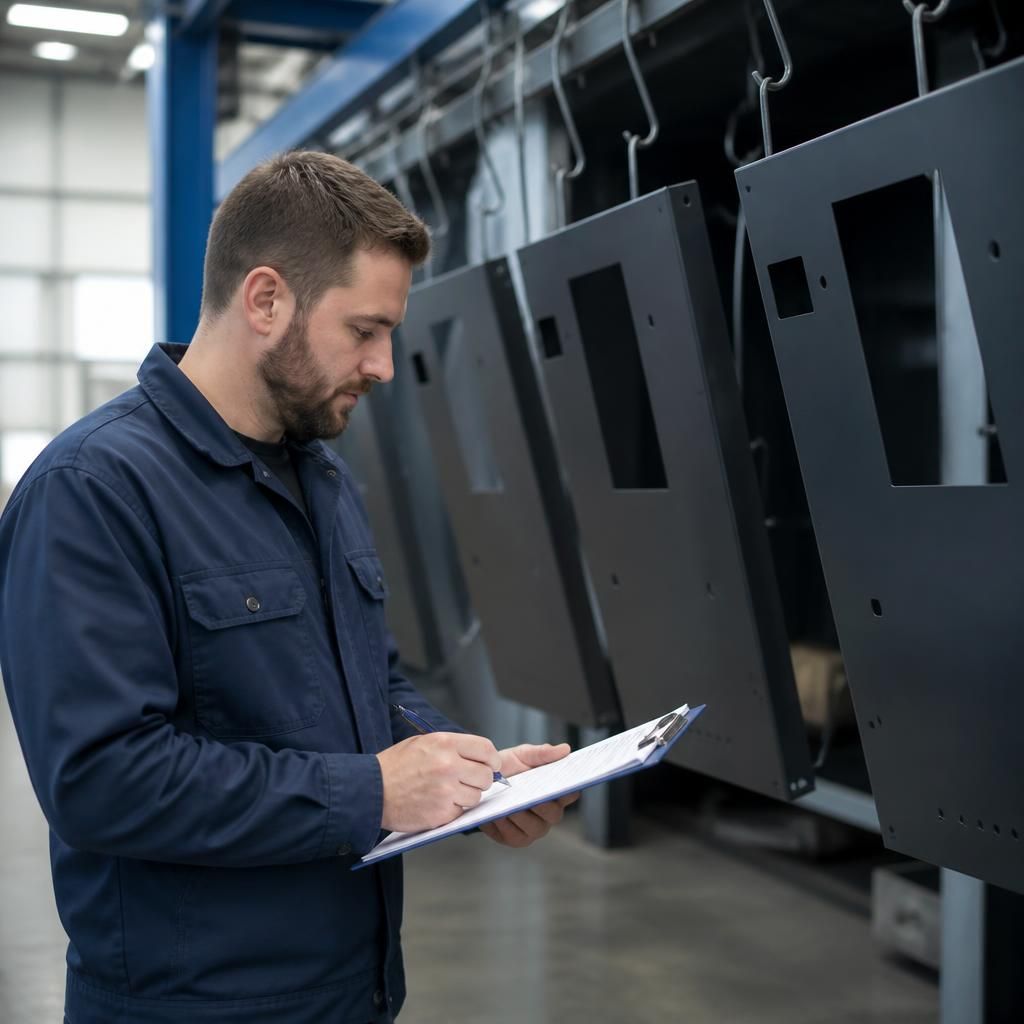
Industries with formal quality-control requirements benefit from thermoset powder coatings because the finish can be defined as part of the component specification. Manufacturers, construction suppliers and automotive businesses can record the substrate, preparation method, powder type, colour, texture, film requirements and curing conditions, creating a consistent reference for production and inspection.
This is particularly useful when coated parts form part of a larger approved product or project. A clearly documented coating specification helps purchasing, production and quality teams assess whether replacement or repeat components have been finished to the same requirements, rather than judging appearance alone.